Skip to content
You can now search across every topic, entity and event.What's new
Russia-Ukraine War 2026
23JUL

Putin: war ending, summit needs treaty first

3 min read
20:33UTC

Putin told reporters on 9 May the war is 'coming to an end', then conditioned any meeting with Zelenskyy on a comprehensive peace treaty being finalised beforehand, asking the outcome to precede the negotiation.

ConflictDeveloping
Key takeaway

Putin's summit pre-condition requires a completed peace treaty before any meeting can occur.

Vladimir Putin told reporters on 9 May 2026 that 'I think the matter is coming to an end' 1. His statement carried a structural condition that makes it something other than a diplomatic opening. Any summit with Volodymyr Zelenskyy requires a comprehensive peace treaty already finalised beforehand, not a meeting to negotiate one. Kremlin spokesman Dmitry Peskov confirmed the same day that Russia's territorial demands are unchanged: full Ukrainian withdrawal from all four annexed regions 2.

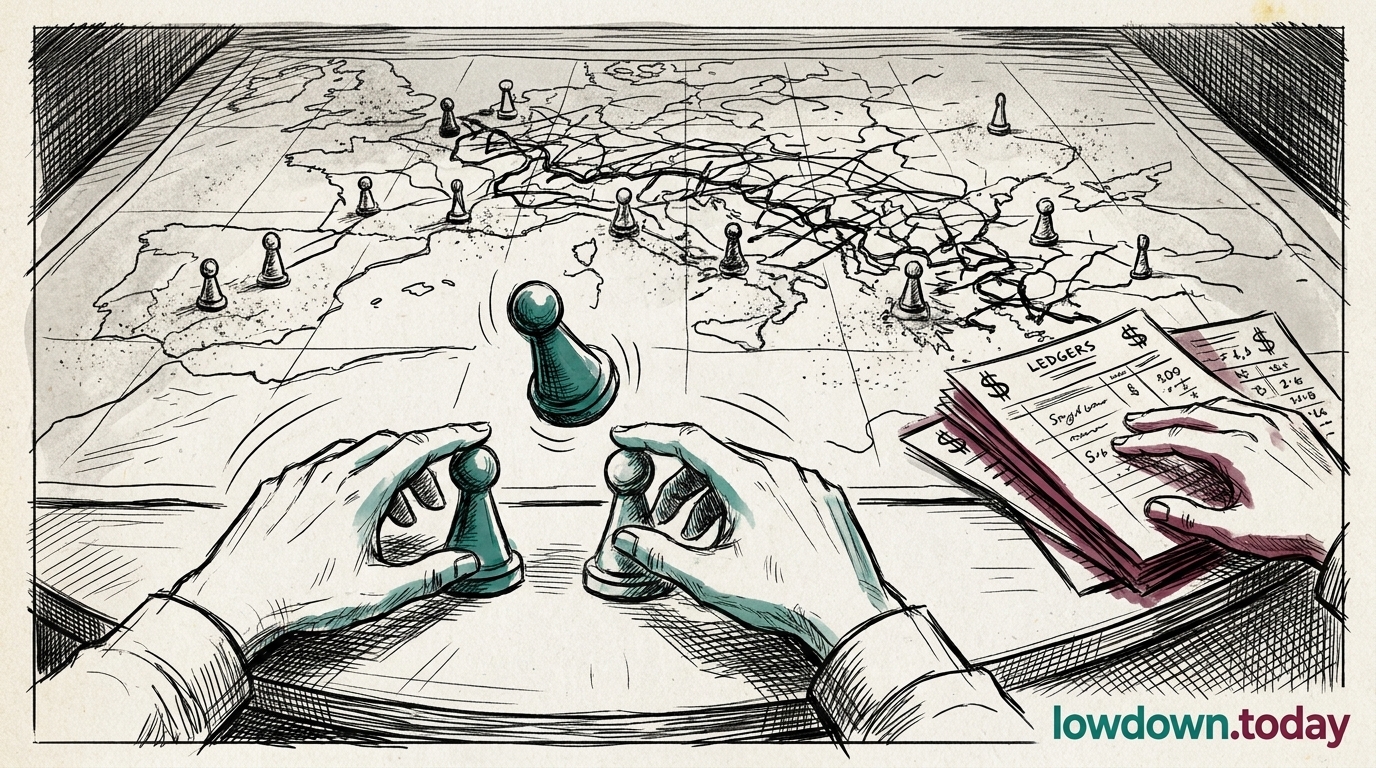
Every successful peace negotiation in post-Soviet conflicts ran in the opposite order: a meeting first, a framework agreed at the meeting, a text drafted afterward. Putin's formulation asks the negotiated outcome to exist before the negotiation begins. Ukraine cannot withdraw from four annexed regions without a negotiated instrument; the negotiated instrument cannot exist without a meeting; the meeting is conditional on the instrument. The structure ensures the status quo without requiring Russia to formally reject talks.

Putin had proposed the Victory Day ceasefire in a 29 April call to Trump . Zelenskyy had characterised the concept as theatrical on 30 April . The 9 May statement confirms that Zelenskyy's read was structurally correct: the verbal content of 'coming to an end' sits alongside unchanged territorial maximalism. Trump's 11-13 May statements that peace is 'getting very close' 3 adopt the framing of the 9 May statement without accounting for the pre-condition. The diplomatic week produces a consistent public narrative from Washington while Russia's operational and positional ledgers move in a different direction.

Deep Analysis

In plain English

On 9 May 2026, Putin said the war is almost over. But he also said he will only meet Zelenskyy after a full peace agreement has already been written and finalised. That is a contradiction. In normal diplomacy, leaders meet to reach an agreement, with their teams doing the groundwork. Putin has flipped that: he wants the agreement done first, then a meeting to sign it. But Russia's own conditions, such as requiring Ukraine to hand over four entire regions, make a 'done deal' almost impossible before talks even start. Putin made both statements on 9 May: 'the matter is coming to an end', and a summit requires a pre-finalised treaty. Moscow designed this combination so that the optimistic framing travels internationally while the impossible condition ensures no summit can occur.

Deep Analysis
Root Causes

Putin's summit pre-condition follows a structural logic driven by three factors. First, Russia's domestic political economy requires any peace to be framed as a Russian victory; a summit where Zelenskyy is a co-equal interlocutor contradicts that framing without prior concessions validating Russian territorial gains.

Second, Russia's military position in April 2026, with a net territorial loss and a 70% advance-rate deceleration, makes the current moment a poor time for Russia to freeze lines. Delaying any formal diplomatic process until the military position improves is therefore rational from Moscow's perspective.

Third, the pre-condition transfers the burden of movement entirely to Kyiv and Washington. Russia makes no concession by offering a summit subject to conditions Kyiv cannot meet.

What could happen next?
  • Consequence

    By placing the treaty-first pre-condition on the table publicly, Putin has raised the political cost for any future European leader who tries to broker a meeting without Russian terms being satisfied first.

  • Risk

    If Trump accepts the pre-condition framing and begins pressing Kyiv for concessions 'to get a summit', the US becomes the implementer of Russian sequencing rather than a neutral mediator.

First Reported In

Update #16 · 800 drones, three ceasefires, one cliff

AP· 13 May 2026
Read original
Different Perspectives
IAEA (Rafael Grossi)
IAEA inspectors logged Zaporizhzhia's 22nd loss of off-site power, ten of them in the last three months, after a thunderstorm knocked out the plant's sole surviving backup line. Grossi reads the accelerating frequency, not any single outage, as the safety signal now that the plant's redundancy is exhausted.
United States (Treasury/OFAC)
Washington has let general licence 134C, its Russian crude waiver, lapse for 36 days with no successor, the longest gap of the war. Treasury has not said whether the non-renewal reflects deliberate policy or administrative delay, leaving buyers to price in compliance risk rather than wait for clarity.
Slovakia
Slovakia
Slovakia dropped its hold-out on the EU's 21st sanctions package only after winning a 2028 guarantee phasing out Russian gas, the exact pipeline dependency, roughly 80% of its crude supply, that gave it leverage. Bratislava's climbdown clears the package but leaves the same single-veto mechanism intact for the next round.
Russia (Kremlin and general staff)
General staff chief Gerasimov claimed Donetsk captures on 18 July that ISW says it cannot corroborate, extending a pattern ISW clocked at a 5:1 exaggeration ratio earlier this year. Moscow is conditioning its public for a possible autumn mobilisation after September's Duma elections rather than acknowledging the front has stalled.
Ukraine (Zelenskyy government)
Zelenskyy dismissed his commander-in-chief, defence minister and chief of general staff within eight days, replacing Syrskyi with Drapatyi and Hnatov with Skybiuk as protesters demanded Syrskyi go and Fedorov return. Kyiv frames the sweep as a bet on manoeuvre capacity ahead of a feared Russian autumn surge, not the disarray critics read into three changes in a week.
The United Kingdom
The United Kingdom
Starmer pledged £300 million in Kyiv on 16 July toward Ukraine's Gripen E squadron, adding to the PURL expansion Trump and Rutte had announced two days earlier. London is paying into a scheme built around a shortfall NATO's own published $4bn-plus pledge does not close against Zelenskyy's roughly $15bn stated need.