Skip to content
You can now search across every topic, entity and event.What's new
Russia-Ukraine War 2026
23JUL

Lebanon outfires Iran against Israel

3 min read
20:33UTC

Ten days in, the war's heaviest daily fire on Israel comes not from Tehran but from across the Lebanese border — and Israeli leadership losses have not slowed it.

ConflictDeveloping
Key takeaway

Lebanon is now the primary military front; a Tehran ceasefire cannot end the war.

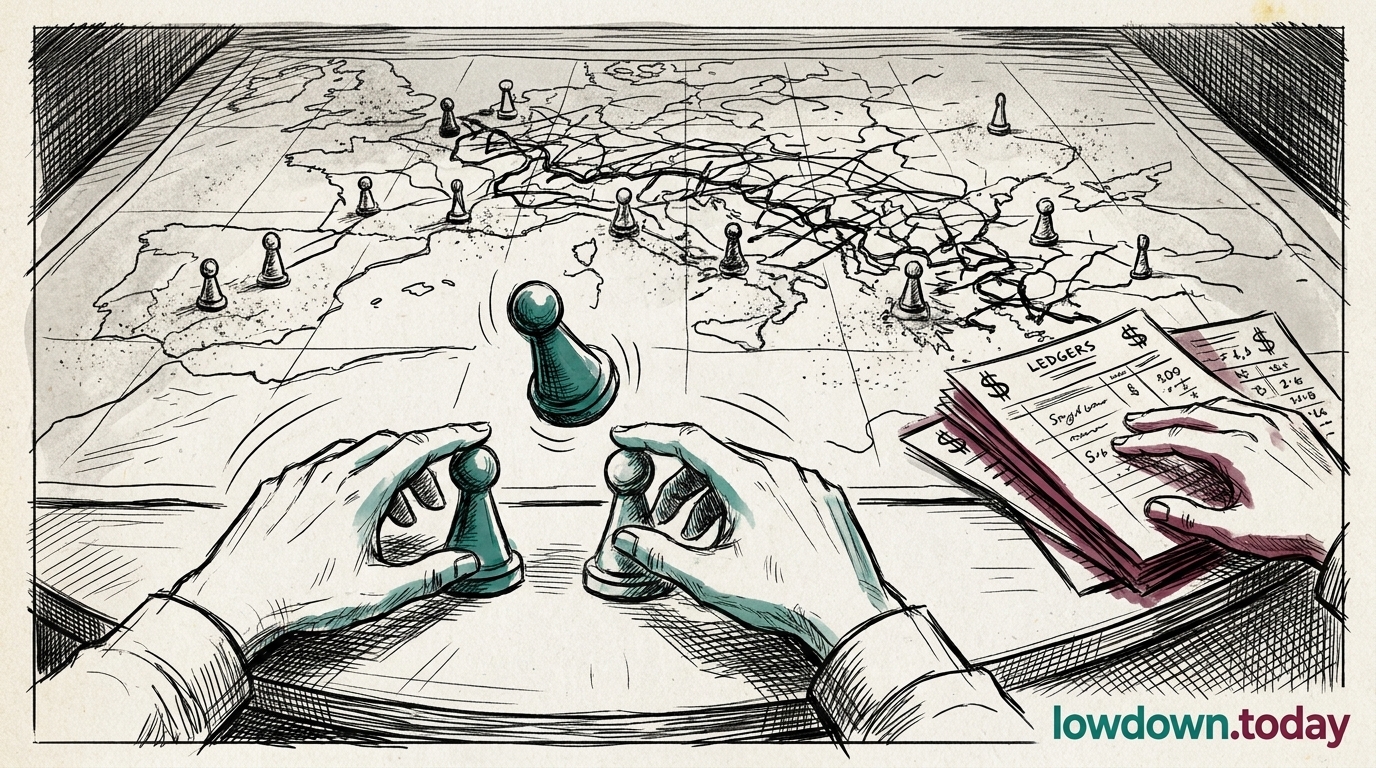
Israel stated on Monday that Lebanon now launches more daily attacks on Israel than Iran — a reversal from the war's opening days, when Tehran's missile and drone volleys defined the conflict. CENTCOM reported three days ago that Iranian Ballistic missile fire had dropped 90% from Day 1 . Tehran's response was doctrinal: a shift to one-tonne warheads, fewer in number but heavier in destructive yield. The arithmetic consequence is that Iran fires less often while Hezbollah fills the volume with continuous rocket and anti-tank fire from southern Lebanon.

The question is who directs Hezbollah's campaign at this tempo. Dozens of IRGC Quds Force officers fled Beirut in recent days fearing Israeli targeting , and five Quds Force commanders — including the Lebanon Corps intelligence chief and its senior financial officer — were killed in Sunday's Ramada Hotel strike in central Beirut . The IDF killed Hezbollah intelligence chief Hussain Makled earlier in the week . Yet Hezbollah's daily fire rate has increased after those losses. That pattern is consistent with the movement's behaviour during the 2006 war, when its field commanders prosecuted a 34-day campaign with minimal real-time Iranian direction. Hezbollah's command structure has always been designed to function without its patron in the room.

The dual front stretches Israel's defence architecture across two different problems. Arrow-3 and David's Sling engage Iran's long-range ballistic threats; Iron Dome and short-range systems handle Hezbollah's rockets from positions along the border. Israeli ground forces are deployed in five south Lebanese towns — Kfar Kila, Houla, Kfar Shouba, Yaroun, and Khiam — but their presence has not suppressed the fire. Lebanon is now both a secondary front and the primary daily threat, a combination that sits awkwardly against any framing of the war as winding down "very soon."


Deep Analysis

In plain English

In the first week of this war, Iran was firing most of the missiles and drones. Now Lebanon — specifically Hezbollah — launches more attacks on Israel every single day than Iran does. This matters because it fundamentally changes what ending the war means. Even if Iran agrees to stop fighting, the Lebanese front keeps going under its own momentum. It also means Israel's air defence networks — built primarily to handle long-range Iranian ballistic missiles — must simultaneously absorb high volumes of shorter-range rockets from the north, a completely different interception challenge.

Deep Analysis
Synthesis

The crossing of the Lebanon-exceeds-Iran threshold forces a fundamental reframing of the war's diplomatic centre of gravity. Western and US efforts concentrated on a bilateral Iran deal cannot resolve the Lebanese front. Lebanon requires a separate diplomatic track — but President Aoun cannot deliver Hezbollah, and Hezbollah has no internationally recognised interlocutor willing to engage it directly. The front that is now primary is also the front with no accessible diplomatic off-ramp.

Root Causes

Hezbollah rebuilt its arsenal to 130,000–150,000 projectiles after 2006 specifically to sustain saturation fire beyond Israeli interceptor capacity for months, not days. This decade-long post-2006 investment was the explicit strategic response to the 2006 war's lesson: volume overwhelms even layered defences. The current volume is not improvised — it is the pre-planned operational posture Hezbollah has prepared since 2007.

Escalation

The reversal from Iran as primary source to Lebanon as primary source represents a qualitative shift in the war's character, not merely a quantitative one. High-volume rocket fire against northern Israeli population centres is less individually interceptable than Iranian ballistic missiles — which are fewer, slower to prepare, and tracked from launch. Aggregate civilian exposure in northern Israel is likely rising even as headline Iranian missile numbers fall. Escalation direction on the Lebanese front is independently upward.

What could happen next?
  • Consequence

    Israel must allocate air defence assets and ground force readiness simultaneously across two primary fronts, constraining offensive operational tempo against Iran's remaining infrastructure.

    Immediate · Assessed
  • Meaning

    Any ceasefire limited to the Iran-US bilateral track leaves the most active military front unaddressed, rendering any 'end of war' announcement operationally hollow.

    Short term · Assessed
  • Risk

    High-volume rocket fire against northern Israeli population centres carries higher aggregate civilian casualty potential than Iranian ballistic missiles, which are fewer and more interceptable individually.

    Short term · Assessed
  • Precedent

    If the war ends with Hezbollah's arsenal largely intact and the Lebanese state further weakened, post-war Lebanon becomes even less capable of constraining Hezbollah's future military capacity.

    Long term · Suggested
First Reported In

Update #31 · Iran moves to heavy warheads; China deploys

CNN· 10 Mar 2026
Read original
Causes and effects
This Event
Lebanon outfires Iran against Israel
Lebanon replacing Iran as the primary source of daily attacks shifts the war's operational geography and forces Israel's layered air defences to engage two simultaneous, fundamentally different threat profiles: long-range ballistic warheads from Iran and short-range rockets from Hezbollah positions as close as ten kilometres from the border.
Different Perspectives
IAEA (Rafael Grossi)
IAEA inspectors logged Zaporizhzhia's 22nd loss of off-site power, ten of them in the last three months, after a thunderstorm knocked out the plant's sole surviving backup line. Grossi reads the accelerating frequency, not any single outage, as the safety signal now that the plant's redundancy is exhausted.
United States (Treasury/OFAC)
Washington has let general licence 134C, its Russian crude waiver, lapse for 36 days with no successor, the longest gap of the war. Treasury has not said whether the non-renewal reflects deliberate policy or administrative delay, leaving buyers to price in compliance risk rather than wait for clarity.
Slovakia
Slovakia
Slovakia dropped its hold-out on the EU's 21st sanctions package only after winning a 2028 guarantee phasing out Russian gas, the exact pipeline dependency, roughly 80% of its crude supply, that gave it leverage. Bratislava's climbdown clears the package but leaves the same single-veto mechanism intact for the next round.
Russia (Kremlin and general staff)
General staff chief Gerasimov claimed Donetsk captures on 18 July that ISW says it cannot corroborate, extending a pattern ISW clocked at a 5:1 exaggeration ratio earlier this year. Moscow is conditioning its public for a possible autumn mobilisation after September's Duma elections rather than acknowledging the front has stalled.
Ukraine (Zelenskyy government)
Zelenskyy dismissed his commander-in-chief, defence minister and chief of general staff within eight days, replacing Syrskyi with Drapatyi and Hnatov with Skybiuk as protesters demanded Syrskyi go and Fedorov return. Kyiv frames the sweep as a bet on manoeuvre capacity ahead of a feared Russian autumn surge, not the disarray critics read into three changes in a week.
The United Kingdom
The United Kingdom
Starmer pledged £300 million in Kyiv on 16 July toward Ukraine's Gripen E squadron, adding to the PURL expansion Trump and Rutte had announced two days earlier. London is paying into a scheme built around a shortfall NATO's own published $4bn-plus pledge does not close against Zelenskyy's roughly $15bn stated need.



