Skip to content
You can now search across every topic, entity and event.What's new
Russia-Ukraine War 2026
13JUL

3.2m Iranians displaced in a fortnight

3 min read
10:28UTC

UNHCR reports up to 3.2 million Iranians have been forced from their homes since 28 February — 3.6% of the country — in what the agency calls the fastest mass displacement the region has seen in decades.

ConflictDeveloping
Key takeaway

Iran has displaced 3.6% of its population in two weeks — faster than any comparable regional precedent.

UNHCR reported Thursday that between 600,000 and one million Iranian households — up to 3.2 million people — have been internally displaced since the war began on 28 February. The agency called it the fastest and largest wave of internal displacement in the region in decades.

Iran's total population is 88 million. If the upper estimate is correct, 3.6% of the country has been forced from home in a fortnight. When UN Secretary-General Guterres issued the conflict's first consolidated displacement figure on 7 March, the total across Iran, Lebanon, Bahrain, and the wider Gulf stood at 330,000 . Iran's figure alone is now roughly ten times that. For scale: Syria's internal displacement took over a year of civil war to reach comparable numbers. This conflict compressed a similar volume into fourteen days.

The displacement has multiple drivers operating simultaneously. Israeli strikes on 30 fuel depots across Tehran and Alborz provinces generated thick toxic smoke that blotted out the sun over the capital and produced the acidic black rain Iranian Red Crescent warned carried sulphur, nitrogen oxides, and hydrocarbon compounds . Tehran Province holds approximately 14 million people. Residents are fleeing both the strikes and their atmospheric aftermath — a displacement pattern that more closely resembles an industrial catastrophe than conventional war. The WHO has warned of ongoing health risks across parts of the capital, but the population is moving faster than any public health response can follow.

Combined with Lebanon's 800,000 displaced , the war has now uprooted more than four million people across the region in two weeks. Iran's humanitarian infrastructure was built over decades to host Afghan and Iraqi refugees flowing into the country — one of the world's largest refugee-hosting populations. It was not designed for millions of its own citizens moving in the opposite direction, internally, under bombardment, with no neighbouring country offering intake.


Deep Analysis

In plain English

Imagine 3.2 million people — roughly the population of Chicago — forced from their homes in under a fortnight. Iran's government was already weakened by years of economic sanctions before this war began. It has experience hosting Afghan refugees, but managing millions of its own displaced citizens is a fundamentally different challenge: it requires food distribution, emergency shelter, medical care, and state coordination at scale. The combination of massive sudden need, a weakened state, and an active war that prevents international aid access is what makes this figure alarming beyond the headline number.

Deep Analysis
Synthesis

The compound nature of Iran's emergency — displacement plus environmental contamination from toxic rain — means its full medical and social costs will be unquantifiable during active conflict and will persist long after any ceasefire. Unlike displacement alone, toxic environmental exposure cannot be remedied by people returning home. The humanitarian bill will outlast the war.

Root Causes

Iran has one of the highest urbanisation rates in the Middle East, approximately 75–76%. Urban concentration means strikes near population centres produce proportionally larger displacement than equivalent operations in more rural conflict zones.

Decades of sanctions prevented investment in dispersal infrastructure, hardened civilian shelters, and emergency housing reserves — the civil defence investment Western states and Israel made during the Cold War era. This structural deficit predates the current conflict by thirty years.

Escalation

Mass displacement concentrates grievance among populations with diminishing stake in the war's continuation on current terms. In Iran's constitutional structure, this pressure flows upward to Pezeshkian, not to the IRGC, which operates outside electoral accountability.

Displacement could paradoxically strengthen Pezeshkian's ceasefire argument within Iranian elite circles — or it could provide IRGC provincial commanders a destabilised civilian population easier to mobilise for militia recruitment.

What could happen next?
  • Consequence

    Secondary refugee flows into Turkey, Iraq, and Pakistan will strain bilateral relations and regional stability within weeks.

    Short term · Assessed
  • Risk

    Agricultural worker displacement from Khuzestan and Fars, if persistent past planting season, threatens Iran's domestic food production for 2026.

    Medium term · Assessed
  • Risk

    Environmental contamination from toxic rain creates a public health legacy that will persist years beyond any ceasefire, regardless of displacement resolution.

    Long term · Assessed
  • Meaning

    Displacing 3.6% of a population in two weeks generates a rate of social disruption that governments rarely survive politically, even after wars conclude.

    Medium term · Suggested
First Reported In

Update #33 · Oil breaks $100; war reaches Iraqi waters

UNHCR· 13 Mar 2026
Read original
Causes and effects
This Event
3.2m Iranians displaced in a fortnight
First consolidated UN displacement figure for Iran shows internal displacement has reached 3.2 million in two weeks — an order of magnitude above the 330,000 regional total the UN reported just days earlier. The speed reflects both direct military strikes and secondary atmospheric contamination from energy infrastructure destruction across Tehran province.
Different Perspectives
Turkey
Turkey
Turkey, a major buyer of Russian diesel cargoes, loses that access under Moscow's first producer-binding export ban, in force from 8 July to 31 July. Ankara hosted the same week's NATO summit pledging EUR 70bn to Ukraine, sitting on both sides of the fuel-and-alliance ledger.
NATO
NATO
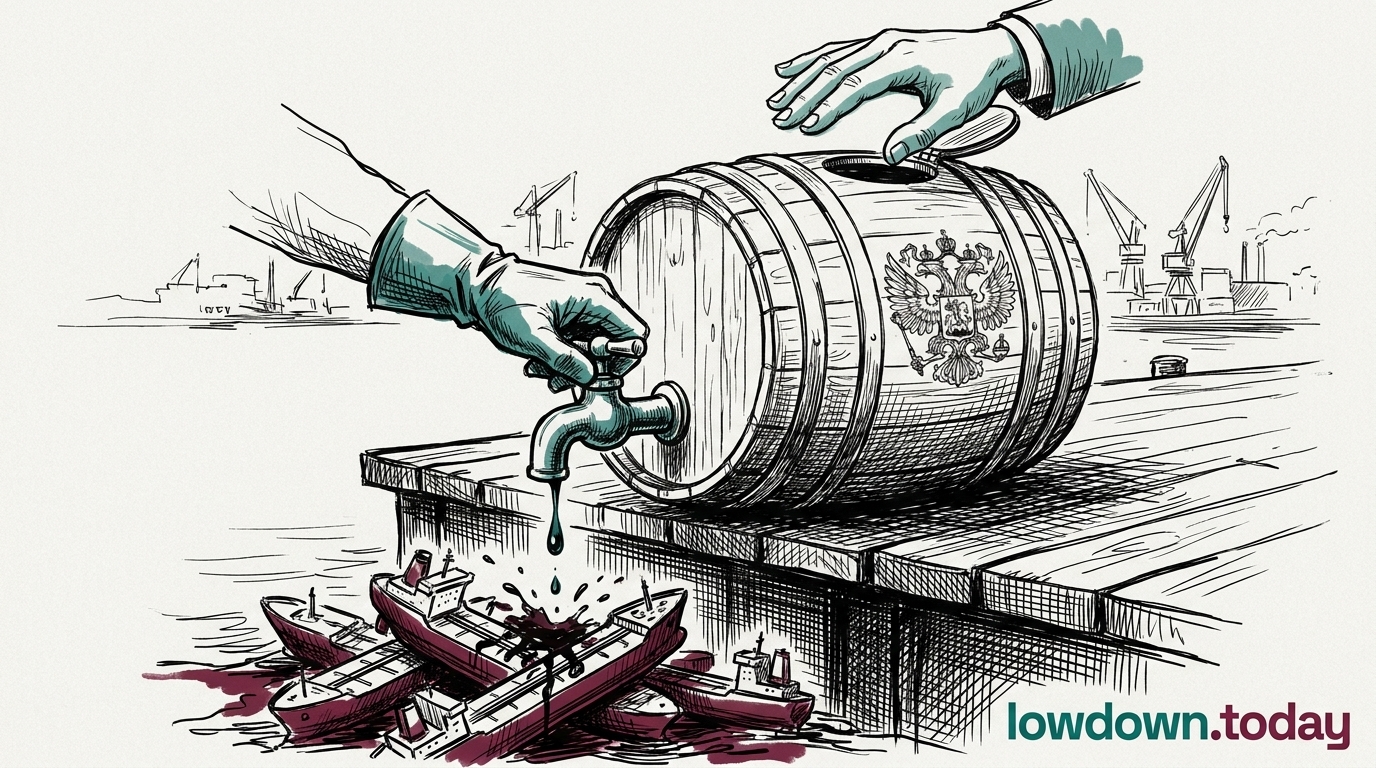
NATO leaders meeting in Ankara on 7 and 8 July pledged EUR 70bn in equipment, assistance and training for Ukraine across 2026, with a 2027 sustainment commitment and a $40bn Drone Edge counter-drone initiative. European allies now fund the vast majority of that package, filling the gap left by Washington's idled crude waiver.
India
India
India's state refiners continued buying discounted Urals crude as June's price fell to $63.18 a barrel, insulating New Delhi from the OFAC waiver gap still constraining Western buyers. Indian refiners could pick up diesel-export share as Russia's producer-binding ban shuts out its former customers.
China
China
China's independent refiners kept importing discounted Urals crude through June as the price fell to $63.18 a barrel, down 26% month-on-month per CREA. Beijing has said nothing on Moscow's new diesel ban, leaving Chinese refiners a likely beneficiary if Turkish and Brazilian buyers seek replacement cargoes.
United States
United States
No successor licence has been issued since General License 134C lapsed on 17 June, leaving a 26-day gap, the longest of the war, in the Russian crude waiver. Washington's silence is tightening the channel without any stated decision, as Treasury weighs whether to let it die.
Ukraine
Ukraine
Ukraine's long-range strike campaign shifted from refineries to seaborne fuel tankers crossing the Sea of Azov, cutting tracked vessel traffic 55% between 30 June and 11 July, per Starboard Maritime Intelligence. The shift targets Russia's export revenue directly rather than just domestic supply, adding pressure alongside the collapsing Urals price.



