Skip to content
You can now search across every topic, entity and event.What's new
Russia-Ukraine War 2026
16JUN

Russia torches the Lavra in night barrage

2 min read
10:25UTC

Russia fired 611 drones and 70 missiles at Ukraine overnight on 14-15 June, killing 11 people and setting the Dormition Cathedral inside Kyiv's holiest monastery ablaze two days before the G7.

ConflictDeveloping
Key takeaway

Russia's heaviest June strike burned a 1,000-year-old cathedral two nights before the G7 opened.

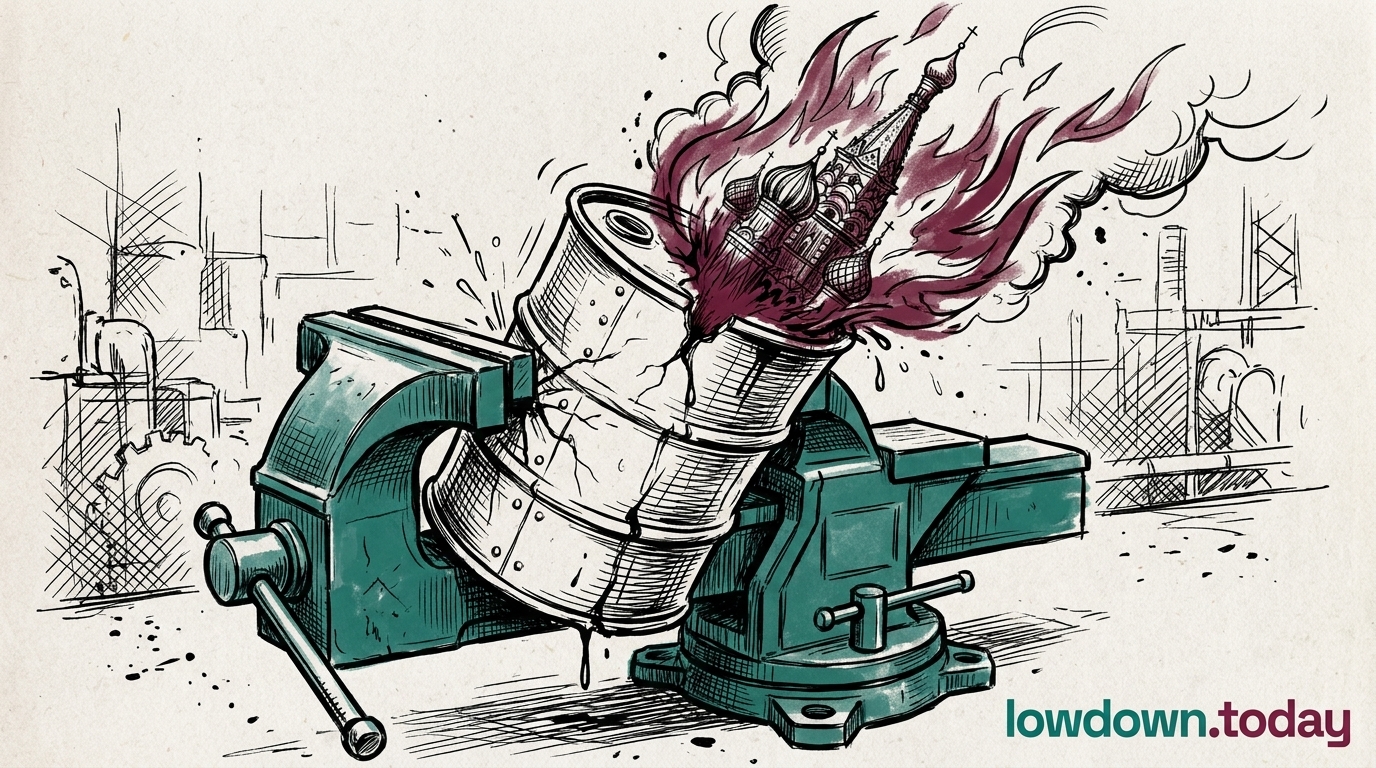
Russia fired 611 drones and 70 missiles at Ukraine overnight on 14-15 June, killing 11 people and setting fire to the Dormition Cathedral inside the Kyiv-Pechersk Lavra 1. The Lavra is an Orthodox monastery complex founded in 1051, inscribed on the United Nations Educational, Scientific and Cultural Organization (UNESCO) World Heritage list, and treated as the spiritual centre of Ukrainian Orthodoxy. Emergency crews extinguished the blaze. Five of the dead were in Kharkiv, among them rescue workers hit by a follow-up strike.

The same night gutted the Oleksandr Dovzhenko Film Studios, destroying a costume archive of roughly 100,000 garments, and cut power to 140,000 households. Ukraine's air defence stopped 582 of the drones and 50 of the missiles, a high absolute intercept count that still left dozens of weapons through. Metropolitan Epiphanius, head of the Orthodox Church of Ukraine, called the strike an attack "against history, against Christianity".

The scale exceeded the 656-drone barrage that collapsed a residential block in Dnipro on 2 June , and it landed two nights before the Group of Seven (G7) summit opened in France. Russia has timed heavy strikes to diplomatic events before; the symbolic target this time was a thousand-year-old cathedral rather than a power grid. Moscow denied hitting the Lavra and blamed a malfunctioning US-supplied Patriot, a claim aimed at the air-defence argument Kyiv was about to put to Western leaders.


Deep Analysis

In plain English

Russia launched its biggest combined drone-and-missile attack in weeks overnight on 14-15 June, targeting cities across Ukraine. One strike set fire to a famous monastery in Kyiv called the Kyiv-Pechersk Lavra, which is over 900 years old and protected under international heritage law. The fire was put out, but the attack killed 11 people and knocked out power to 140,000 homes. Russia denies it meant to hit the monastery and blames a faulty Western missile interceptor. Ukrainian open-source analysts point to Iskander-M crater and debris patterns at the site. The attack happened two days before a major meeting of Western leaders in France, and the monastery's fame made it a powerful symbol in the global media coverage of the summit.

Deep Analysis
Root Causes

Russia's escalating drone and ballistic volumes across the spring of 2026 (656 drones on 2 June, then 611 on 14-15 June) reflect a structural production reality: Shahed-type loitering munitions, assembled in Alabuga at scale, are cheaper per unit than PAC-3 interceptors by a factor estimated at roughly 40:1. Moscow exploits this cost asymmetry by saturating Ukrainian air-defence stocks faster than Western resupply can replenish them.

The choice of civilian-adjacent targets follows from battlefield stagnation. With ISW recording a net Russian territorial loss across the four weeks to 9 June, the air campaign serves both military and symbolic functions: disrupting Ukrainian energy and production infrastructure while generating diplomatic pressure through the spectacle of attacked heritage sites at summit moments.

Escalation

Upward on the symbolic register: the Lavra strike represents Russia's largest combined barrage in the current window and was timed two days before the G7 summit, suggesting deliberate use of spectacular civilian-adjacent attacks as diplomatic pressure at Western leadership events.

What could happen next?
  • Consequence

    UNESCO's World Heritage Committee faces pressure to condemn the strike formally, which would strengthen Ukraine's case before the International Criminal Court for cultural-property war crimes.

    Short term · Reported
  • Risk

    Russia's success in degrading symbolic infrastructure near the Lavra complex demonstrates that ballistic salvos can reach protected sites even when air-defence resources are nominally present, creating a template for further cultural targeting.

    Medium term · Assessed
  • Precedent

    The attack establishes a pattern of timing mass strikes to coincide with Western diplomatic summits, suggesting future barrages will cluster around NATO Ankara in July or other high-profile allied events.

    Medium term · Reported
First Reported In

Update #20 · Oil vise shuts as Russia torches the Lavra

PBS News / AP· 16 Jun 2026
Read original
Different Perspectives
Turkey
Turkey
Ankara hosts the NATO summit on 7-8 July, the next Western diplomatic convergence that Russia may target with a mass barrage based on the documented pattern of timing strikes to allied events; Turkey's role as the indispensable logistical intermediary between Kyiv and Moscow gives it standing to broker any ceasefire repair at Zaporizhzhia.
IAEA
IAEA
The IAEA's sixth brokered repair ceasefire at ZNPP collapsed within days of enabling initial work on the 750 kV Dniprovska line, leaving Europe's largest nuclear plant on a single 330 kV backup with 19 total blackouts recorded since the Russian occupation began.
European Union
European Union
The EU delayed the €9.1bn first tranche of its €90bn Ukraine loan on unmet technical conditions, while disbursing a separate €2.8bn Facility payment on 8 June; the G7 sanctions-to-talks linkage now runs parallel to EU enforcement.
United Kingdom
United Kingdom
Britain conducted its first maritime interdiction of the Russian shadow fleet, with Royal Marines seizing the Smyrtos in the English Channel on 14 June, and simultaneously announced a £210m Urenco uranium deal to break Ukraine's dependence on Russian nuclear fuel.
United States
United States
Trump called both Putin and Zelenskyy separately on 14 June, pledged to re-engage on Ukraine now the Iran deal is done, and the G7 tied future Russia sanctions to peace-talk progress, giving Washington leverage over both parties' negotiating posture.
Ukraine
Ukraine
Zelenskyy attended the G7 at Evian and proposed a direct Putin summit while 140,000 households in Kyiv lost power and the Lavra's Dormition Cathedral burned; Metropolitan Epiphanius called it an attack "against history, against Christianity." Kyiv's immediate priority is closing the PAC-3 export gap that left 19 of 34 Iskander-M ballistic missiles unintercepted.


