Skip to content
You can now search across every topic, entity and event.What's new
Russia-Ukraine War 2026
16JUN

ISW Logs Third Straight Net-Loss Week for Russia

3 min read
10:25UTC

ISW assessed Russia net-lost 12 sq mi between 5 and 12 May and a further 29 sq mi between 12 and 19 May, extending the April territorial-loss pattern as Moscow extended its gasoline export ban through 31 July.

ConflictAssessed
Key takeaway

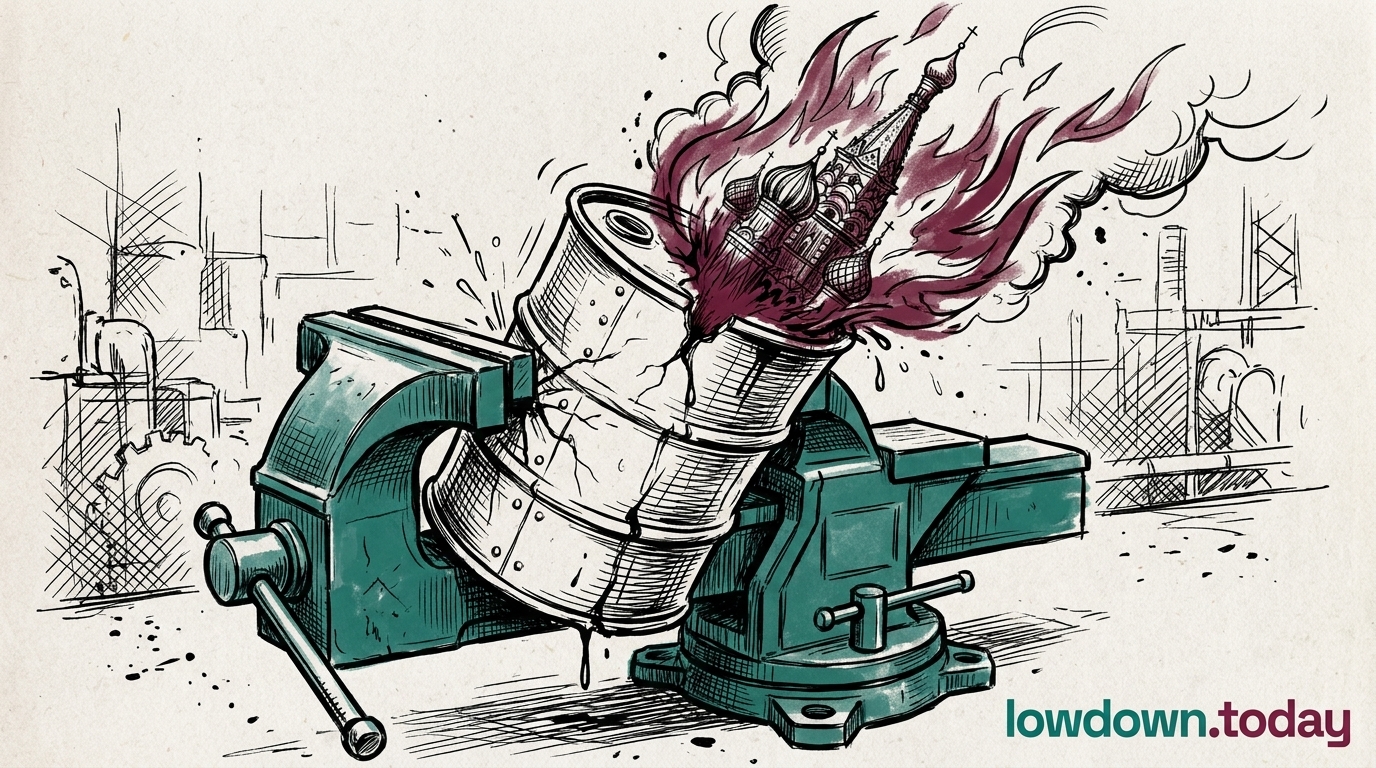
Three straight net-loss weeks and a fuel-export ban extension are pulling on the same constrained refining base.

The Institute for the Study of War (ISW, a Washington think-tank publishing daily battlefield assessments) assessed Russia net-lost 12 sq mi of territory between 5 and 12 May 2026, then a further 29 sq mi between 12 and 19 May 1. Those are the second and third consecutive net-loss weeks since the pattern first appeared in April , and the 12-19 May figure is the largest single-week net loss recorded since the spring offensive began.

Russia imposed a gasoline export ban through 31 July 2026 in response to refinery damage, extending the April measure first taken when the Kirishi refinery ceased operations . Moscow is now defending a home fuel market and a slipping front at the same time, with the same set of constrained refining outputs feeding both. The extension to the end of July signals the Ministry of Energy does not expect the central-Russia refinery picture to clear inside ten weeks.

Net-loss numbers at this scale do not by themselves indicate Russian collapse. Twelve and 29 square miles in a week are small absolute movements on a thousand-kilometre front; the war has run for years at slower rates. Three consecutive net-loss weeks indicate something narrower: the direction of the trade has flipped. After more than a year of incremental Russian gains in the Donetsk axis, the ledger has gone the other way, briefly.

The pairing with the export ban tightens that signal. Forces that cannot generate sortie volume because their fuel chain is constrained also cannot generate the close-air-support tempo Russian formations have relied on to convert assault losses into ground. The refinery campaign and the front-line ledger are converging on the same week in May.


Deep Analysis

In plain English

Researchers at the Institute for the Study of War have been tracking which side is gaining more ground each week. For three weeks in a row from late April to mid-May 2026, Russia lost more ground than it gained. That had not happened since Ukraine's Kursk incursion in August 2024. The numbers are not huge: Russia lost the equivalent of a couple of square miles per week. But the direction matters. Russia had been slowly gaining ground for over a year. The reversal is happening at the same time Ukraine is destroying fuel refineries, which limits how many aircraft sorties Russia can fly and how much fuel reaches frontline vehicles. Russia has also banned petrol exports until the end of July, which is a sign the fuel shortage is serious enough to require emergency domestic rationing.

What could happen next?
  • Consequence

    If net-loss weeks continue through June, Russian operational commanders face pressure to redeploy units from the Zaporizhzhia-Kherson axes to shore up the Donetsk front, thinning defensive depth in the south.

  • Risk

    Moscow's fuel export ban reduces hard-currency revenue in Q2 at the same moment the Q1 deficit overshoot requires emergency financing, compressing the fiscal runway Bruegel estimates at four to six months.

First Reported In

Update #17 · Istanbul talks, refineries dark, deficit overruns

Eastern Herald· 22 May 2026
Read original
Causes and effects
This Event
ISW Logs Third Straight Net-Loss Week for Russia
Two more weeks of net-negative Russian advance, paired with a fuel-export ban extension, suggest the front line and the home fuel market are tightening on the same timeline.
Different Perspectives
Turkey
Turkey
Ankara hosts the NATO summit on 7-8 July, the next Western diplomatic convergence that Russia may target with a mass barrage based on the documented pattern of timing strikes to allied events; Turkey's role as the indispensable logistical intermediary between Kyiv and Moscow gives it standing to broker any ceasefire repair at Zaporizhzhia.
IAEA
IAEA
The IAEA's sixth brokered repair ceasefire at ZNPP collapsed within days of enabling initial work on the 750 kV Dniprovska line, leaving Europe's largest nuclear plant on a single 330 kV backup with 19 total blackouts recorded since the Russian occupation began.
European Union
European Union
The EU delayed the €9.1bn first tranche of its €90bn Ukraine loan on unmet technical conditions, while disbursing a separate €2.8bn Facility payment on 8 June; the G7 sanctions-to-talks linkage now runs parallel to EU enforcement.
United Kingdom
United Kingdom
Britain conducted its first maritime interdiction of the Russian shadow fleet, with Royal Marines seizing the Smyrtos in the English Channel on 14 June, and simultaneously announced a £210m Urenco uranium deal to break Ukraine's dependence on Russian nuclear fuel.
United States
United States
Trump called both Putin and Zelenskyy separately on 14 June, pledged to re-engage on Ukraine now the Iran deal is done, and the G7 tied future Russia sanctions to peace-talk progress, giving Washington leverage over both parties' negotiating posture.
Ukraine
Ukraine
Zelenskyy attended the G7 at Evian and proposed a direct Putin summit while 140,000 households in Kyiv lost power and the Lavra's Dormition Cathedral burned; Metropolitan Epiphanius called it an attack "against history, against Christianity." Kyiv's immediate priority is closing the PAC-3 export gap that left 19 of 34 Iskander-M ballistic missiles unintercepted.


