Skip to content
You can now search across every topic, entity and event.What's new
Russia-Ukraine War 2026
16JUN

EU 20th package hits crypto and Kyrgyzstan

4 min read
10:25UTC

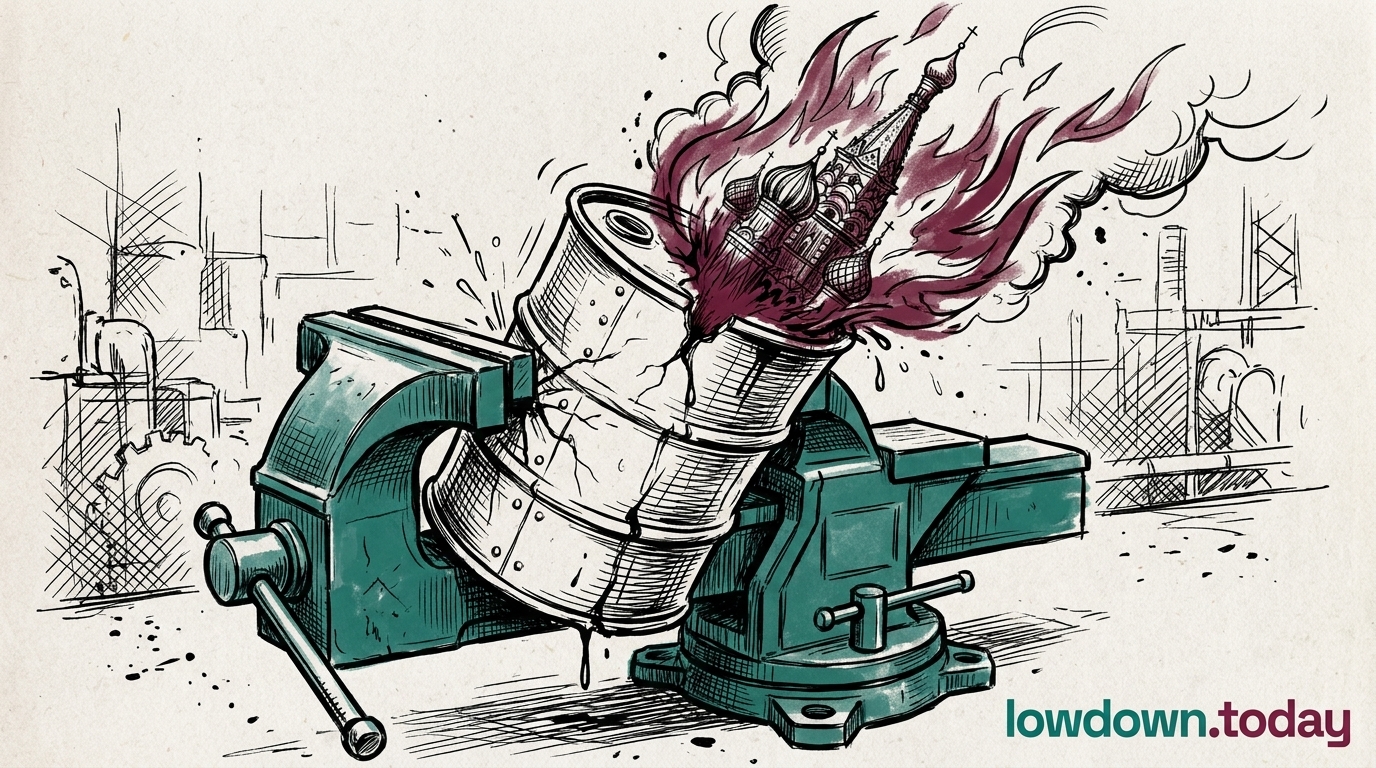
The European Council adopted its 20th sanctions package on 23 April, naming 120 individuals and entities, seven Russian refineries and 46 shadow-fleet vessels, and triggering the anti-circumvention tool against Kyrgyzstan for the first time.

ConflictAssessed
Key takeaway

Brussels activated the anti-circumvention tool for the first time and added 46 shadow-fleet tankers.

The European Council adopted its 20th sanctions package on Thursday 23 April, designating 120 new individuals and entities, seven Russian refineries, 46 additional shadow-fleet vessels bringing the sanctioned fleet total to 632, a blanket ban on transactions with Russian and Belarusian crypto-asset providers, and the first-ever activation of the anti-circumvention tool against Kyrgyzstan 1. The seven refineries named are Tuapse, Komsomolsk, Angarsk, Achinsk, Ryazan, Afipsky and Lukoil's Usinsk plant. Two producers, Bashneft and Slavneft, sit alongside them. Transaction bans extend to twenty Russian banks.

The novel parts sit further out from the energy core. The crypto ban covers the RUBx rouble-pegged stablecoin and the digital rouble, closing a channel Russian counterparties had used to settle sanctioned transactions off the SWIFT rails. Sixteen entities in China, the UAE, Uzbekistan, Kazakhstan and Belarus are listed for shipping dual-use components into Russia's military-industrial base. The Kyrgyzstan activation targets the systematic transhipment of EU machine tools and telecoms gear into Russian drone and missile production lines, a route documented across successive packages but never before sanctioned with the anti-circumvention instrument the EU added for this purpose.

The package builds directly on Treasury's 16 April SDN redesignation of Rosneft and Lukoil , which had already closed the dollar-clearing channel for Russia's two largest oil producers. Brussels is layering European sanctions on top of an American cliff that now runs to 29 October for Lukoil's non-Russian retail network. What the 20th package adds is enforcement at the periphery: shadow-fleet insurers, third-country transhippers, crypto providers. The commercial enforcement architecture Kyiv reinforced this week with the Druzhba move now runs through two jurisdictions at once.


Deep Analysis

In plain English

Every few months, the European Union adds more names and companies to its Russia sanctions list: a list of people and organisations that EU firms are banned from doing business with. The 20th such update, adopted on 23 April, was one of the biggest: 120 new entries including seven Russian oil refineries and 46 more ships that have been secretly carrying Russian oil to avoid earlier bans. It also banned all dealings with Russian crypto firms and, for the first time, used a special tool to punish Kyrgyzstan, a Central Asian country that had been quietly shipping European-made machine parts to Russia to build drones.

Deep Analysis
Root Causes

Three structural conditions drive the escalating sanctions architecture. First, the EU has sanctioned 632 shadow fleet vessels but Lloyd's intelligence estimates Russia's full shadow fleet at 700 to 800 vessels, with new vessels entering service faster than existing ones are designated, outpacing the designation rate by an estimated 50-100 ships per year.

Second, dual-use component flows through Kyrgyzstan reflect a specific manufacturing geography: CNC machine tools and telecommunications equipment transiting through Bishkek into Russia's Alabuga special economic zone, which produces Geran-2 drones. Sanctioning Kyrgyzstan for machine-tool transhipment targets the Geran-2 supply chain more directly than sanctioning Geran-2 producers, who simply move to different subcontractors.

Third, the crypto ban addresses Russian state financing at a higher level than individual transaction evasion: RUBx was designed as a state-to-state settlement mechanism for commodity trades that sidestep SWIFT, not a retail product. Its designation closes a wholesale channel.

First Reported In

Update #14 · Kyiv's Druzhba gambit unlocks €90bn loan

EU Council· 24 Apr 2026
Read original
Causes and effects
Different Perspectives
Turkey
Turkey
Ankara hosts the NATO summit on 7-8 July, the next Western diplomatic convergence that Russia may target with a mass barrage based on the documented pattern of timing strikes to allied events; Turkey's role as the indispensable logistical intermediary between Kyiv and Moscow gives it standing to broker any ceasefire repair at Zaporizhzhia.
IAEA
IAEA
The IAEA's sixth brokered repair ceasefire at ZNPP collapsed within days of enabling initial work on the 750 kV Dniprovska line, leaving Europe's largest nuclear plant on a single 330 kV backup with 19 total blackouts recorded since the Russian occupation began.
European Union
European Union
The EU delayed the €9.1bn first tranche of its €90bn Ukraine loan on unmet technical conditions, while disbursing a separate €2.8bn Facility payment on 8 June; the G7 sanctions-to-talks linkage now runs parallel to EU enforcement.
United Kingdom
United Kingdom
Britain conducted its first maritime interdiction of the Russian shadow fleet, with Royal Marines seizing the Smyrtos in the English Channel on 14 June, and simultaneously announced a £210m Urenco uranium deal to break Ukraine's dependence on Russian nuclear fuel.
United States
United States
Trump called both Putin and Zelenskyy separately on 14 June, pledged to re-engage on Ukraine now the Iran deal is done, and the G7 tied future Russia sanctions to peace-talk progress, giving Washington leverage over both parties' negotiating posture.
Ukraine
Ukraine
Zelenskyy attended the G7 at Evian and proposed a direct Putin summit while 140,000 households in Kyiv lost power and the Lavra's Dormition Cathedral burned; Metropolitan Epiphanius called it an attack "against history, against Christianity." Kyiv's immediate priority is closing the PAC-3 export gap that left 19 of 34 Iskander-M ballistic missiles unintercepted.


