Skip to content
Briefings are running a touch slower this week while we rebuild the foundations.See roadmap
Russia-Ukraine War 2026
5MAR

Britain will not join offensive on Iran

2 min read
04:57UTC

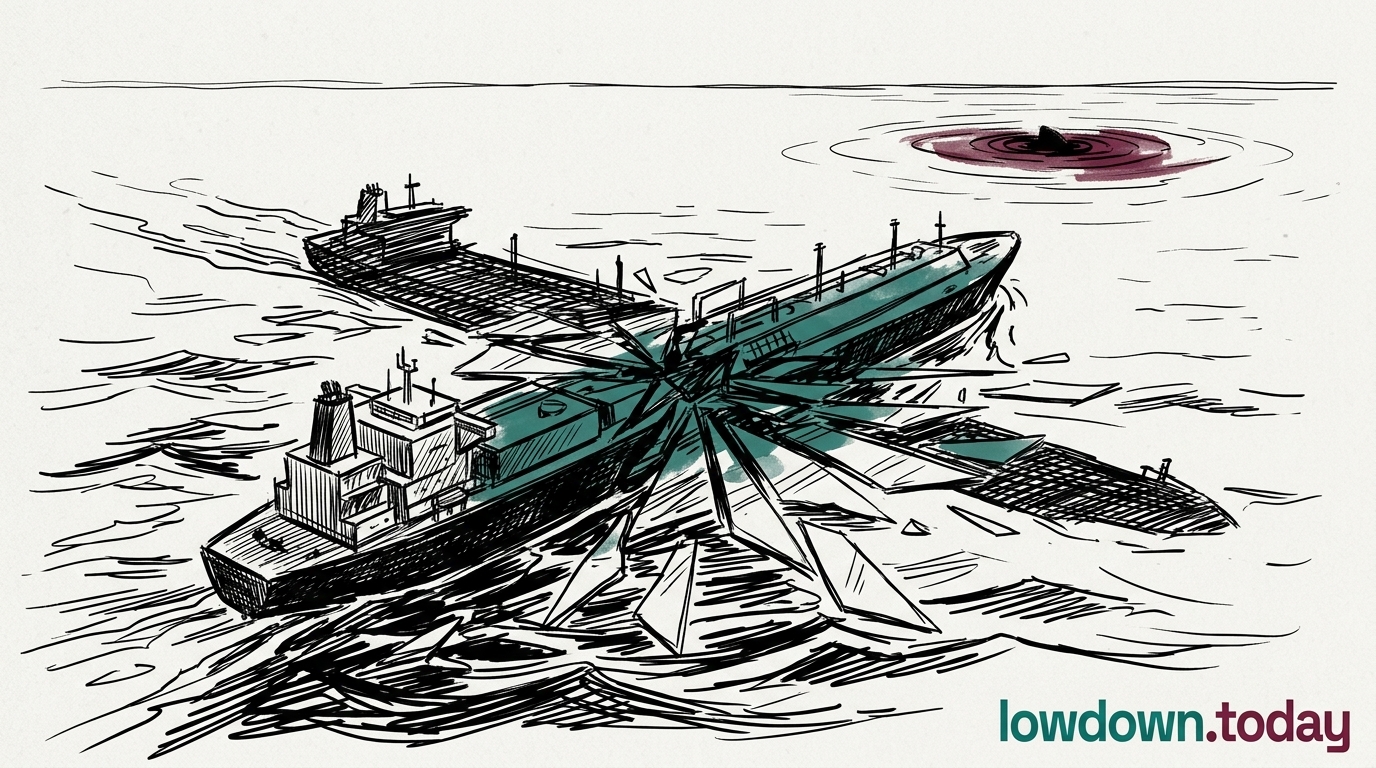
Starmer told Parliament that Britain will not fight, invoking Iraq — capping a 72-hour arc from authorising base access to absorbing a drone strike on sovereign territory to public refusal.

ConflictDeveloping
Key takeaway

Starmer's refusal is as much a product of domestic constitutional convention and Labour's electoral coalition as it is a principled transatlantic break.

Keir Starmer told Parliament that Britain "will not join offensive action" against Iran, invoking the Iraq war directly: "We all remember the mistakes of Iraq, and we have learned those lessons." The statement is the sharpest public break between London and Washington on military action since 18 March 2003, when 139 Labour MPs voted against Tony Blair's motion to authorise the invasion of Iraq.

The refusal arrived after a 72-hour sequence that compressed years of alliance management into three days. On 1 March, Starmer authorised US use of Diego Garcia and RAF Fairford for strikes on Iranian missiles and launch sites , which Downing Street described as defensive. Within an hour, a drone struck RAF Akrotiri in Cyprus — a direct hit on British sovereign territory. By Sunday, the prime minister had moved from facilitation to casualty to public disavowal.

The Iraq parallel is more precise than rhetoric. In 2003, Blair committed Britain on intelligence the Chilcot Inquiry later found presented with "a certainty that was not justified." In 2026, Senator Mark Warner told NPR he had "seen no intelligence" supporting the imminent threat claim, and the Pentagon's 90-minute briefing reportedly produced none . The 2003 dispute concerned intelligence quality. The 2026 dispute concerns its reported absence.

Britain's refusal leaves the United States without its closest military partner. No European ally has joined the offensive — France called for an emergency Security Council session; Spain described the operation as contributing to "a more uncertain and hostile international order." Downing Street's distinction between "defensive" base access and "offensive" operations may satisfy parliamentary language, but the drone on Akrotiri demonstrated that whoever fired it did not parse the difference.

Deep Analysis

In plain English

After Parliament blocked David Cameron from bombing Syria in 2013 — the first time MPs had overruled a Prime Minister on war since 1782 — an unwritten rule took hold: the Prime Minister must explain himself to Parliament before joining a conflict. Starmer is following that rule. It also gives him political cover: refusing looks like democratic accountability rather than weakness. The harder pressure comes from Labour's electoral base, which includes constituencies with large Muslim populations still raw from Iraq — Starmer cannot afford to be seen as Blair's heir on a Middle East war.

Deep Analysis
Synthesis

The gap between Events 8 and 9 reveals the real policy: the UK is providing material military support through base access while maintaining political distance through parliamentary language. Under the UK MOD's own Manual of the Law of Armed Conflict (JSP 383), a state providing territory for offensive operations may itself become a party to the conflict — Starmer's statement does not resolve this legal exposure, it papers over it.

Root Causes

Three structural forces converge: the post-2013 parliamentary convention constraining executive war powers; the asymmetric logic of the special relationship, in which the UK provides legitimacy and the US provides capability; and Labour's electoral coalition, which cannot absorb an Iraq repetition without lasting damage to the party's urban majority seats.

Escalation

The 'defensive only' position is politically sustainable only for as long as British bases are not visibly used for strikes that cause significant civilian casualties; the Akrotiri drone hit has already shortened that window by demonstrating that Iran or its proxies will treat base access as a casus belli regardless of Westminster's framing.

What could happen next?
  • Risk

    If UK bases are used for strikes that cause mass civilian casualties, parliamentary and legal pressure to withdraw base access entirely could collapse the UK's operational contribution faster than a formal refusal to participate.

    Short term · Suggested
  • Precedent

    A successful public refusal by a major US ally without apparent penalty would encourage other alliance partners to similarly decouple political endorsement from operational support.

    Medium term · Suggested
  • Consequence

    UK exclusion from post-conflict governance discussions on Iran is likely if Washington perceives London's refusal as undermining operational legitimacy.

    Medium term · Suggested
First Reported In

Update #9 · IRGC HQ destroyed; Britain quits coalition

Gov.uk· 2 Mar 2026
Read original
Causes and effects
This Event
Britain will not join offensive on Iran
Britain's refusal leaves the United States without any European military partner and raises the Iraq-era question of intelligence justification — with the difference that in 2003 the dispute concerned intelligence quality, while in 2026 it concerns its reported absence.
Different Perspectives
North Korea / DPRK
North Korea / DPRK
ISW confirmed the first mounting of DPRK Type-75 MLRS on Russian autonomous UGVs near Kharkiv on 7 June, the latest step in a supply axis that escalated from shells in 2023 to troops in 2024. Pyongyang gains live battlefield data on its ordnance and on Russia's uncrewed-systems programme.
IAEA / Rafael Grossi
Grossi confirmed Chornobyl structural damage with nuclear material metres away and could not attribute the ZNPP 15-hour blackout during the agreed repair window. Six ceasefires brokered and broken at ZNPP, compounded by Rosatom's May attack on IAEA neutrality, have eroded his ability to enforce the windows he negotiates.
Emmanuel Macron / France
Macron co-signed the E3 framework whose line-of-contact baseline marks Europe's first formal acceptance that 1991 borders are not the opening position. France's role carries weight because Macron had previously proposed a European force for Ukraine, and the framework's multinational force point is the vehicle for that.
Keir Starmer / E3
Keir Starmer / E3
Starmer, Macron and Merz met Zelenskyy on 7 June and backed a five-point framework taking the line of contact as the talks baseline, conceding roughly one fifth of Ukraine in exchange for a multinational force and frozen assets. With US mediation ended, the NATO Ankara summit on 7-8 July is the next test.
Vladimir Putin / Kremlin
Putin used SPIEF to reject Zelenskyy's summit letter, citing 'elements of rudeness', and repeated the pre-agreed treaty precondition that has frozen every diplomatic round since May. The SPIEF platform's message of investor confidence was punctured by naval fires visible from St Petersburg, which Moscow declined to dispute in scale.
Ukraine / Unmanned Systems Forces
Commander Brovdi confirmed USF units tracked and set fire to Boikyi at Kronstadt, while Code 9.2 struck the Chonhar Bridge the following day. Ukraine is sequencing strikes for rear-area interdiction and political timing rather than ground gains, trading the Baltic Fleet's home base for the logistics squeeze Russia cannot absorb without rationing its own occupied territory.