Skip to content
Welcome, thoughtbot's Giant Robots listeners!Start here
Russia-Ukraine War 2026
5MAR

Qatar halts LNG ramp on carrier strike

2 min read
04:57UTC

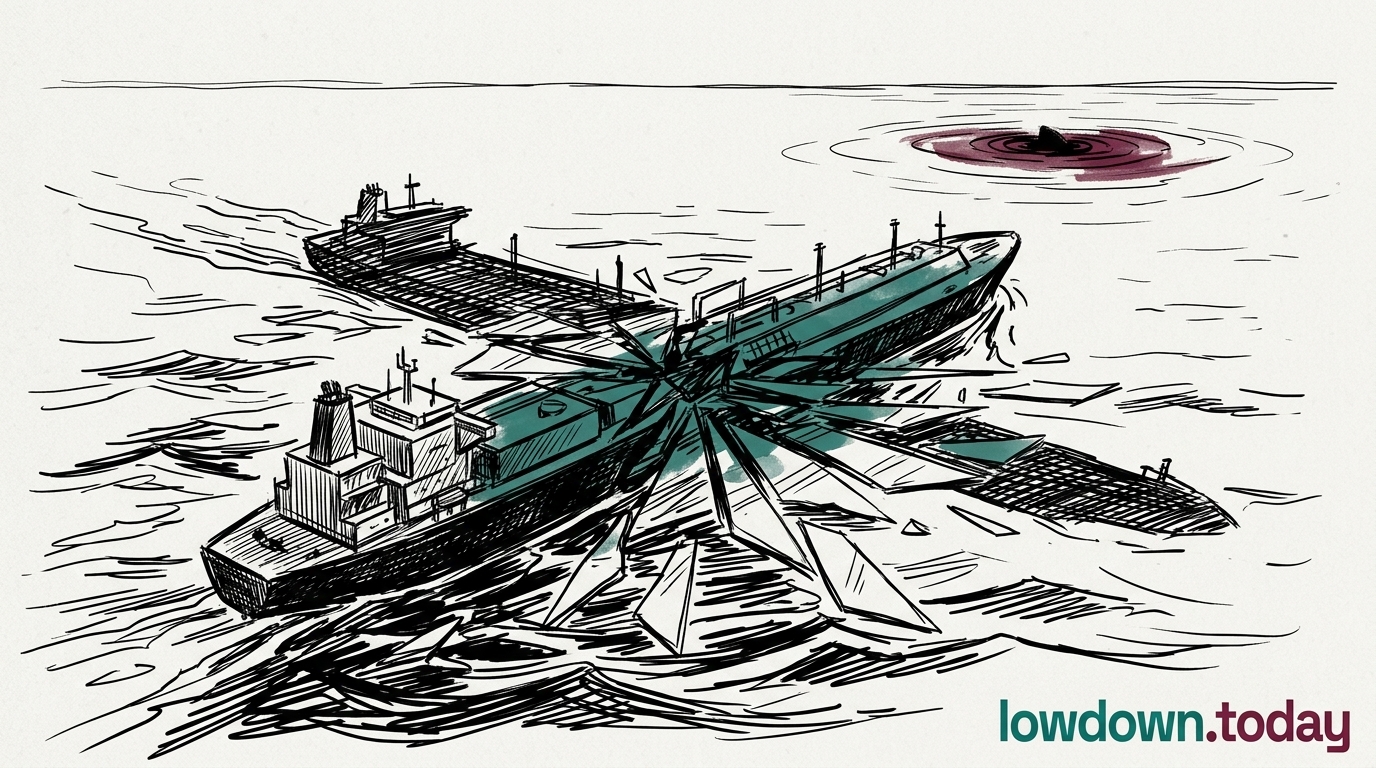
QatarEnergy halted its Ras Laffan restart on 9 July after a strike on the carrier Al Rekayyat, extending force majeure to some Asian buyers into August and pulling expected volume back out of the market.

ConflictDeveloping
Key takeaway

QatarEnergy stopped adding LNG supply just as Europe's injection season needs the marginal cargo most.

QatarEnergy halted the restart of its Ras Laffan export complex on Thursday 9 July, two days after a missile Qatar says Iran fired disabled the LNG carrier Al Rekayyat near the Strait of Hormuz on Tuesday 7 July⁠1⁠2. Chief executive Saad al-Kaabi kept the terminal at minimum output, cut the number of vessels scheduled to dock, and extended force majeure notices to some Asian buyers into August⁠3. Ras Laffan handles close to a fifth of the world's LNG, so a halt there reaches every hub that prices off the marginal cargo.

QatarEnergy's move reverses the guidance it gave at the start of July, when it still expected to reach 50% of capacity within a month against a ceiling set by escort-convoy capacity rather than diplomacy. Two trains destroyed in the March strikes had already capped any recovery near 83% of pre-conflict nameplate. al-Kaabi has now removed the floor beneath that cap, taking expected barrels out of the forward balance rather than adding them to it.

That withdrawn volume routes east regardless of where Europe needs it. The JKM-TTF arbitrage has held an Asia premium of roughly 1.4 to 2.4 USD/MMBtu through the run-up, wide enough to pull marginal Atlantic cargoes towards Northeast Asia rather than into European injection. Europe loses the swing cargo at the same moment Qatar stops adding to the pool, in the middle of the season when storage most needs it.

Deep Analysis

In plain English

QatarEnergy is the state company that runs Qatar's giant Ras Laffan gas export site, one of the world's largest sources of liquefied natural gas (LNG), gas cooled into liquid so it can travel by ship instead of pipeline. After a tanker loading from Ras Laffan was attacked on 7 July, the company's boss, Saad al-Kaabi, stopped plans to increase output and cut the number of ships allowed to dock. He also told some Asian buyers they will not get their normal cargoes into August, using a legal clause called force majeure that lets a supplier miss contracted deliveries when events outside its control make them impossible. That reversal matters because Qatar had said only weeks earlier that it expected to reach half its normal output within a month. It now has no public timeline at all.

Deep Analysis
Root Causes

QatarEnergy's ramp-up was already structurally capped before Tuesday's strike: two Ras Laffan trains destroyed in March hold recovery near 80% of pre-conflict nameplate for years, not months, and Lloyd's List identifies escort-convoy capacity, not diplomacy, as the binding constraint on how fast LNG carriers can transit regardless of demand.

The 7 July strike removes the assumption underlying even that reduced pace: a direct attack on a carrier rather than ambient risk to the corridor, which is why al-Kaabi halted output at Ras Laffan itself rather than merely slowing the shipping schedule.

What could happen next?
  • Consequence

    European buyers lose the marginal LNG cargoes QatarEnergy was expected to redirect west as it ramped up, tightening the summer supply cushion just as storage refill already lags last year's pace.

    Short term · Assessed
  • Risk

    A fourth attack on Qatari LNG infrastructure this year would test whether QatarEnergy extends force majeure beyond August or begins renegotiating contracted volumes outright.

    Medium term · Suggested
  • Precedent

    Extending force majeure past a company's own guided restart date, rather than simply missing it, sets a template Qatar may reuse if further strikes occur.

    Short term · Reported
First Reported In

Update #25 · Qatari LNG strike puts TTF back over EUR 50

Bloomberg· 10 Jul 2026
Read original →
Different Perspectives
South Korean foreign ministry
Seoul said on 20 October it will withdraw some Kyiv embassy staff, citing no constructive steps from Kyiv since it recalled its ambassador over the disclosure of two North Korean prisoners. A chargé d'affaires and consular staff stay, and Seoul says its aid continues.
Alexander Lukashenko
Lukashenko said on 22 October that talks with the US show progress despite problems, which he said were highlighted with the exchange of political prisoners for the lifting of sanctions. He said Minsk keeps its promises and wants the US to deliver its side in full.
Moldovan government (Daniella Misail-Nichitin)
Moldova has pulled its border guards and customs officers from four crossings on Ukrainian soil after Russian strikes near the border. Interior Minister Daniella Misail-Nichitin said Chisinau is weighing moving Ukrainian checkpoints onto Moldovan territory.
Péter Magyar
Péter Magyar
Magyar told RTL that Ukrainian maize may cross Hungary in sealed trains bound for Western Europe. He set one condition: the cargo must only transit the country.
Donald Tusk
Donald Tusk
Tusk said Warsaw would seek an explanation from Kyiv for the drone's route across Poland. He said Poland allows no operations over its territory without its explicit consent.
Mindaugas Sinkevičius
Lithuania's prime minister said the Ukrainian drone that exploded in Pasvalys district on 18 October carried explosives and entered from Poland through the Schengen zone. Earlier drones over Lithuania had come from Belarus, not through allied airspace.

Written with AI from Lowdown's published reporting. Not individually reviewed by an editor. Editorial standards.