Skip to content
Briefings are running a touch slower this week while we rebuild the foundations.See roadmap
Russia-Ukraine War 2026
5MAR

Five nations queue for Hormuz toll

3 min read
04:57UTC

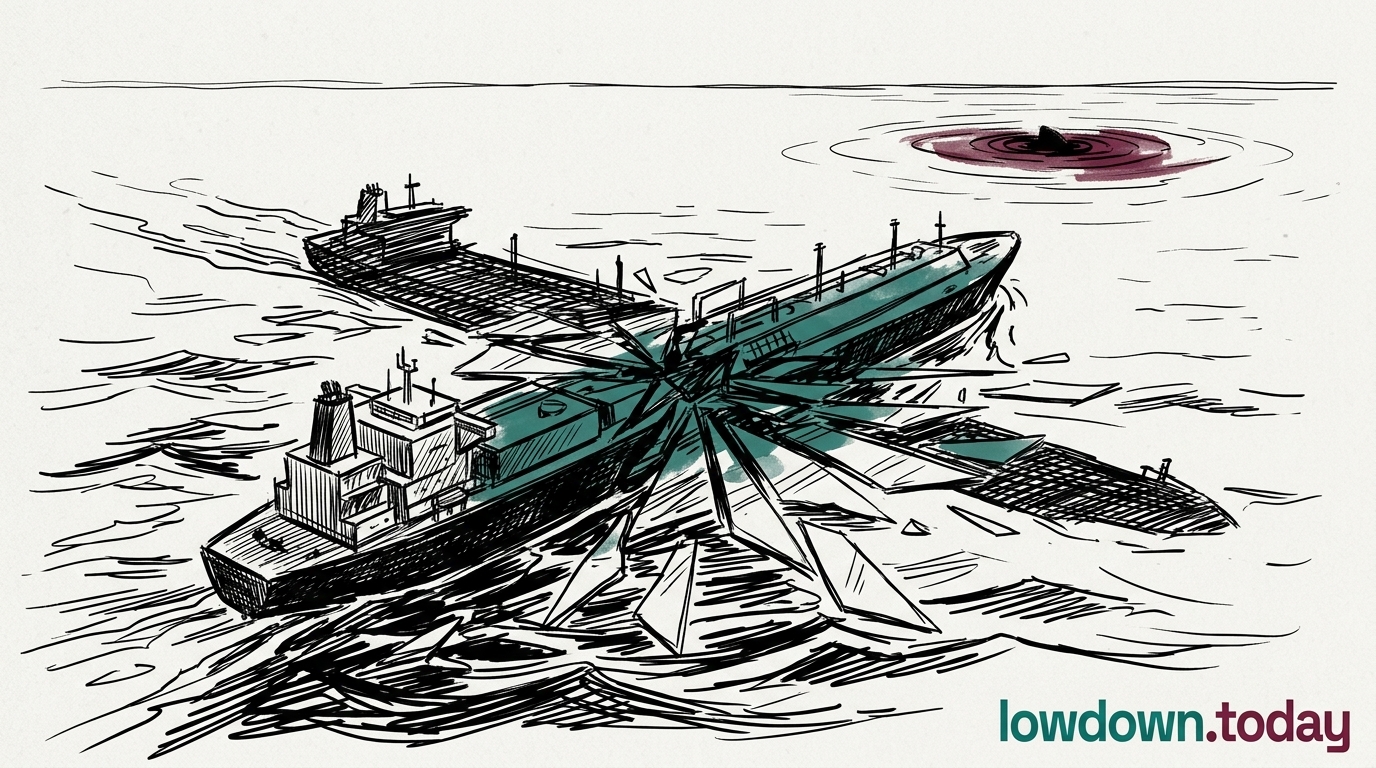
India, China, Pakistan, Iraq and Malaysia are negotiating bilateral transit deals with Tehran, splitting global shipping into those who pay Iran and those who cannot pass.

ConflictDeveloping
Key takeaway

Iran is converting a military chokepoint into bilateral diplomatic leverage, systematically fracturing the anti-Iran coalition.

India, Pakistan, Iraq, Malaysia and China are in direct negotiations with Tehran for bilateral transit arrangements through the strait of Hormuz, following Japan's grant of passage on 21 March 1. China and India are the world's largest and third-largest crude importers. Iraq is OPEC's second-largest producer and exports through the strait. Each is negotiating separately with Iranian intermediaries, not as a bloc.

The mechanism is the IRGC's toll system. Lloyd's List Intelligence documented 89 to 90 vessels transiting under IRGC clearance between 1 and 15 March, with fees reaching $2 million per passage 2. Ships submit ownership details, cargo manifests, crew nationalities and destination ports through Iran-affiliated intermediaries operating outside Iran. Payments are accepted in cash or cryptocurrency. An Iranian lawmaker confirmed the fee collection to Anadolu Agency 3. Charter rates have quadrupled to $800,000 per day; war-risk premiums on very large crude carriers run between $3.6 million and $6 million per voyage 4.

The result is a two-tier global shipping order. Nations aligned with Washington face a de facto embargo. Non-aligned nations pay Iran for access. Twenty-two countries signed a joint statement demanding reopening ; none committed warships. Every ally Trump named for a Hormuz escort coalition formally refused . That gap between declaratory and operational policy gives Tehran space to entrench the toll system as a standing institution rather than a wartime improvisation.

During the 1980–88 Tanker War, both Iran and Iraq attacked commercial shipping indiscriminately. The US responded with Operation Earnest Will, reflagging Kuwaiti tankers under the American flag and escorting them through the strait. Neither belligerent attempted selective access — the concept of granting passage to some nations while denying others did not arise. Tehran's current system is structurally different. It converts military control into differentiated commercial leverage, compelling each government to weigh its relationship with Washington against the price of energy disruption — and to do so alone.

Deep Analysis

In plain English

Think of it like a toll bridge operator who has closed the bridge to some drivers but will let others through — for a price. Iran has shut the main oil shipping route to US-allied countries, but is offering individual deals to countries like India and China. Each country that cuts its own deal weakens collective pressure on Iran to reopen the route for everyone. The more countries that accept these bilateral terms, the less reason Iran has to negotiate a full reopening.

Deep Analysis
Synthesis

The bilateral deals invert the traditional US sanctions architecture. Iran is administering its own secondary sanctions regime — charging access fees to non-aligned states while imposing a de facto embargo on US-aligned ones. The US built this tool to isolate Iran; Iran has replicated it to isolate the US-led coalition instead.

Root Causes

The five negotiating states share a structural vulnerability Iran is deliberately exploiting: acute Gulf-origin energy dependency that outweighs their political alignment with Washington. None of the five is treaty-bound to US coalition positions. Each faces severe domestic political costs from refusing passage negotiations while their industries and consumers bear elevated fuel prices.

Escalation

The bilateral negotiation pattern is de-escalatory for individual negotiating states but structurally escalatory for the overall crisis. Each deal Iran closes reduces the economic cost to Tehran of maintaining the closure, entrenching the two-tier system and extending the timeline toward a negotiated resolution.

What could happen next?
  • Consequence

    Each completed bilateral deal reduces multilateral pressure on Iran to reopen Hormuz unconditionally, extending the supply disruption timeline.

    Immediate · Assessed
  • Risk

    Nations completing bilateral transit deals may face US secondary sanctions, forcing a binary choice between IRGC access and US financial market participation.

    Short term · Assessed
  • Precedent

    If formalised, the two-tier system establishes a permanent Iranian veto over individual nations' energy access, restructuring Gulf geopolitics around bilateral leverage relationships with Tehran.

    Medium term · Suggested
First Reported In

Update #45 · Ultimatum expires; Iran tolls Hormuz at $2m

Time· 23 Mar 2026
Read original
Causes and effects
This Event
Five nations queue for Hormuz toll
Iran's bilateral negotiating structure prevents collective bargaining among transit-seeking nations, giving Tehran maximum leverage over each counterpart individually — a feature absent from every previous Hormuz crisis since the 1980s Tanker War.
Different Perspectives
North Korea / DPRK
North Korea / DPRK
ISW confirmed the first mounting of DPRK Type-75 MLRS on Russian autonomous UGVs near Kharkiv on 7 June, the latest step in a supply axis that escalated from shells in 2023 to troops in 2024. Pyongyang gains live battlefield data on its ordnance and on Russia's uncrewed-systems programme.
IAEA / Rafael Grossi
Grossi confirmed Chornobyl structural damage with nuclear material metres away and could not attribute the ZNPP 15-hour blackout during the agreed repair window. Six ceasefires brokered and broken at ZNPP, compounded by Rosatom's May attack on IAEA neutrality, have eroded his ability to enforce the windows he negotiates.
Emmanuel Macron / France
Macron co-signed the E3 framework whose line-of-contact baseline marks Europe's first formal acceptance that 1991 borders are not the opening position. France's role carries weight because Macron had previously proposed a European force for Ukraine, and the framework's multinational force point is the vehicle for that.
Keir Starmer / E3
Keir Starmer / E3
Starmer, Macron and Merz met Zelenskyy on 7 June and backed a five-point framework taking the line of contact as the talks baseline, conceding roughly one fifth of Ukraine in exchange for a multinational force and frozen assets. With US mediation ended, the NATO Ankara summit on 7-8 July is the next test.
Vladimir Putin / Kremlin
Putin used SPIEF to reject Zelenskyy's summit letter, citing 'elements of rudeness', and repeated the pre-agreed treaty precondition that has frozen every diplomatic round since May. The SPIEF platform's message of investor confidence was punctured by naval fires visible from St Petersburg, which Moscow declined to dispute in scale.
Ukraine / Unmanned Systems Forces
Commander Brovdi confirmed USF units tracked and set fire to Boikyi at Kronstadt, while Code 9.2 struck the Chonhar Bridge the following day. Ukraine is sequencing strikes for rear-area interdiction and political timing rather than ground gains, trading the Baltic Fleet's home base for the logistics squeeze Russia cannot absorb without rationing its own occupied territory.