Skip to content
Briefings are running a touch slower this week while we rebuild the foundations.See roadmap
Russia-Ukraine War 2026
5MAR

Baltic Terminals Stay Offline; Russia Reroutes Through Arctic

2 min read
04:57UTC

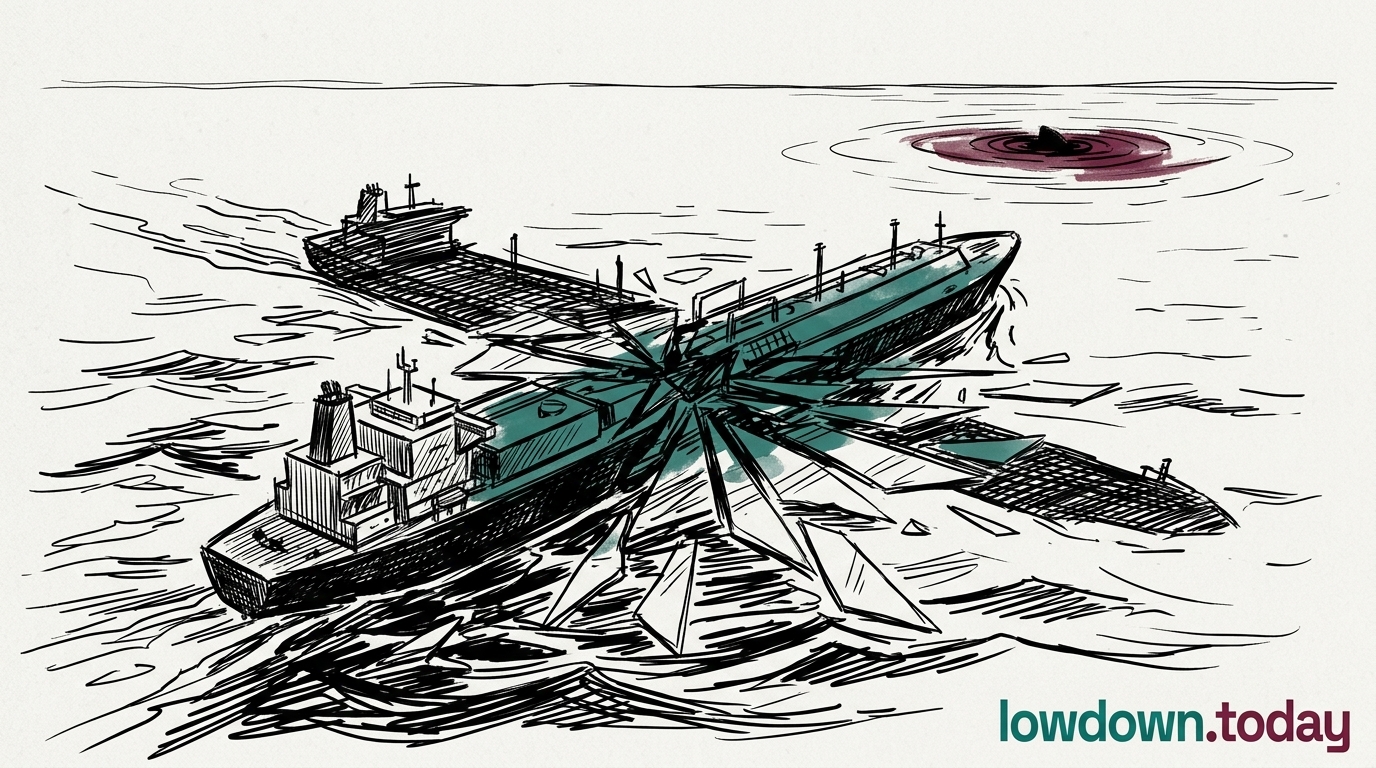
Both Ust-Luga and Primorsk remained closed for petroleum products into a second week, with Primorsk's 40% storage loss confirming lasting physical damage as Russia attempts Arctic rerouting.

ConflictDeveloping
Key takeaway

Ust-Luga's crude terminal is intact, pointing to faster crude recovery; Primorsk's 40% storage loss constrains product exports for weeks.

Planet Labs satellite imagery from 1 April confirmed Ust-Luga's crude terminal is physically intact, while fuel and product terminals bear fire traces from Ukraine's four-strike Baltic campaign . Primorsk suffered more lasting damage: eight 50,000 cubic metre reservoir losses represent permanent storage reduction until repairs complete.

Transneft CEO Nikolai Tokarev publicly acknowledged that rerouting volumes to Murmansk at short notice is difficult. Ice-class vessels are not abundant and Arctic transit times nearly double those from the Baltic (15 to 20 days versus 8 to 10). Russia's earlier refinery strikes at Promsintez and YANOS compounded the logistics challenge by reducing inland processing capacity.

Eighty-five sanctioned shadow tankers have sailed along Norwegian coastal waters since October 2025. Norwegian security officials describe a monitoring gap in their territorial waters. The Arctic logistics infrastructure was not built to absorb Baltic volumes at short notice, and each week of delay brings Russia closer to the storage saturation threshold that would force production cuts.

Deep Analysis

In plain English

Russia's main oil export terminals on the Baltic Sea are still shut down for fuel products two weeks after Ukrainian drone strikes. Russia is trying to redirect oil shipments through Arctic routes near Murmansk, but those routes are slower and require specialist ice-capable ships that are in short supply.

Deep Analysis
Root Causes

Russia built its seaborne export infrastructure around Baltic terminals — Ust-Luga and Primorsk handle roughly 60% of seaborne crude — with no equivalent Arctic alternative at scale. The shadow fleet expansion since 2022 added volume capacity but not port infrastructure.

Arctic ice-class vessel supply is a structural constraint: Russia commissioned fewer than 30 vessels capable of sustained Arctic routing, against demand requiring 50+. Primorsk's eight damaged reservoirs represent a storage bottleneck that rerouting cannot bypass — crude must still pass through terminal storage before loading.

What could happen next?
  • Consequence

    Crude terminal structural integrity at Ust-Luga suggests faster recovery for crude exports than for petroleum products.

  • Risk

    Norway faces a monitoring gap as 85+ sanctioned shadow tankers transit its coastal waters en route to Arctic export routes.

First Reported In

Update #11 · Russia Sells Less Oil but Earns More

Reuters via US News· 5 Apr 2026
Read original
Causes and effects
This Event
Baltic Terminals Stay Offline; Russia Reroutes Through Arctic
Partial physical recovery is underway but Arctic rerouting constraints mean full restoration will take weeks, creating a window for Ukraine to sustain the production squeeze if strike tempo continues.
Different Perspectives
North Korea / DPRK
North Korea / DPRK
ISW confirmed the first mounting of DPRK Type-75 MLRS on Russian autonomous UGVs near Kharkiv on 7 June, the latest step in a supply axis that escalated from shells in 2023 to troops in 2024. Pyongyang gains live battlefield data on its ordnance and on Russia's uncrewed-systems programme.
IAEA / Rafael Grossi
Grossi confirmed Chornobyl structural damage with nuclear material metres away and could not attribute the ZNPP 15-hour blackout during the agreed repair window. Six ceasefires brokered and broken at ZNPP, compounded by Rosatom's May attack on IAEA neutrality, have eroded his ability to enforce the windows he negotiates.
Emmanuel Macron / France
Macron co-signed the E3 framework whose line-of-contact baseline marks Europe's first formal acceptance that 1991 borders are not the opening position. France's role carries weight because Macron had previously proposed a European force for Ukraine, and the framework's multinational force point is the vehicle for that.
Keir Starmer / E3
Keir Starmer / E3
Starmer, Macron and Merz met Zelenskyy on 7 June and backed a five-point framework taking the line of contact as the talks baseline, conceding roughly one fifth of Ukraine in exchange for a multinational force and frozen assets. With US mediation ended, the NATO Ankara summit on 7-8 July is the next test.
Vladimir Putin / Kremlin
Putin used SPIEF to reject Zelenskyy's summit letter, citing 'elements of rudeness', and repeated the pre-agreed treaty precondition that has frozen every diplomatic round since May. The SPIEF platform's message of investor confidence was punctured by naval fires visible from St Petersburg, which Moscow declined to dispute in scale.
Ukraine / Unmanned Systems Forces
Commander Brovdi confirmed USF units tracked and set fire to Boikyi at Kronstadt, while Code 9.2 struck the Chonhar Bridge the following day. Ukraine is sequencing strikes for rear-area interdiction and political timing rather than ground gains, trading the Baltic Fleet's home base for the logistics squeeze Russia cannot absorb without rationing its own occupied territory.
