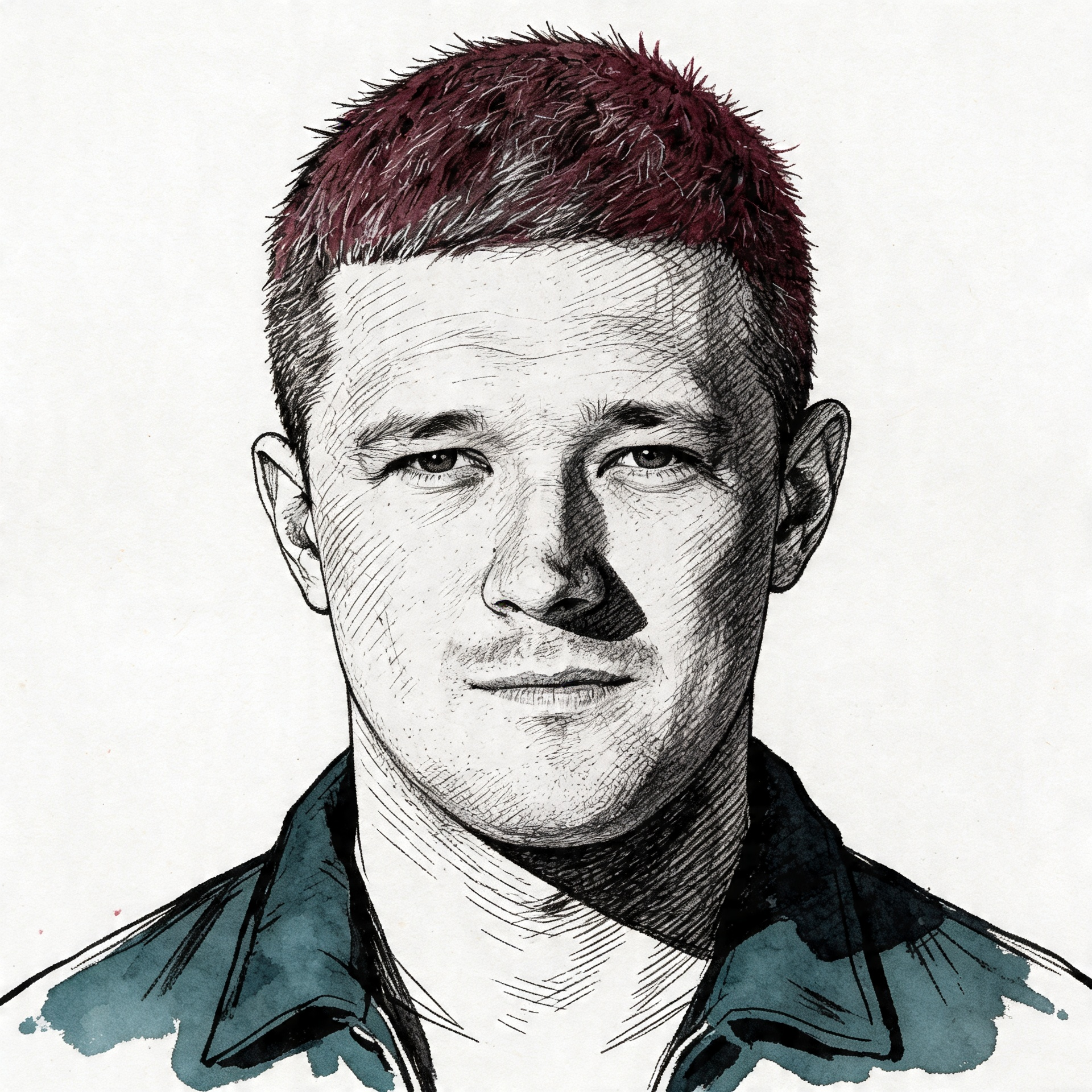
Mykhailo Fedorov
Ukraine's former Defence Minister, dismissed 15 July 2026; architect of Diia and the drone programme.
Volodymyr Zelenskyy dismissed Mykhailo Fedorov as defence minister on 15 July 2026, opening eight days in which all three top posts in Ukraine's war command changed hands. Out of office, Fedorov called on 18 August for a legal route to wartime elections.
Last refreshed: 12 October 2026 · Appears in 2 active topics
How has Fedorov turned a digital ministry into Ukraine's weapons procurement engine?
Timeline for Mykhailo Fedorov
Mentioned in: Zelenskyy ties elections to a ceasefire
Russia-Ukraine War 2026Rada confirms Khmara as defence minister, 312 to two
Russia-Ukraine War 2026Mentioned in: Zelenskyy swaps out his top general
Russia-Ukraine War 2026Mentioned in: Zelenskyy dismisses Syrskyi, names Drapatyi war chief
Russia-Ukraine War 2026Mentioned in: Khmara made Ukraine's acting defence minister
Russia-Ukraine War 2026Background
Mykhailo Fedorov, Born in 1991, was Ukraine's defence minister until Volodymyr Zelenskyy dismissed him on 15 July 2026. Yevhen Khmara now holds the POST, confirmed by Parliament on 19 August.
Fedorov entered government in 2019 as Minister of Digital Transformation, after running Zelenskyy's campaign digital strategy. He built Diia, the state's digital services app, and after the February 2022 invasion pressed Apple, Google and other technology firms to suspend business in Russia. He went on to oversee Ukraine's drone programme, pulling civilian engineers into FPV and reconnaissance drone production. In May 2026 he calculated that Russian forces lost 179 soldiers per square kilometre of ground taken that year, against 67 in 2025.
His significance now lies outside government. He left office blaming a dispute with the Army's commander-in-chief, and has since put wartime elections on the table.
His dismissal triggered a command purge
Zelenskyy removed Fedorov on 15 July after a meeting with military leadership. Fedorov blamed a lasting feud with Commander-in-Chief Oleksandr Syrskyi.
The sacking did not settle that feud in the general's FAVOUR. Protests began in Kyiv on 16 July and spread to eight cities, with crowds chanting "Syrsky out" and demanding Fedorov's return. On 21 July Zelenskyy dismissed Syrskyi too and named Mykhailo Drapatyi in his place; the chief of the general staff followed a day later. Yevhen Khmara took over the ministry and was confirmed by Parliament on 19 August. Fedorov left office as the man whose exit started the purge, not as its main casualty.
The former minister now argues politics
On 18 August, the day before Parliament confirmed his successor by 312 votes to two, Fedorov called for a legal mechanism to hold elections during the war. Ukrainian law bars a vote under martial law.
The position put him at odds with most voters: a Kyiv International Institute of Sociology poll dated 5 August found 57% wanted elections only after the fighting stops. It also anticipated pressure from Washington. When Donald Trump said on 10 October that Ukraine needed a new leader, Zelenskyy offered elections after a 60-day total ceasefire, a condition Fedorov's proposal would have removed.
He signed for interceptors Ukraine could receive
As defence minister, Fedorov co-signed a €4bn package with Germany in Berlin on 14 April 2026. Its centrepiece was a roughly €3.2bn Raytheon contract for several hundred GEM-T Patriot interceptors, bought as a direct commercial sale outside the US foreign military sales queue.
The deal showed the limits he worked within. GEM-T stops drones and Cruise Missiles, not ballistic missiles, while a White House export suspension had frozen PAC-3 MSE, the round that stops Iskanders and Kinzhals. Fedorov's ministry bought what Ukraine could legally receive, routing the purchase around the US export queue.
Reference
What is the Diia app Ukraine?
Who replaced Mykhailo Fedorov as Ukraine's Defence Minister?
Did Mykhailo Fedorov accept an advisory role after his dismissal?
Why was Mykhailo Fedorov dismissed as Ukraine's Defence Minister?
Why did Russia lose so many soldiers per square kilometre in 2026?
Who is Mykhailo Fedorov and what does he do in Ukraine?
What did Ukraine and Germany sign in the €4bn defence deal?
How did Ukraine use social media against Russia after the 2022 invasion?
Is Fedorov's dismissal linked to the July 2026 general staff reshuffle?


