Skip to content
Briefings are running a touch slower this week while we rebuild the foundations.See roadmap
Russia-Ukraine War 2026
9JUN

Rostekhnadzor licences ZNPP reactors through 2036

2 min read
11:54UTC

Russia's nuclear regulator issued decade-long operating certificates for the two restart-capable units in early April. Administering an occupied plant on paper through 2036 is a bureaucratic commitment no negotiated settlement can easily unwind.

ConflictDeveloping
Key takeaway

Russia administered ZNPP through the next decade on paper the same month its cables failed on the ground.

Rostekhnadzor, Russia's Federal Environmental, Industrial and Nuclear Supervision Service, issued decade-long operating certificates for Zaporizhzhia Nuclear Power Plant units 1 and 2 in early April. Rosatom, the Russian state nuclear corporation, has separately confirmed the reactors cannot be restarted while fighting continues.

The regulatory decision sits alongside the plant's deteriorating physical situation, with the main high-voltage feeder still disconnected and the thirteenth total power loss detailed in event 3. The certification does not change the daily operational problem. It changes the horizon. An earlier IAEA-brokered local ceasefire in April had reconnected the backup feeder , but no sixth ceasefire for the main line has been agreed.

The two Russian actions, operational caution and administrative commitment, are not in tension. Rostekhnadzor's paperwork asserts long-horizon control regardless of military or diplomatic reversals. Rosatom's restart refusal avoids the international safety argument that would come with attempting cold start-up during active fighting. The combined posture treats the plant as a Russian nuclear asset permanently and a cold asset temporarily. Anything a negotiated settlement delivers on Ukrainian territory now has to reckon with a regulator that has already issued paperwork committing Moscow to administer the plant through 2036.

Deep Analysis

In plain English

In early April, Russia's nuclear regulator, called Rostekhnadzor, issued 10-year operating licences for two of the six reactors at Zaporizhzhia Nuclear Power Plant. The plant is inside Ukraine but has been occupied and run by Russia since 2022. A 10-year licence is a bureaucratic document that says, in effect, Russia intends to be running this plant under Russian law until 2036. The reactors are currently shut down and not generating power, but the licence is a formal administrative claim to long-term Russian control. Ukraine and international nuclear bodies do not recognise Russia's authority over the plant, but non-recognition has not changed the physical reality on the ground.

Deep Analysis
Root Causes

Rostekhnadzor's licensing decision is a direct bureaucratic response to the IAEA pressure for a Russian-backed repair ceasefire. Every repair negotiation implicitly acknowledges that the plant's operational safety is a shared international concern under Ukrainian regulatory sovereignty. Issuing Russian domestic operating licences asserts a parallel legal framework: Russia is now the licensing authority, and any safety negotiation must engage Rostekhnadzor rather than Ukraine's regulator.

The timing, early April, during the same period as IAEA Update 346's disclosure of the 18-day main line disconnection, is not coincidental. The licences create a bureaucratic claim at the moment when IAEA visibility into ZNPP is at its most active.

What could happen next?
  • Precedent

    Russian domestic nuclear licensing of an occupied Ukrainian facility creates a bureaucratic precedent that any peace negotiation must explicitly address; silence on ZNPP status in a ceasefire agreement implicitly accepts Russian administrative control.

  • Consequence

    IAEA repair negotiations must now implicitly acknowledge Rostekhnadzor as a party, complicating the agency's insistence on conducting negotiations through Ukraine's State Nuclear Regulatory Inspectorate.

First Reported In

Update #13 · Treasury kills the Russian crude waiver

RBC-Ukraine (citing IAEA)· 16 Apr 2026
Read original
Causes and effects
This Event
Rostekhnadzor licences ZNPP reactors through 2036
The certificates establish a decade-horizon Russian administrative commitment to Zaporizhzhia that does not depend on any military or diplomatic outcome.
Different Perspectives
North Korea / DPRK
North Korea / DPRK
ISW confirmed the first mounting of DPRK Type-75 MLRS on Russian autonomous UGVs near Kharkiv on 7 June, the latest step in a supply axis that escalated from shells in 2023 to troops in 2024. Pyongyang gains live battlefield data on its ordnance and on Russia's uncrewed-systems programme.
IAEA / Rafael Grossi
Grossi confirmed Chornobyl structural damage with nuclear material metres away and could not attribute the ZNPP 15-hour blackout during the agreed repair window. Six ceasefires brokered and broken at ZNPP, compounded by Rosatom's May attack on IAEA neutrality, have eroded his ability to enforce the windows he negotiates.
Emmanuel Macron / France
Macron co-signed the E3 framework whose line-of-contact baseline marks Europe's first formal acceptance that 1991 borders are not the opening position. France's role carries weight because Macron had previously proposed a European force for Ukraine, and the framework's multinational force point is the vehicle for that.
Keir Starmer / E3
Keir Starmer / E3
Starmer, Macron and Merz met Zelenskyy on 7 June and backed a five-point framework taking the line of contact as the talks baseline, conceding roughly one fifth of Ukraine in exchange for a multinational force and frozen assets. With US mediation ended, the NATO Ankara summit on 7-8 July is the next test.
Vladimir Putin / Kremlin
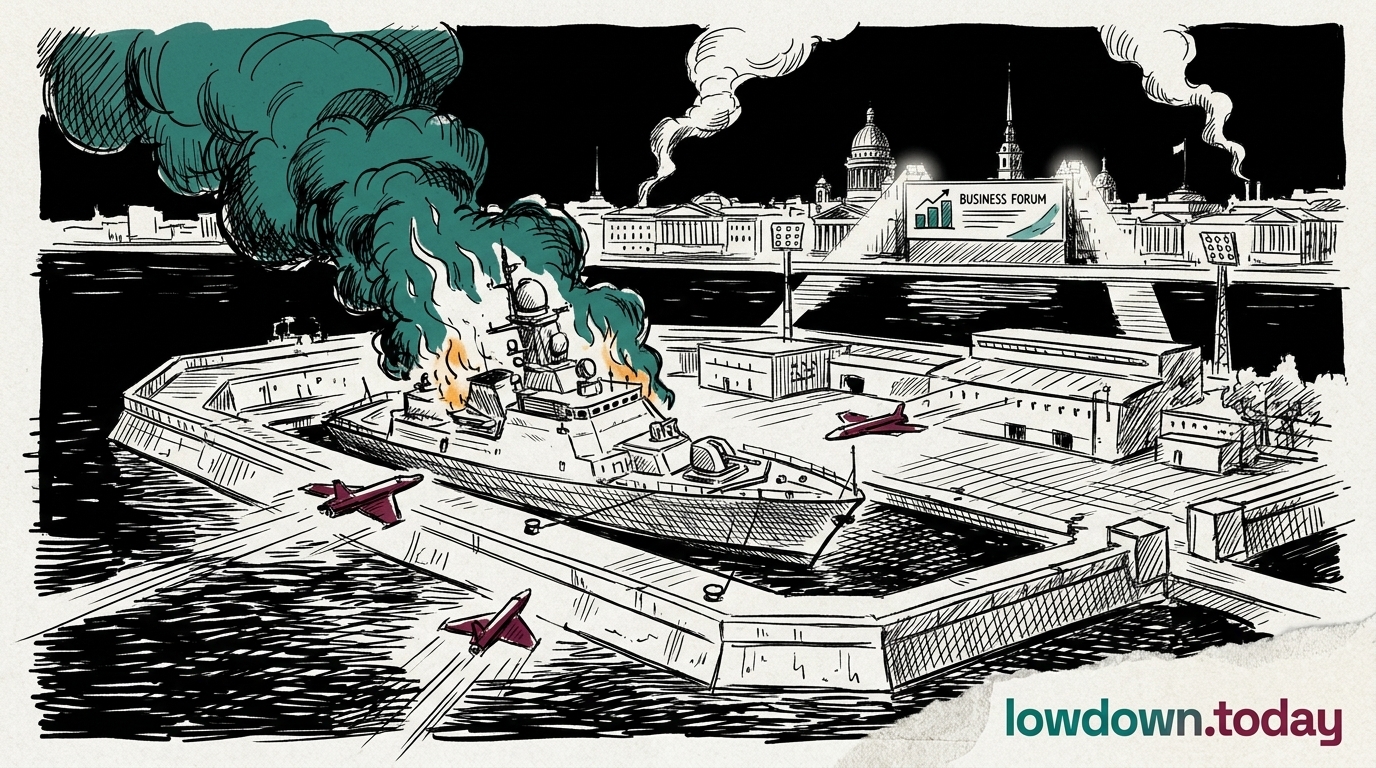
Putin used SPIEF to reject Zelenskyy's summit letter, citing 'elements of rudeness', and repeated the pre-agreed treaty precondition that has frozen every diplomatic round since May. The SPIEF platform's message of investor confidence was punctured by naval fires visible from St Petersburg, which Moscow declined to dispute in scale.
Ukraine / Unmanned Systems Forces
Commander Brovdi confirmed USF units tracked and set fire to Boikyi at Kronstadt, while Code 9.2 struck the Chonhar Bridge the following day. Ukraine is sequencing strikes for rear-area interdiction and political timing rather than ground gains, trading the Baltic Fleet's home base for the logistics squeeze Russia cannot absorb without rationing its own occupied territory.