Skip to content
Briefings are running a touch slower this week while we rebuild the foundations.See roadmap
Russia-Ukraine War 2026
9JUN

Zaporizhzhia loses external power twice in a week

4 min read
11:54UTC

Europe's largest nuclear plant lost external power for the fourteenth and fifteenth times of the war around 17 April, days after an IAEA-mediated ceasefire had restored the main 750 kV feeder.

ConflictDeveloping
Key takeaway

The paperwork runs through 2036; the plant runs on one external cable.

The Zaporizhzhia Nuclear Power Plant lost all external power for the fourteenth time of the war on or around Friday 17 April, and again days later on the fifteenth occasion 1. The main 750 kV Dniprovska line, disconnected since 24 March at 23 days on 14 April , was repaired during the week via an IAEA-mediated local ceasefire; the plant then lost power twice more. Repair crews on the 330 kV Ferosplavna-1 backup feeder found additional damage 1.8 kilometres from the switchyard. As of Wednesday 22 April, one external line was running. Rafael Grossi, the IAEA Director General, said the agency is negotiating a further ceasefire to repair the main feeder.

The operational trajectory and the administrative one now run in opposite directions. Rostekhnadzor, Russia's nuclear regulator, issued 10-year operating licences for ZNPP units 1 and 2 through 2036 earlier in April . The paperwork runs through the next decade; the physical plant runs on a single external cable. The 1.8 km Ferosplavna-1 fault widens the repair footprint beyond the previous cable-break scope, and the fortnightly pattern of outage and repair is not a stable operating regime for a nuclear plant under any framework.

The plant is in cold shutdown, which reduces the fuel-damage timeline of a total loss relative to an operating reactor. That floor is the argument against panic. The argument against complacency is duration: emergency diesel generators carried the site for roughly 90 minutes during the 13th incident, and every additional outage within a week narrows the margin before the diesels run into a ceasefire negotiation that has not yet been concluded. The operational gain of an IAEA-brokered ceasefire lasted less than a week; the next one will have to hold longer than that.

Deep Analysis

In plain English

The Zaporizhzhia Nuclear Power Plant (ZNPP) in Ukraine is the largest nuclear power station in Europe, with six reactors. Russia has occupied it since March 2022. The reactors are in a safe shutdown state: they are not generating electricity: but they still need a constant power supply to keep the cooling systems running that prevent the fuel from overheating. External power has been cut and restored 15 times since the war began. This week it happened twice in the same week. The main power line was repaired using a short ceasefire brokered by the IAEA, then the backup line was found to have new damage 1.8 km from the plant. As of 22 April, one external line was working.

First Reported In

Update #14 · Kyiv's Druzhba gambit unlocks €90bn loan

IAEA (via nuclear-news / GlobalSecurity)· 24 Apr 2026
Read original
Different Perspectives
North Korea / DPRK
North Korea / DPRK
ISW confirmed the first mounting of DPRK Type-75 MLRS on Russian autonomous UGVs near Kharkiv on 7 June, the latest step in a supply axis that escalated from shells in 2023 to troops in 2024. Pyongyang gains live battlefield data on its ordnance and on Russia's uncrewed-systems programme.
IAEA / Rafael Grossi
Grossi confirmed Chornobyl structural damage with nuclear material metres away and could not attribute the ZNPP 15-hour blackout during the agreed repair window. Six ceasefires brokered and broken at ZNPP, compounded by Rosatom's May attack on IAEA neutrality, have eroded his ability to enforce the windows he negotiates.
Emmanuel Macron / France
Macron co-signed the E3 framework whose line-of-contact baseline marks Europe's first formal acceptance that 1991 borders are not the opening position. France's role carries weight because Macron had previously proposed a European force for Ukraine, and the framework's multinational force point is the vehicle for that.
Keir Starmer / E3
Keir Starmer / E3
Starmer, Macron and Merz met Zelenskyy on 7 June and backed a five-point framework taking the line of contact as the talks baseline, conceding roughly one fifth of Ukraine in exchange for a multinational force and frozen assets. With US mediation ended, the NATO Ankara summit on 7-8 July is the next test.
Vladimir Putin / Kremlin
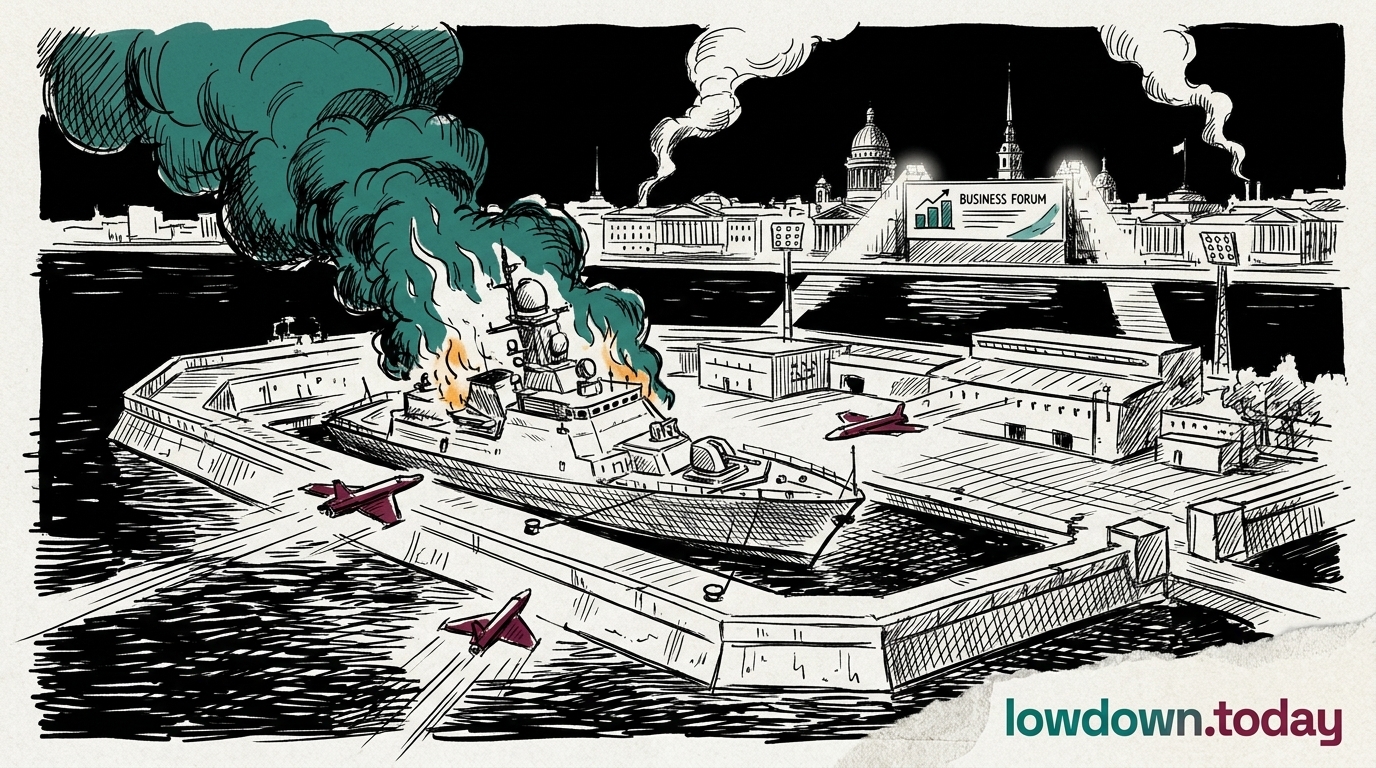
Putin used SPIEF to reject Zelenskyy's summit letter, citing 'elements of rudeness', and repeated the pre-agreed treaty precondition that has frozen every diplomatic round since May. The SPIEF platform's message of investor confidence was punctured by naval fires visible from St Petersburg, which Moscow declined to dispute in scale.
Ukraine / Unmanned Systems Forces
Commander Brovdi confirmed USF units tracked and set fire to Boikyi at Kronstadt, while Code 9.2 struck the Chonhar Bridge the following day. Ukraine is sequencing strikes for rear-area interdiction and political timing rather than ground gains, trading the Baltic Fleet's home base for the logistics squeeze Russia cannot absorb without rationing its own occupied territory.