Skip to content
Briefings are running a touch slower this week while we rebuild the foundations.See roadmap
Russia-Ukraine War 2026
1JUN

Three ceasefires collapsed with zero instruments signed

3 min read
10:39UTC

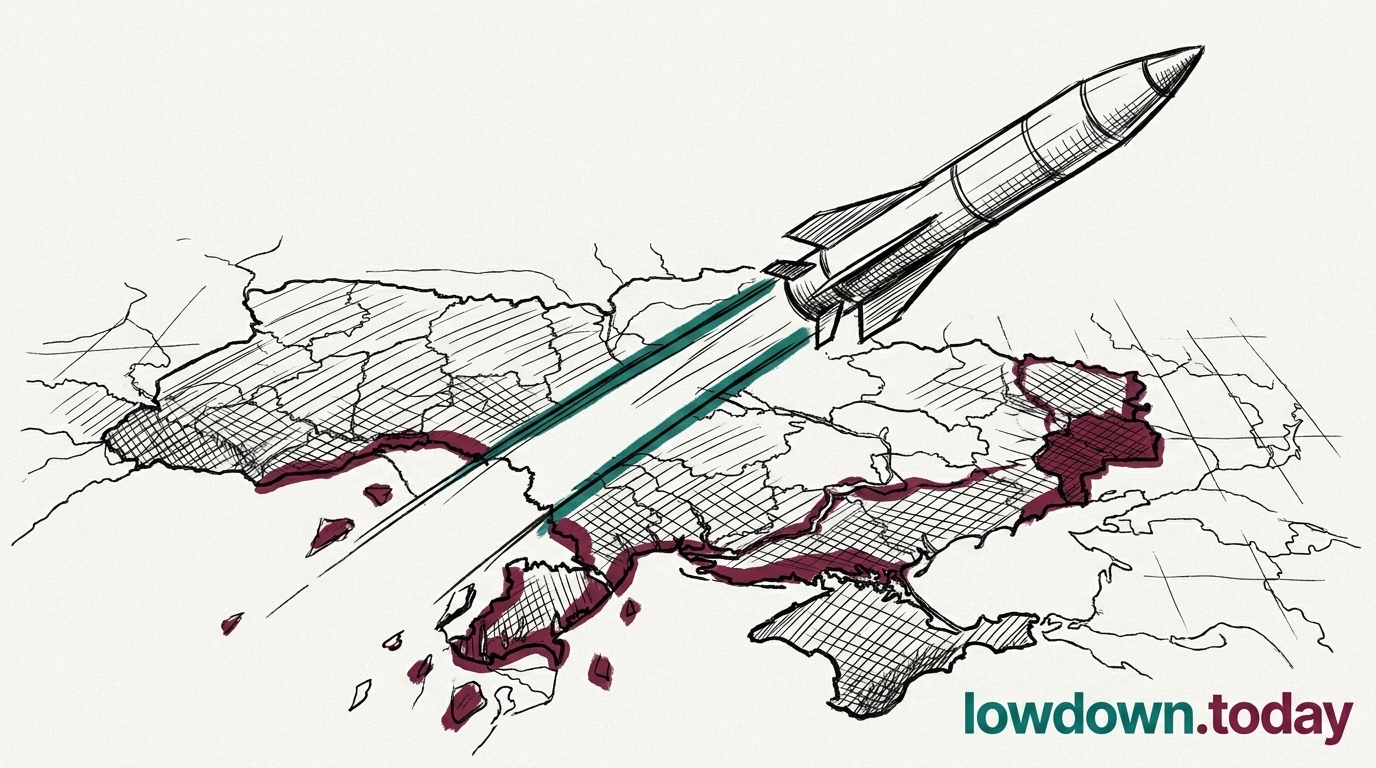
Between 6 and 11 May, Ukraine, Russia, and Trump each declared a ceasefire; all three collapsed, with Ukraine logging 1,820 Russian violations by 10am on 6 May alone.

ConflictDeveloping
Key takeaway

Three ceasefires in eight days collapsed; Ukraine's long-range restraint was the only part that held.

Donald Trump announced a three-day Ceasefire covering 9-11 May 2026 on 8 May, with a 1,000-for-1,000 prisoner exchange attached 1. Ukraine had declared a unilateral halt from midnight on 6 May; Russia declared one for 8-9 May. All three collapsed without a signed instrument 2.

The numbers on the Ukrainian unilateral halt are precise: 1,820 Russian violations logged by 10am on 6 May alone, as Russia launched 108 drones and 3 missiles over that period 3. For the Trump window, the only durable component was Volodymyr Zelenskyy's confirmation that Ukraine refrained from long-range retaliatory strikes during 9-11 May 4. Russia maintained drone and artillery exchanges throughout.

This is the third data point in a series that began with Putin's Orthodox Easter ceasefire in April . That template expired with 10,721 Ukrainian-logged Russian violations , then a 324-drone overnight barrage followed within hours. The Victory Day version repeats the same architecture: decree, partial compliance on long-range, unbroken front-line fire, accusation exchange, full resumption. The one variable that shifted between April and May is Trump's personal attachment to the framing; the operational outcome is identical.

Ukraine's demonstrated long-range restraint is now a documented bargaining chip; Russia has seen it deployed and can calibrate its next demand against it. Putin proposed the Victory Day Ceasefire in a 29 April call to Trump ; Zelenskyy had pre-emptively called the concept theatrical on 30 April . Three templates produced Western wire coverage of diplomatic activity but no front-line halt.

Deep Analysis

In plain English

Between 6 and 11 May, three separate attempts were made to stop the fighting. Ukraine said it would stop shooting. Then Russia said it would stop shooting. Then Donald Trump announced a three-day pause. All three failed within hours. Each was an announcement, not an agreement. For a ceasefire to hold, both sides need to sign the same document, and a neutral observer needs authority to say who broke it. None of that was in place. Ukraine recorded nearly 2,000 Russian attacks in the first few hours of its own ceasefire. It is a bit like two drivers in a car park both announcing they are going to stop, but neither actually slowing down.

Deep Analysis
Root Causes

Two structural deficits caused the collapse of all three templates. First, no mutually recognised third-party verification authority exists between Russia and Ukraine. The UN Security Council cannot fill this role because Russia holds a permanent veto. The OSCE Special Monitoring Mission was expelled from Russian-controlled territory in 2022.

Second, Russia's Peskov-confirmed minimum condition, namely Ukrainian cession of Donetsk, Luhansk, Zaporizhzhia, and Kherson oblasts in their entirety, is irreconcilable with Ukraine's internationally recognised borders position. No ceasefire framework that does not address this gap can produce a durable halt; it can only produce a pause that each side uses to improve its military position.

Escalation

The triple-collapse pattern now constitutes a datable series: Easter in April, Victory Day window in May, Trump window in May. Each successive failure has been followed by a larger barrage. Any future ceasefire announcement should be treated as a precursor to escalation rather than a de-escalatory signal until a verification mechanism is in place.

What could happen next?
  • Consequence

    The absence of signed instruments across three templates makes it harder for Western governments to argue that diplomatic engagement with Russia produces outputs, weakening the political case for continued negotiation-first approaches.

    Short term · 0.8
  • Risk

    Trump's public commitment to the 9-11 May window without a corresponding Russian signature creates a credibility cost for future US mediation; the next ceasefire proposal from Washington will face a higher scepticism threshold from Kyiv and European capitals.

    Medium term · 0.72
  • Precedent

    The 1,820-violation tally within hours of the 6 May Ukrainian ceasefire establishes a documentation methodology that Kyiv can deploy to delegitimise future unilateral Russian ceasefire proposals before they expire.

    Immediate · 0.85
First Reported In

Update #16 · 800 drones, three ceasefires, one cliff

Al Jazeera· 13 May 2026
Read original
Different Perspectives
China
China
Beijing has not publicly commented on the dual Oreshnik launch. China's declared position of urging restraint and dialogue sits awkwardly alongside its continued economic ties with Russia; the weapons escalation tests whether Beijing's neutrality framing can survive a European IRBM normalisation event.
IAEA
IAEA
Director General Grossi condemned the ZNPP reactor-6 turbine building strike and stated "there should be no attack of any kind from or against the plant." The agency confirmed normal radiation levels but has not resolved attribution; Rosatom CEO Likachev warned the region is "one step closer to an incident."
Turkey
Turkey
Ankara hosted Istanbul Round 2 at Ciragan Palace on 2 June and secured a 1,200-for-1,200 prisoner exchange, consolidating Turkey as the war's sole diplomatic venue after Rubio confirmed US mediation has ended. Erdogan's leverage over both parties grows with each round.
European Union
European Union
EU Ambassador Mathernova answered Lavrov's evacuation demand with "We stay in Kyiv. We stay with Ukraine." The Verkhovna Rada approved the EUR 90bn EU loan on 28 May; the EUR 9.1bn first tranche, the EU's first explicit defence-procurement financing, arrives mid-June.
United States
United States
Rubio declared US mediation stagnated on 22 May and confirmed no talks were occurring, then received Lavrov's evacuation demand three days later without ordering embassy drawdown. Washington's leverage now runs through the GL 134C sanctions cliff on 17 June rather than any active diplomatic channel.
Ukraine
Ukraine
Zelenskyy called Russia's 2-3 day ceasefire counter-offer at Istanbul Round 2 "shortsighted" and submitted a full peace memorandum covering EU membership, international guarantees, phased sanctions relief and frozen-asset reparations. Kyiv's position is that a partial ceasefire freeze aids Russian reconstitution; only an all-domain 30-day pause is acceptable.
