Skip to content
Briefings are running a touch slower this week while we rebuild the foundations.See roadmap
Russia-Ukraine War 2026
22MAY

Islamabad four stall on Hormuz terms

2 min read
10:57UTC

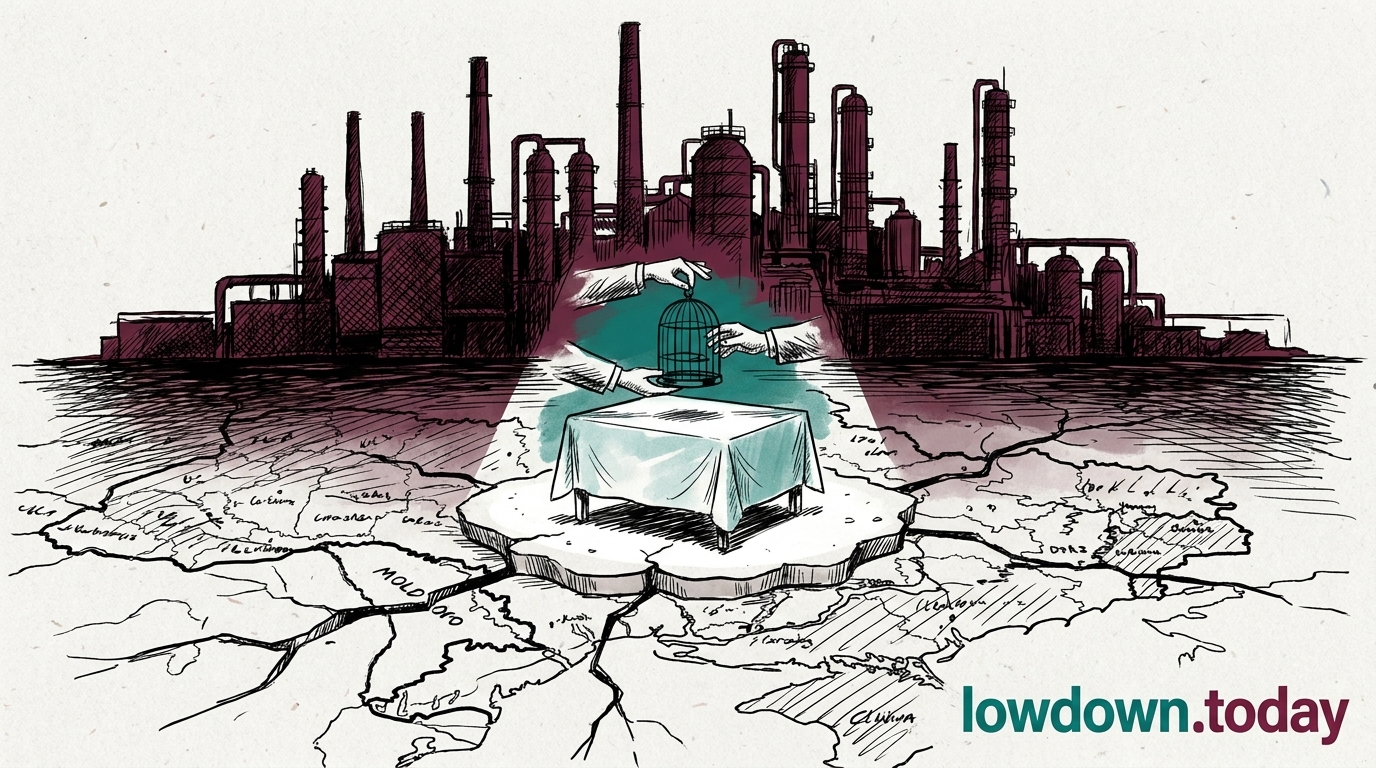
Pakistan, Turkey, Egypt, and Saudi Arabia launched the war's most ambitious diplomatic effort, but Iran's non-negotiable sovereignty claim over Hormuz leaves the core dispute structurally deadlocked.

ConflictDeveloping
Key takeaway

The Islamabad talks are diplomatically visible but structurally incapable of resolving the Hormuz dispute.

Foreign ministers from Pakistan, Turkey, Egypt, and Saudi Arabia met in Islamabad on 29 to 30 March for the most substantial multilateral diplomatic initiative since the war began 1. The conference follows Pakistan's confirmation that indirect US-Iran talks had stalled.

Iran's Condition 5 demands recognition of Iranian sovereignty over the strait of Hormuz as a "natural and legal right." Under UNCLOS Article 38, the strait is an international waterway with guaranteed transit passage. Accepting Iran's position would set a precedent the US has resisted globally for decades: no state may claim sovereignty over an international strait. Iran simultaneously notified the IMO of its legal position , building the kind of two-layer legal architecture (domestic statute plus international notification) that Egypt used after nationalising the Suez Canal in 1956.

Iran's Foreign Minister Abbas Araghchi has been direct: "intermediary messages are not direct negotiations." Tehran rejected the US 15-point plan as exclusively benefiting American and Israeli interests . The Islamabad Four can signal diplomatic intent. They cannot bridge the Hormuz sovereignty gap.

Deep Analysis

In plain English

Four countries (Pakistan, Turkey, Egypt, and Saudi Arabia) met in Islamabad to try to negotiate a ceasefire. All four are Muslim-majority states with different but overlapping interests in ending the conflict. The problem is that the central dispute is not about territory or money, but about who has the legal right to control the Strait of Hormuz. Iran says it does. International law says no nation can block international shipping lanes. Pakistan, Turkey, Egypt, and Saudi Arabia cannot resolve that disagreement. Only the US and Iran can, and Iran has said it will not sit down directly with the Americans.

Deep Analysis
Root Causes

Iran's Hormuz sovereignty demand has deep domestic legitimacy. The strait's control has been a central element of IRGC and Islamic Republic ideology since 1979; any leader who conceded it could face the accusation of surrendering national territory.

The UNCLOS Article 38 incompatibility is not a negotiating position; it is a structural conflict between Iran's constitutional claim and international maritime law as enforced by the US Navy for four decades. No regional diplomatic process can bridge that gap without US and Iranian leadership at the table.

What could happen next?
  • Consequence

    The Islamabad summit's failure to produce a framework shifts pressure back to the 6 April power grid deadline as the next decision point.

    Immediate · 0.8
  • Risk

    Each failed multilateral initiative reinforces Iran's reading that it can outlast diplomatic pressure and that time is on its side.

    Short term · 0.7
  • Opportunity

    If Pakistan's bilateral relationship with Iran yields a broader passage deal, other nations may replicate the model, creating a de facto two-tier maritime system.

    Short term · 0.6
First Reported In

Update #51 · Iran hits aluminium plants; Hormuz emptying

Egyptian Streets· 29 Mar 2026
Read original
Different Perspectives
Rafael Grossi, IAEA Director General
Grossi's Update 349 of 7 May recorded a drone strike on ZNPP's radiation monitoring laboratory on 3 May. Rosatom's 17 May public attack on the Secretariat's neutrality degrades the diplomatic ground Grossi needs for the sixth repair ceasefire at day 60 on the single backup line.
Indian Government / Embassy Moscow
The Indian Embassy in Moscow confirmed on 18 May that an Indian national was killed and three hospitalised at a refinery construction site in the 17 May barrage. India is among the largest buyers of discounted Russian crude; the fatality forces a diplomatic protest without changing the purchasing posture.
Recep Tayyip Erdogan, Turkish President
Erdogan met Zelenskyy in Ankara for nearly three hours on 15 May before the Istanbul session, recovering Turkey's 2022 mediator role and reducing Trump's leverage by hosting bilateral talks without Washington in the room. Turkey hosts the NATO Ankara summit on 7-8 July; the Istanbul format gives Erdogan standing at both tables simultaneously.
Viktor Orban / Hungarian Government
Budapest's new cabinet, formed 12 May, holds the institutional veto point on the EU tranche disbursement ahead of the first-half June window. Hungary has previously leveraged EU loan tranches to extract bilateral concessions; the combination of a fresh cabinet and a tight disbursement timeline makes Budapest the single highest-leverage actor in the EU track this fortnight.
European Council / Commission
The Commission is preparing a three-document disbursement package for the 9.1-billion euro first tranche of the EU loan to Ukraine, targeting first-half June, but delivery depends on the Magyar cabinet, which formed on 12 May, not blocking the mechanism. The 20th sanctions package remains in force against Russia.
Donald Trump / US Treasury
Treasury issued GL 134C with a 48-hour gap after GL 134B expired, confirming the waiver series functions as permanent monthly management rather than a wind-down instrument. Washington was absent from the Istanbul room; Treasury Secretary Bessent framed the Cuba carve-out as protecting 'most vulnerable nations', maintaining the fiction that the 30-day bridge has a humanitarian rationale.
