Skip to content
Briefings are running a touch slower this week while we rebuild the foundations.See roadmap
Russia-Ukraine War 2026
22MAY

Iran's five peace terms: Hormuz first

2 min read
10:57UTC

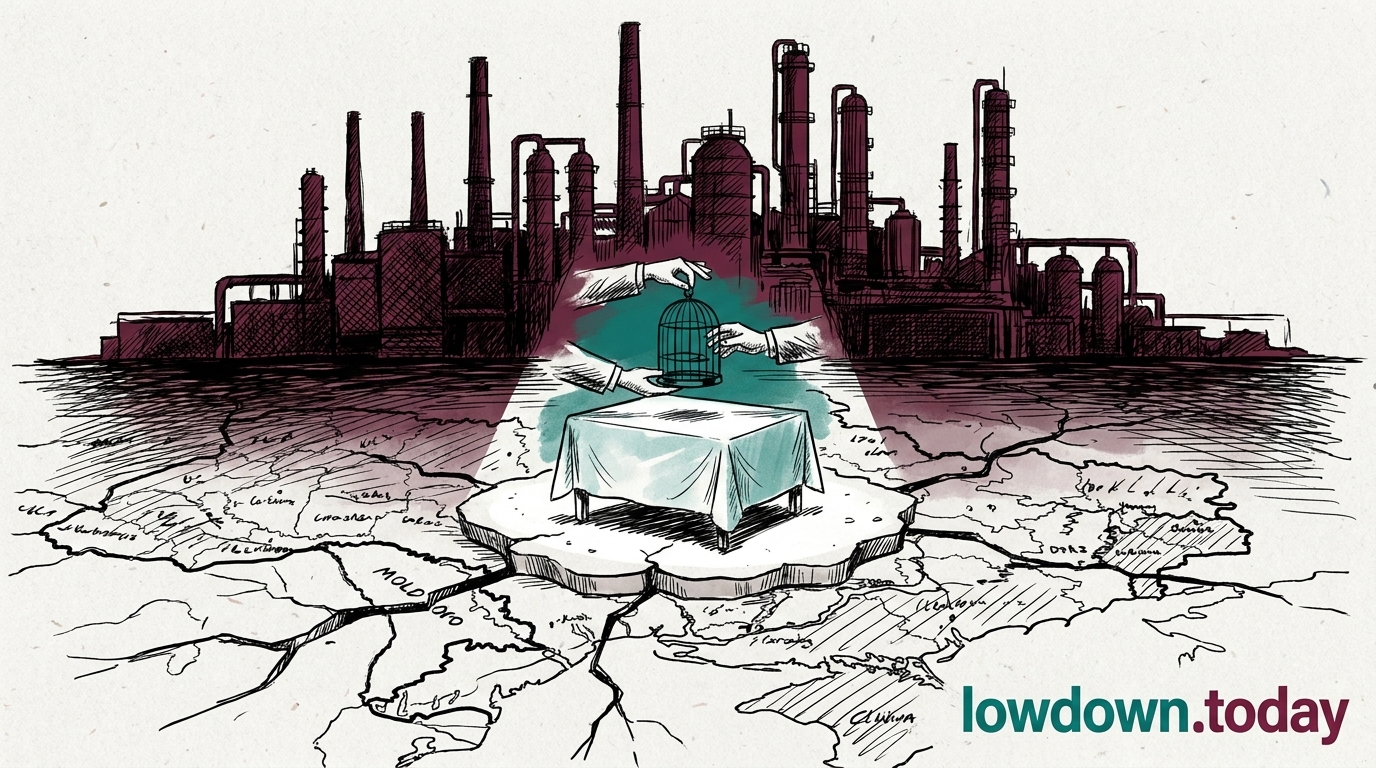
Tehran published five conditions for ending the war. The fifth, permanent control of the Strait of Hormuz, would rewrite international maritime law.

ConflictDeveloping
Key takeaway

Iran is legislating Hormuz control into permanent law before any ceasefire.

Iran's stated terms for ending the war, relayed through PressTV on 25 March via a senior political-security official, are: (1) complete cessation of all attacks; (2) concrete security mechanisms preventing reimposition of war; (3) guaranteed reparations; (4) end of war across all fronts for all resistance groups; and (5) recognition of Iran's right to control the Strait of Hormuz. 1

Condition five is not a ceasefire demand. Under UNCLOS, the strait of Hormuz is an international waterway; Iran may regulate transit through its territorial waters but cannot claim sovereignty over passage itself. No US administration could accept this. Iran almost certainly knows that.

Western coverage has framed Iran as simply "refusing talks" . The five-condition structure tells a different story: Iran has a formal position, and its most consequential demand is being legislated domestically through the Majlis bill and formalised internationally through the IMO notification . Iran is building legal architecture to outlast the war, following the same model Egypt used after Suez in 1957: establish physical control during a crisis, then legislate before it ends.

Deep Analysis

In plain English

Iran has published five demands it says must be met before it will stop fighting. The first four involve ceasefire terms and compensation. The fifth is different: Iran wants permanent legal recognition that it controls the Strait of Hormuz, the narrow passage through which most of the Persian Gulf's oil leaves. Under current international law, the strait is an international waterway. Every country's ships have the right to pass through it. Iran cannot legally block that passage, even though the water runs alongside its coast. Iran's fifth condition would change that law. No US president can agree to this. And Iran almost certainly knows that. The more telling detail is that Iran is not just saying it; it is also passing a law in its parliament to formalise the toll regime, and filing paperwork with the international shipping body. Iran is building the legal infrastructure of permanent control while the war is still ongoing.

Deep Analysis
Root Causes

Iran's Hormuz sovereignty demand is thirty years in development. Tehran has consistently argued since the 1994 Law of the Sea negotiations that its territorial waters include the strait's northern half, and that innocent passage rights are not absolute for warships of hostile states. The IRGC's toll infrastructure built between 2015 and 2025 was designed to create an operational fact before any legal claim was tested.

The war created the opportunity to formalise what the IRGC had been building. The Majlis toll bill and the IMO notification are the legal superstructure on top of an operational infrastructure that already exists.

What could happen next?
  • Consequence

    Iran's five conditions remove diplomatic off-ramps: any deal requires accepting demands that no allied government can publicly endorse, guaranteeing talks collapse if aired publicly.

  • Precedent

    If the Majlis bill passes before a ceasefire, the Hormuz toll regime becomes Iranian domestic law that any future government would need to repeal, entrenching the leverage beyond this war.

First Reported In

Update #50 · Houthis join; Iran holds two chokepoints

PressTV· 28 Mar 2026
Read original
Different Perspectives
Rafael Grossi, IAEA Director General
Grossi's Update 349 of 7 May recorded a drone strike on ZNPP's radiation monitoring laboratory on 3 May. Rosatom's 17 May public attack on the Secretariat's neutrality degrades the diplomatic ground Grossi needs for the sixth repair ceasefire at day 60 on the single backup line.
Indian Government / Embassy Moscow
The Indian Embassy in Moscow confirmed on 18 May that an Indian national was killed and three hospitalised at a refinery construction site in the 17 May barrage. India is among the largest buyers of discounted Russian crude; the fatality forces a diplomatic protest without changing the purchasing posture.
Recep Tayyip Erdogan, Turkish President
Erdogan met Zelenskyy in Ankara for nearly three hours on 15 May before the Istanbul session, recovering Turkey's 2022 mediator role and reducing Trump's leverage by hosting bilateral talks without Washington in the room. Turkey hosts the NATO Ankara summit on 7-8 July; the Istanbul format gives Erdogan standing at both tables simultaneously.
Viktor Orban / Hungarian Government
Budapest's new cabinet, formed 12 May, holds the institutional veto point on the EU tranche disbursement ahead of the first-half June window. Hungary has previously leveraged EU loan tranches to extract bilateral concessions; the combination of a fresh cabinet and a tight disbursement timeline makes Budapest the single highest-leverage actor in the EU track this fortnight.
European Council / Commission
The Commission is preparing a three-document disbursement package for the 9.1-billion euro first tranche of the EU loan to Ukraine, targeting first-half June, but delivery depends on the Magyar cabinet, which formed on 12 May, not blocking the mechanism. The 20th sanctions package remains in force against Russia.
Donald Trump / US Treasury
Treasury issued GL 134C with a 48-hour gap after GL 134B expired, confirming the waiver series functions as permanent monthly management rather than a wind-down instrument. Washington was absent from the Istanbul room; Treasury Secretary Bessent framed the Cuba carve-out as protecting 'most vulnerable nations', maintaining the fiction that the 30-day bridge has a humanitarian rationale.
