Skip to content
You can now search across every topic, entity and event.What's new
Russia-Ukraine War 2026
24APR

US Iran war cost hits $29bn on 12 May

3 min read
11:21UTC

Bloomberg and CBS News reported on 12 May that the US war against Iran has cost $29 billion, up $4 billion from the $25 billion figure the Pentagon briefed to Congress two weeks earlier. None of the spending has a signed presidential instrument behind it.

ConflictDeveloping
Key takeaway

Bloomberg and CBS put the US Iran war cost at $29bn on 12 May, $4bn above the Pentagon's figure.

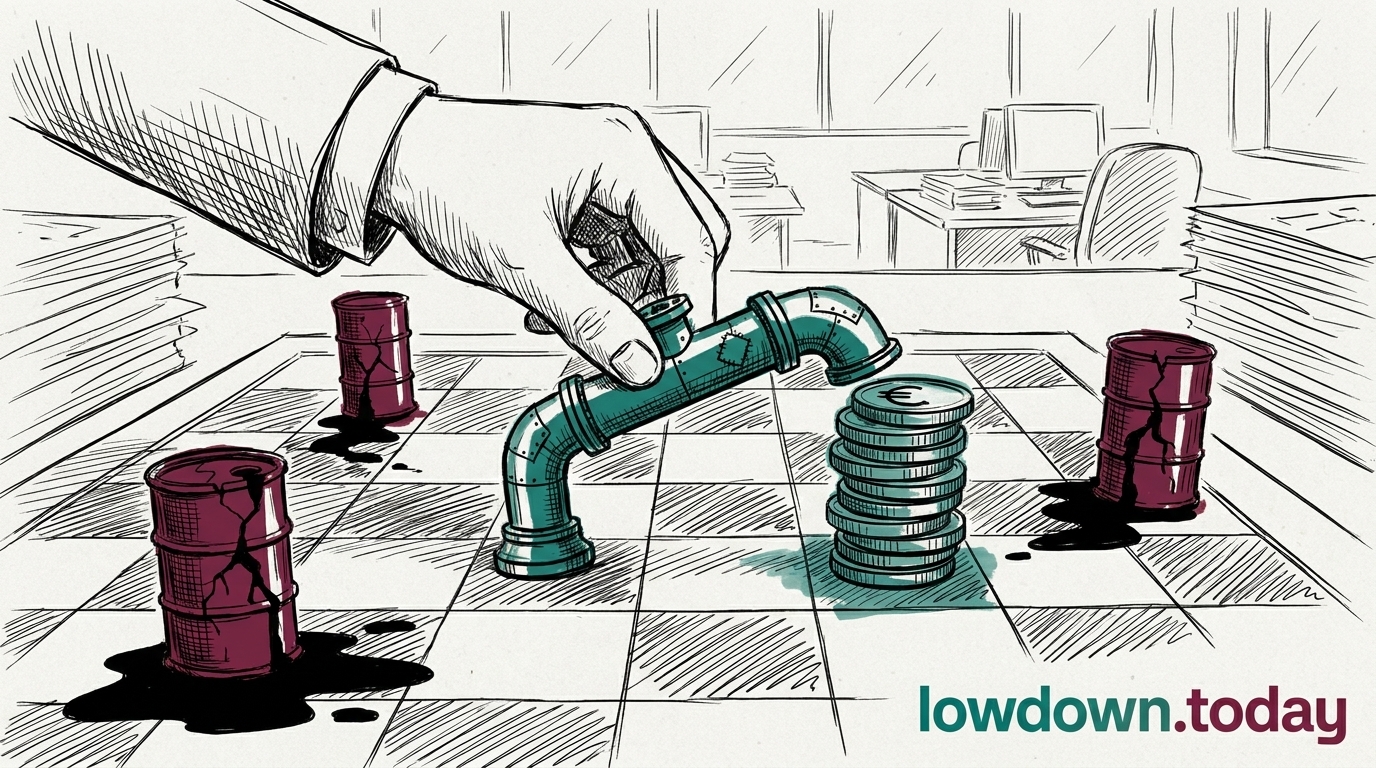
Bloomberg and CBS News reported on 12 May 2026 that the US war cost against Iran has reached $29 billion, up $4 billion from the $25 billion figure the Pentagon briefed to Congress approximately a fortnight earlier 1. The figure landed on the same day Pete Hegseth told Senate Appropriations that Article 2 covers Iran strikes and no AUMF is required, a juxtaposition that puts $4 billion every two weeks alongside zero signed presidential instruments.

$4 billion fortnightly is the build cost of a Virginia-class submarine every two weeks, sustained for 75 days without a vote, a finding, or a signed executive order. The operational layer behind the burn rate is CENTCOM's blockade, which had logged 61 cumulative vessel redirections and four disabled vessels by 10 May . The constitutional layer is now Article 2 alone. Trump's contradictory 8 May Truth Social posts and his 11 May Oval Office military-options list are the rhetorical surface of the same unsigned arithmetic.

Senate Appropriations becomes the only operating venue for legislative pressure on Iran policy because, under the administration's stated reading, appropriators can defund but cannot deauthorise. Murkowski's unfiled AUMF sits between a $4 billion fortnightly burn rate the appropriators can in principle constrain and a doctrine telling them they cannot deauthorise it.

Deep Analysis

In plain English

The United States has spent $29 billion fighting in Iran since the war began on 28 February. Bloomberg and CBS News reported that figure on 12 May. To put it in perspective: the cost of building a nuclear submarine is roughly $4 billion, and the US is spending that amount every two weeks on this conflict. When governments go to war, they normally pass special legislation, called an Authorisation for Use of Military Force, that both approves the war and sets a budget. In this case, Congress has passed no such authorisation. The money is being spent under normal Pentagon budget authority, which the Senate Appropriations Committee oversees. That committee, the one that writes the military's annual budget, is now the main place in Congress where any attempt to question or limit the war can actually happen. The committee cannot formally vote to end the war without the authorisation it was denied, but it can refuse to approve new war spending.

First Reported In

Update #96 · Hegseth: no AUMF needed. Trump flies east

Foreign Policy Journal· 13 May 2026
Read original
Causes and effects
This Event
US Iran war cost hits $29bn on 12 May
A $4 billion fortnightly burn rate with no signed authorisation behind it gives appropriators the leverage that authorisers no longer have under Hegseth's Article 2 reading.
Different Perspectives
Turkey
Turkey
Turkey, a major buyer of Russian diesel cargoes, loses that access under Moscow's first producer-binding export ban, in force from 8 July to 31 July. Ankara hosted the same week's NATO summit pledging EUR 70bn to Ukraine, sitting on both sides of the fuel-and-alliance ledger.
NATO
NATO
NATO leaders meeting in Ankara on 7 and 8 July pledged EUR 70bn in equipment, assistance and training for Ukraine across 2026, with a 2027 sustainment commitment and a $40bn Drone Edge counter-drone initiative. European allies now fund the vast majority of that package, filling the gap left by Washington's idled crude waiver.
India
India
India's state refiners continued buying discounted Urals crude as June's price fell to $63.18 a barrel, insulating New Delhi from the OFAC waiver gap still constraining Western buyers. Indian refiners could pick up diesel-export share as Russia's producer-binding ban shuts out its former customers.
China
China
China's independent refiners kept importing discounted Urals crude through June as the price fell to $63.18 a barrel, down 26% month-on-month per CREA. Beijing has said nothing on Moscow's new diesel ban, leaving Chinese refiners a likely beneficiary if Turkish and Brazilian buyers seek replacement cargoes.
United States
United States
No successor licence has been issued since General License 134C lapsed on 17 June, leaving a 26-day gap, the longest of the war, in the Russian crude waiver. Washington's silence is tightening the channel without any stated decision, as Treasury weighs whether to let it die.
Ukraine
Ukraine
Ukraine's long-range strike campaign shifted from refineries to seaborne fuel tankers crossing the Sea of Azov, cutting tracked vessel traffic 55% between 30 June and 11 July, per Starboard Maritime Intelligence. The shift targets Russia's export revenue directly rather than just domestic supply, adding pressure alongside the collapsing Urals price.
