Skip to content
Briefings are running a touch slower this week while we rebuild the foundations.See roadmap
Russia-Ukraine War 2026
24APR

Sweden detains Sea Owl I captain

3 min read
11:21UTC

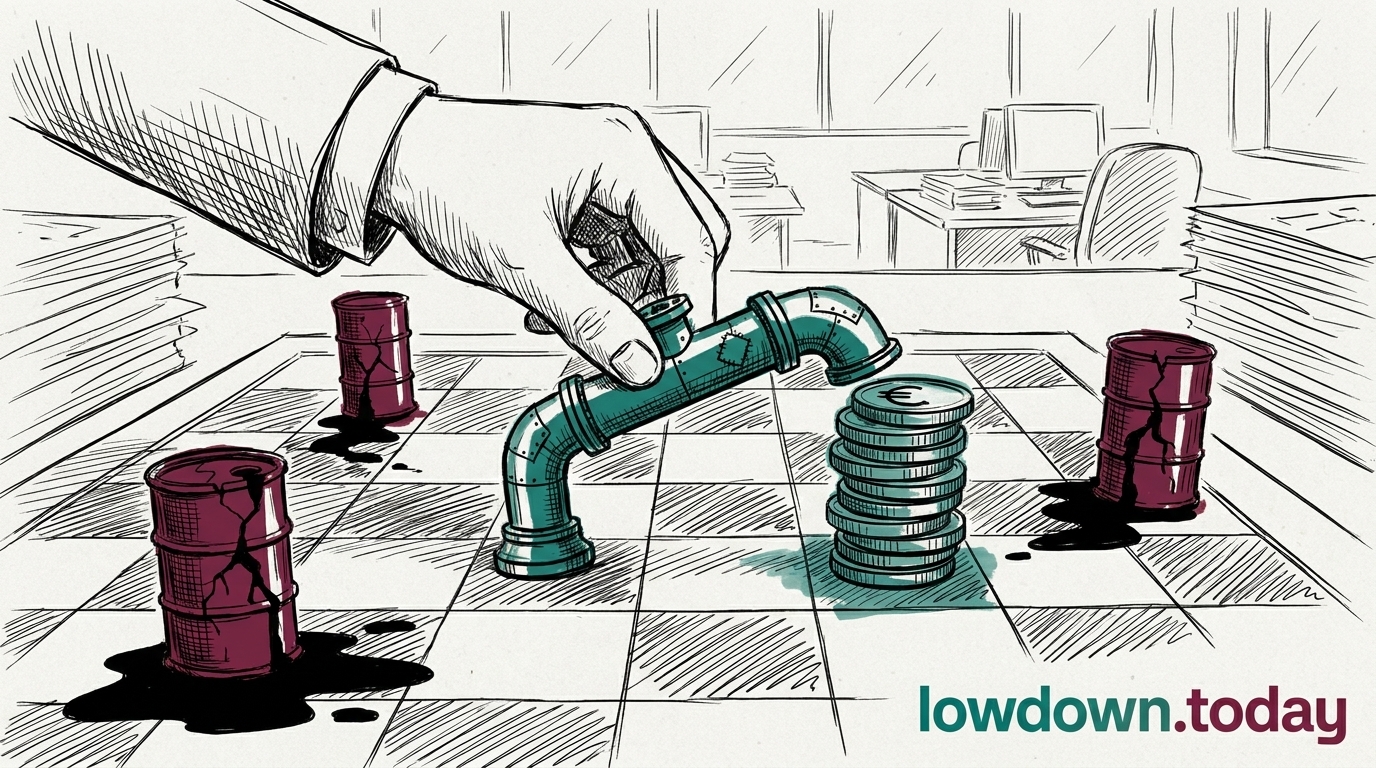
The Sea Owl I is the largest shadow fleet vessel seized in European waters — and the first case to produce a criminal detention of a crew officer.

ConflictDeveloping
Key takeaway

Criminal detention of the captain marks the first personal criminal accountability in the European shadow fleet enforcement campaign.

Swedish coast guard officers boarded the 228-metre tanker Sea Owl I off Trelleborg on 12 March — the largest Russian-linked vessel seized in European waters during the current enforcement campaign. The ship had departed Santos, Brazil on 15 February with Tallinn declared as its destination. Swedish authorities determined the actual heading was Primorsk, a Russian oil export terminal near St Petersburg 1. A Swedish court detained the vessel's 55-year-old Russian captain on 15 March for using falsified documents.

The Sea Owl I was the third shadow fleet vessel taken in European waters within two weeks. Belgium and France seized the Ethera on 28 February under Operation Blue Intruder ; Sweden itself took the Caffa near Trelleborg on 6 March, with Ukrainian authorities alleging it had carried grain from occupied Sevastopol 2 . Each case features the same deception architecture: fraudulent flags of convenience, fictitious port declarations, forged documentation. The consistency points to an organised system, not improvised evasion by individual masters.

The captain's detention introduces a dimension previous enforcement actions lacked. Seizing a vessel is an asset action against a ship's owner — often an opaque shell company registered in a permissive jurisdiction. Detaining the officer who navigated the ship criminalises the human labour the fleet depends on. Officers willing to crew shadow fleet voyages already face denial of Western port access, exclusion from standard maritime insurance, and the physical risks exposed by the destruction of the Arctic Metagaz off Libya on 3 March . Adding criminal prosecution in a Swedish court raises the personal cost further. CREA data showed 56% of Russian crude moved on sanctioned shadow tankers in February . If crew recruitment becomes harder or commands a risk premium, operating costs rise for a fleet that already cannot access standard P&I insurance.

The three seizures concentrate in the Baltic — the corridor where shadow fleet traffic is densest and European patrol presence strongest. Whether enforcement extends into less-policed waters, where the bulk of shadow fleet voyages transit, will determine whether the seizure campaign constrains Russian oil revenue or merely displaces the routes.

Deep Analysis

In plain English

Russia moves its oil using ships that disguise their origins — flying false flags and filing false destination documents to avoid Western sanctions. Sweden has now done something new: it arrested the ship's captain personally, charging him with document fraud. Previously, the worst outcome for a shadow fleet vessel was having the ship temporarily seized. Personal criminal charges create a very different risk calculation for maritime professionals who crew and command these vessels.

Deep Analysis
Synthesis

The Sea Owl I prosecution, combined with Kallas's operator-targeting declaration (Event 9), represents a three-tier enforcement chain — vessels, operators, individuals — mirroring FATF anti-money-laundering doctrine applied to maritime sanctions. Each tier raises the compliance cost for the next actor in the chain. Whether Nordic criminal jurisdiction survives a Russian flag-state challenge at the IMO will determine whether personal criminal liability becomes a replicable enforcement model across EU member states.

Root Causes

False destination declarations exploit a structural gap in the international maritime system: flag-state primacy under UNCLOS means Russia has no enforcement incentive for reflagged vessels. AIS transponder manipulation and false port filings are therefore near-zero-risk practices absent port-state criminal jurisdiction — which Sweden has now exercised, testing the limits of UNCLOS Article 97.

Escalation

The Swedish court's detention moves enforcement from civil asset seizure (in rem) to individual criminal prosecution (in personam). This is a qualitative legal escalation — it creates personal liberty and career risk for maritime professionals, not just commercial risk for vessel owners. No previous European shadow fleet action has reached this threshold.

What could happen next?
  • Precedent

    Personal criminal prosecution of shadow fleet commanders establishes a replicable model for EU member states exercising port-state criminal jurisdiction.

    Medium term · Assessed
  • Consequence

    Russia may accelerate full reflagging of shadow fleet vessels to its own registry to reduce exposure to Nordic criminal jurisdiction.

    Short term · Assessed
  • Risk

    A Russian flag-state challenge at the IMO could produce a ruling that limits port-state criminal jurisdiction, cutting against the entire enforcement escalation.

    Medium term · Suggested
First Reported In

Update #6 · Ukraine sends negotiators as front reverses

Euronews· 20 Mar 2026
Read original
Causes and effects
This Event
Sweden detains Sea Owl I captain
Criminal prosecution of the captain establishes personal liability for shadow fleet operations, targeting the labour supply these voyages depend on beyond asset seizures alone.
Different Perspectives
NATO eastern flank (B9 + Nordics)
The B9+Nordic Bucharest joint statement on 13 May reaffirmed Ukraine's sovereignty within internationally recognised borders and backed NATO eastern flank reinforcement; the summit accepted Zelenskyy's bilateral drone deal proposal as a structural alternative to the stalled US export approval pathway, treating it as a European defence architecture question rather than aid delivery.
IAEA / Rafael Grossi
Grossi is still negotiating a sixth ZNPP repair ceasefire with no agreement after 50 days of 750 kV line disconnection; the 3 May ERCL drone strike that destroyed environmental monitoring equipment represents a qualitative escalation in infrastructure degradation that the IAEA has documented but cannot compel either party to halt.
Péter Magyar / Hungary
Magyar's incoming foreign minister pledged on 12 May that Hungary will stop abusing EU veto rights; the pledge is a statement of intent rather than a binding legal commitment, and Magyar's MEPs voted against the €90 billion loan as recently as April, while a planned referendum on Ukraine's EU accession preserves a downstream blocking lever.
EU Council and European Commission
The Magyar cabinet formation on 12 May removes the Hungary veto that had blocked the €9.1 billion first tranche since February; the Commission is now coordinating the three-document disbursement package for an early-June vote. The structural blocker is gone; the disbursement question is now scheduling, not politics.
Donald Trump / White House
Trump announced a 9-11 May three-day ceasefire with a 1,000-for-1,000 prisoner exchange attached, then called peace 'getting very close' on 11-13 May while Russia's 800-drone barrage was under way; his public framing adopted Russian diplomatic language without securing any Russian operational concession or verifying the exchange was agreed.
Vladimir Putin / Kremlin
Putin told reporters on 9 May the war is 'coming to an end' while Peskov confirmed on 13 May that territorial demands are unchanged and Russia requires full Ukrainian withdrawal from all four annexed regions; the verbal accommodation costs Moscow nothing and conditions any summit on a pre-finalised treaty Kyiv cannot accept.
