Skip to content
Briefings are running a touch slower this week while we rebuild the foundations.See roadmap
Russia-Ukraine War 2026
24APR

Israel's fuel strikes exceeded US plans

4 min read
11:21UTC

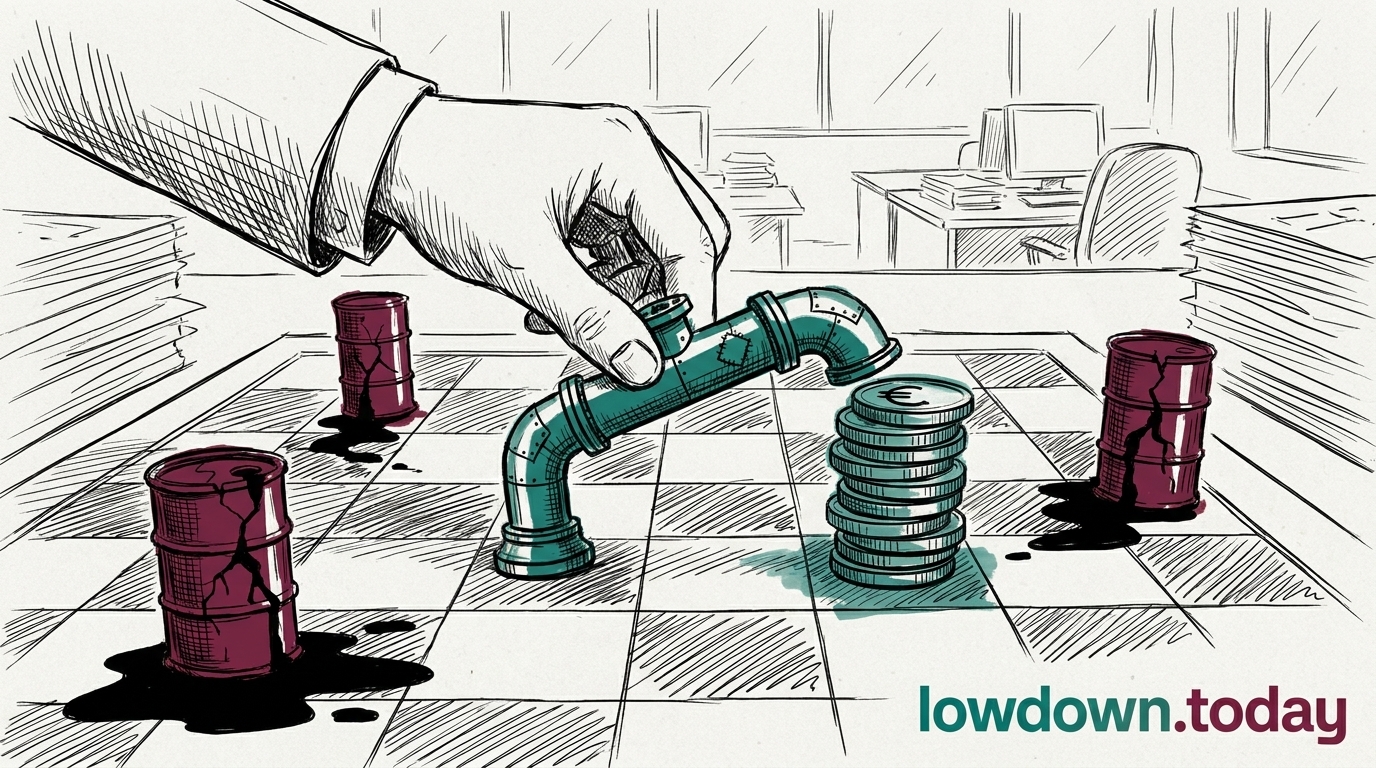
Israel's strikes on 30 Iranian fuel depots went far beyond what the US expected — the first documented crack in the alliance since Day 1, exposing war aims that cannot both be satisfied.

ConflictDeveloping
Key takeaway

Washington's documented displeasure is politically significant but historically has never altered Israeli targeting decisions mid-campaign, and the US currently has no treaty mechanism to enforce a veto.

Axios reported Sunday that Israel's strikes on 30 Iranian fuel depots went far beyond what the US expected when Israel notified Washington in advance — the first documented disagreement between the allies since Operation Epic Fury began on 28 February. US military officials were "surprised by how wide-ranging the attacks were."

Two concerns drove the American reaction. First, that striking civilian Energy infrastructure could rally Iranian society behind its government rather than fracturing it — precisely the opposite of the popular uprising that Netanyahu's regime change objective requires. The acid rain falling on nine million Tehranis is the kind of shared hardship that binds populations to wartime leadership, a pattern Washington's own analysts have documented from Hanoi to Baghdad. Second, the strikes directly worsened the oil price shock The Administration has spent nine days trying to contain. Brent Crude had already posted the largest weekly gain in the history of the contract before Sunday's 26.1% single-day spike above $116. Every barrel of Iranian fuel burning in a depot fire tightens a global supply that is simultaneously squeezed by Kuwait's force majeure , Iraq's production shutdown, and the collapse of war-risk insurance coverage.

The rift exposes a divergence in war aims that was structural from Day 1 but is only now surfacing through named reporting. Defence Secretary Hegseth has explicitly stated that dismantling Iran's security apparatus is "not Regime change." The US objective, as articulated across nine days of Pentagon briefings, is to destroy Iran's military capability and force a negotiated outcome. Netanyahu declared Regime change an explicit Israeli war aim on Saturday , telling Iranians directly that Israel has "an organised plan with many surprises to destabilise the regime." These two objectives require opposite targeting logic. Degrading military capability means hitting military targets — missile launchers, naval vessels, command infrastructure. Engineering Regime change through internal collapse means making daily life unbearable — fuel depots, refineries, power grids. Israel's fuel depot campaign follows the second logic.

How Washington responds will determine whether this remains a disagreement or becomes a constraint. The US has the leverage: Israel depends on American intelligence sharing, aerial refuelling, and munitions supply. But exercising that leverage publicly, during a war The Administration has rated "12-15 on a ten-point scale" , would require a political confrontation the White House has shown no appetite for. The more likely outcome is private discomfort and continued acquiescence — which means the targeting logic defaults to Israel's.

Deep Analysis

In plain English

Israel told the US in advance it was going to strike Iranian fuel depots, but Washington expected a handful of targeted hits — not thirty. The US is now worried on two fronts: that destroying fuel for ordinary Iranians will make them rally behind their government rather than turn against it (the opposite of what Israel says it wants), and that the strikes are pushing oil prices to levels that are damaging the global economy the US is trying to protect. Both countries want a weaker Iran, but they sharply disagree on how to get there — and Israel, once inside an operation, has always continued on its own terms.

Deep Analysis
Synthesis

The rift reveals a structural asymmetry in the alliance: when Israel is the defensive actor, US support is near-unconditional; when Israel is the primary offensive actor against a peer-level state, US interests diverge sharply. This is the first war in decades in which Israel is the principal offensive actor against a state adversary rather than a non-state or sub-state threat, making the divergence unavoidable at scale rather than manageable at the margin.

Root Causes

The US provides Israel with intelligence, logistics, and diplomatic cover but built no formal approval authority over Israeli strike packages into the alliance architecture. Israel deliberately preserved this operational autonomy to avoid the veto problem. The US cannot practically withhold support from an ally in active hostilities — doing so would weaken Israel in the field and carry catastrophic domestic political cost — which means the US's only real leverage is post-war and structural, not real-time.

Escalation

Israel's regime-change logic has a clear escalation ladder: fuel depots are one rung below the electrical grid and water infrastructure. If this rift produces no operational constraint — as history suggests it will not — the next Israeli strike package may target power generation or distribution assets, which would provoke even sharper US objection and carry greater humanitarian consequences.

What could happen next?
  • Consequence

    The US can no longer present unified allied purpose to Russia, China, or Gulf interlocutors — the rift is now on the record and will be exploited in diplomatic channels.

    Immediate · Assessed
  • Risk

    If Israel continues infrastructure strikes over US objection without consequence, Netanyahu will have demonstrated that US concerns can be disregarded during active hostilities — a precedent emboldening future unilateral Israeli action beyond this conflict.

    Short term · Assessed
  • Risk

    Sustained oil above $100 driven by Israeli targeting choices creates a domestic US political pressure point that could eventually force harder White House pressure on Israel than it has publicly signalled willingness to apply.

    Medium term · Suggested
  • Precedent

    The first documented in-war disagreement establishes that advance notification by Israel does not constitute US approval authority — a legal and operational precedent with implications for future joint or parallel operations.

    Long term · Assessed
First Reported In

Update #30 · Mojtaba named leader; oil $116; acid rain

Axios· 9 Mar 2026
Read original
Causes and effects
This Event
Israel's fuel strikes exceeded US plans
The first public US-Israel disagreement reveals structurally incompatible objectives that determine who and what gets bombed. Military degradation demands strikes on military targets. Regime change through popular revolt demands strikes on civilian infrastructure. Israel chose the latter without US agreement.
Different Perspectives
EU Council / European Commission
With Orban's veto lifted and Magyar's Tisza government not placing a replacement block, the European Commission is signalling the first 90 billion euro Ukraine loan tranche for late May or early June 2026. Disbursement depends on Magyar's 5 May government formation proceeding to schedule.
Germany
Germany
Russia's Druzhba northern branch transit halt from 1 May removes one of Germany's residual non-Russian crude supply options. The timing compounds Berlin's exposure in the same week Ukrainian strikes drive Russian refinery throughput to its lowest since December 2009.
IAEA / Rafael Grossi
Grossi confirmed the Zaporizhzhia Nuclear Power Plant lost external power for its 14th and 15th times within a single week in late April, with the Ferosplavna-1 backup feeder damaged 1.8 km from the switchyard. He was negotiating a further local ceasefire; the previous IAEA-brokered repair lasted less than a week.
Japan
Japan
Japan authorised direct PAC-3 exports to the United States on 30 April, breaking its post-1945 arms export restrictions to replenish Iran-war-depleted US stockpiles. The White House global Patriot export freeze remains in place; Japan's historic policy shift benefits US readiness without reaching Ukraine.
Kazakhstan
Kazakhstan
Russia's Druzhba northern branch transit halt from 1 May cuts Kazakhstan's access to the German crude market. Astana routes most of its export crude through Russian infrastructure, meaning Moscow's unilateral decision directly constrains Kazakh export diversification despite Kazakhstan's stated neutrality on the war.
Péter Magyar / Tisza Party / Hungary
Magyar targets 5 May for government formation ahead of the 12 May constitutional deadline. Orbán lifted the EU loan veto before leaving office; Magyar supports Hungary's opt-out but has not placed a new veto, leaving the first 90 billion euro tranche on track for late May disbursement.
