Skip to content
You can now search across every topic, entity and event.What's new
Russia-Ukraine War 2026
11APR

White House freezes all Patriot exports

2 min read
16:48UTC

Global Patriot export approvals went on ice after three days of Iran war operations burned through more rounds than the United States builds in an entire year.

ConflictDeveloping
Key takeaway

A Patriot export freeze on top of the production gap leaves Ukraine no resupply route that clears in time.

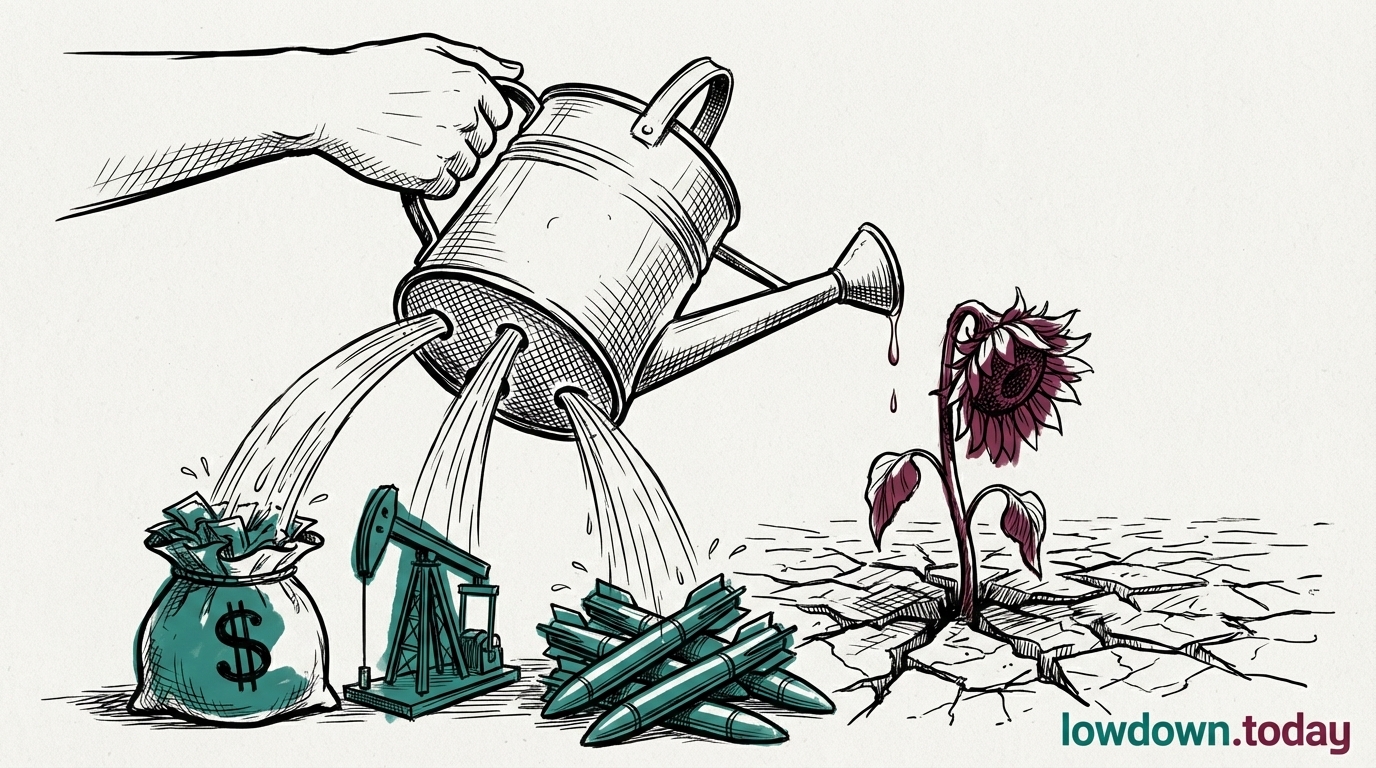
Defense News and the Washington Post reported this week that the White House suspended PAC-3 export approvals worldwide after more than 800 rounds were expended in three days of Iran war operations 1. Annual US production runs at roughly 600. The arithmetic does not reconcile with even a single restock cycle, let alone two.

For Kyiv, the suspension compounds the Lockheed contract arithmetic covered separately in this briefing. Gulf customers lose near-term deliveries, but Ukraine is the only recipient whose stockpile deadline falls inside the ninety-day window. Zelenskyy's figure from late March did not anticipate the export queue freezing on top of the production gap.

Zelenskyy had already flagged in late March that Ukraine needed 800 interceptors of the same kind the US expended in Iran in three days against roughly 700 Ukraine had received all winter . The export freeze converts that asymmetry from a supply warning into a supply wall. Ukraine's STING interceptor drone, validated a week earlier, does not close the gap for ballistic or cruise threats, which still require the PAC-3 airframe. What Ukraine can do alone is narrower than what it needs Washington to backfill.

Deep Analysis

In plain English

After the recent conflict with Iran, the US used more than 800 Patriot missiles in just three days. To put that in perspective, the US only makes about 600 per year. The White House responded by temporarily stopping all Patriot sales to other countries, including Ukraine, while production catches up. This leaves Ukraine in a queue alongside dozens of other US allies, with no guaranteed timeline for resuming deliveries. Ukraine's air defence shields its cities from ballistic missiles; without interceptors, those shields run dry.

Deep Analysis
Root Causes

The root cause is a production base that was sized for deterrence, not attrition warfare. US PAC-3 production was optimised over two decades for planned peacetime deliveries to Gulf and Asian allies, not for sustained wartime consumption rates. The Iran conflict consumed in 72 hours what US factories produce in 16 months.

A secondary cause is institutional: the US never established a strategic interceptor reserve analogous to the Strategic Petroleum Reserve. Each PAC-3 is allocated to a named buyer at contract signature, leaving no unallocated buffer that could be redirected to Ukraine under emergency authority.

Escalation

The suspension, if maintained beyond six to eight weeks, creates a predictable window for Russia to test Ukraine's depleted Patriot coverage with ballistic missile concentrations on Kyiv or Odesa. Russian targeting patterns historically exploit confirmed air defence gaps within 30-60 days of detection.

What could happen next?
  • Risk

    A sustained suspension creates a measurable window for Russian ballistic missile penetration of Ukrainian air defence coverage within 30-60 days.

  • Consequence

    FMS buyers who hold Patriot systems, including Germany, Netherlands, Japan, and Saudi Arabia, will face their own restocking delays, adding diplomatic friction to existing US alliance management.

First Reported In

Update #12 · Three narrowings of US support for Kyiv

Defense News· 11 Apr 2026
Read original
Different Perspectives
Turkey
Turkey
Turkey, a major buyer of Russian diesel cargoes, loses that access under Moscow's first producer-binding export ban, in force from 8 July to 31 July. Ankara hosted the same week's NATO summit pledging EUR 70bn to Ukraine, sitting on both sides of the fuel-and-alliance ledger.
NATO
NATO
NATO leaders meeting in Ankara on 7 and 8 July pledged EUR 70bn in equipment, assistance and training for Ukraine across 2026, with a 2027 sustainment commitment and a $40bn Drone Edge counter-drone initiative. European allies now fund the vast majority of that package, filling the gap left by Washington's idled crude waiver.
India
India
India's state refiners continued buying discounted Urals crude as June's price fell to $63.18 a barrel, insulating New Delhi from the OFAC waiver gap still constraining Western buyers. Indian refiners could pick up diesel-export share as Russia's producer-binding ban shuts out its former customers.
China
China
China's independent refiners kept importing discounted Urals crude through June as the price fell to $63.18 a barrel, down 26% month-on-month per CREA. Beijing has said nothing on Moscow's new diesel ban, leaving Chinese refiners a likely beneficiary if Turkish and Brazilian buyers seek replacement cargoes.
United States
United States
No successor licence has been issued since General License 134C lapsed on 17 June, leaving a 26-day gap, the longest of the war, in the Russian crude waiver. Washington's silence is tightening the channel without any stated decision, as Treasury weighs whether to let it die.
Ukraine
Ukraine
Ukraine's long-range strike campaign shifted from refineries to seaborne fuel tankers crossing the Sea of Azov, cutting tracked vessel traffic 55% between 30 June and 11 July, per Starboard Maritime Intelligence. The shift targets Russia's export revenue directly rather than just domestic supply, adding pressure alongside the collapsing Urals price.
