Skip to content
Briefings are running a touch slower this week while we rebuild the foundations.See roadmap
Russia-Ukraine War 2026
11APR

Iran got 800 interceptors; Ukraine 700

2 min read
16:48UTC

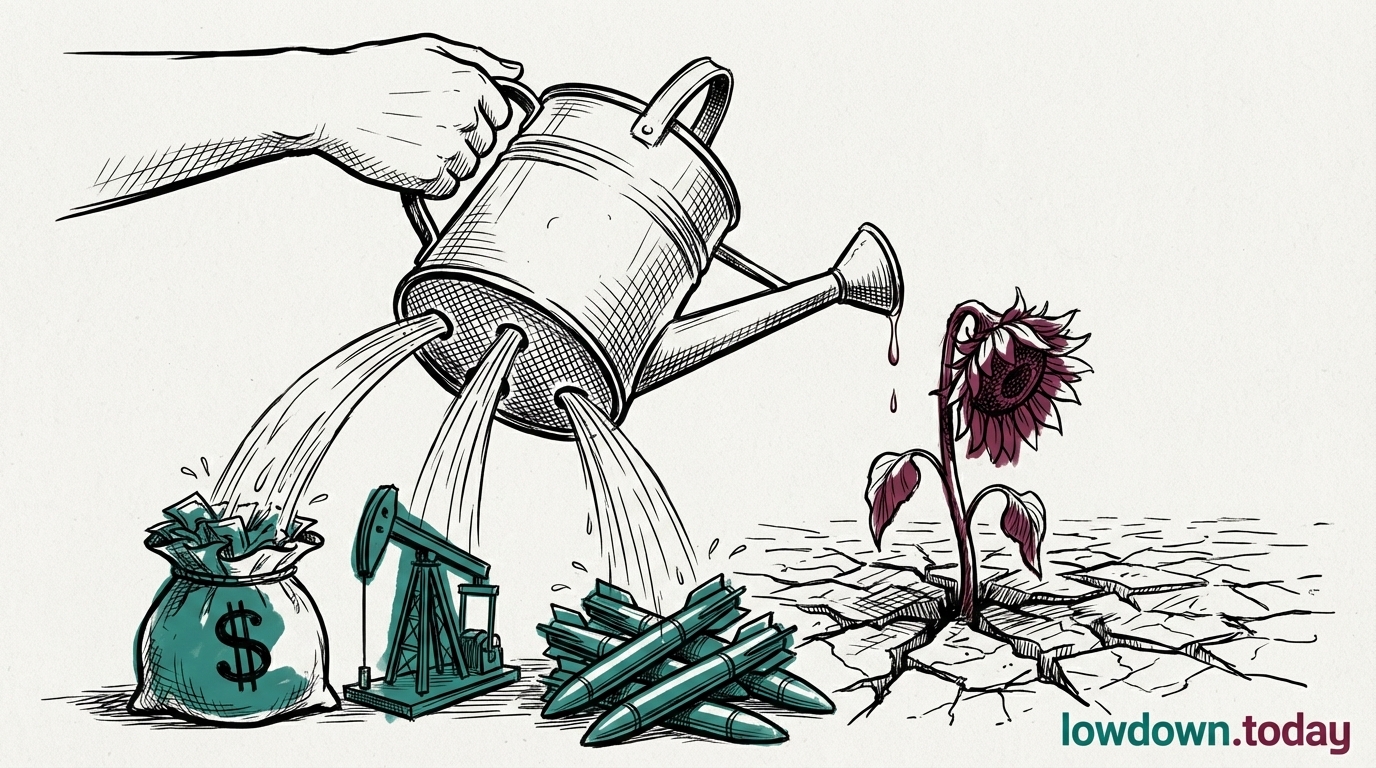
Eight hundred missiles consumed in three days of the Iran war exceeded everything Ukraine received over the entire winter, exposing a production bottleneck that cannot be resolved in under a year.

ConflictDeveloping
Key takeaway

US interceptor production cannot sustain two simultaneous high-intensity air defence campaigns.

Zelenskyy told the BBC on 26 March that 800 US-made interceptors were consumed in three days of the Iran war, compared to 700 Ukraine received over its entire winter 1. The United States produces only 60 to 65 Patriot missiles per month.

Replacing the 800 rounds burned in Iran takes 12 to 13 months at current production rates. Zelenskyy's earlier observation that more Patriot interceptors were used in three days of the Iran war than Ukraine received in three years was a rhetorical comparison; the 26 March figures make it arithmetic. The THAAD expenditure of 100 to 150 rounds in the first week compounds the shortfall across a second interceptor class.

Zelenskyy confirmed that deliveries to Ukraine have not stopped. But the trajectory is clear: the $750 million PURL diversion notified the same day signals Washington is prioritising restocking over resupply. France's commitment of eight SAMP/T NG air defence systems becomes a more important stopgap with each week the American production bottleneck persists.

The production constraint is physical, not political. Propellant, seeker heads, and testing capacity all take 18 months to surge. No amount of congressional goodwill changes the number of missiles that leave the factory floor each month.

Deep Analysis

In plain English

Imagine there are only 65 bullets produced each month for a very expensive gun. Ukraine was given 700 over the whole winter. Then, separately, 800 were fired in just three days during the Iran war. Zelenskyy is pointing out the maths: the US cannot supply both wars at once. The gun that protects Ukraine from Russian drones uses the same bullets being spent in the Middle East. Until production speeds up — which takes 12-18 months at minimum — one theatre will go short.

Deep Analysis
Root Causes

The interceptor shortage has two structural roots.

US Patriot missile production was scaled for Cold War deterrence scenarios, not sustained multi-theatre high-intensity conflict. The production bottleneck — propellant chemistry, seeker head manufacturing, and qualification testing — cannot be surged quickly. Raytheon has stated publicly that 18 months is the minimum lead time for a significant production increase.

The Iran war created demand that was structurally unpredictable in Western defence planning. NATO procurement cycles operate on 5-10 year horizons; simultaneous high-intensity air defence campaigns across two separate theatres were not in the baseline scenario for Patriot allocation planning.

First Reported In

Update #8 · Pentagon diverts funds; 948 drones fired

Ukrainska Pravda· 27 Mar 2026
Read original
Different Perspectives
Rafael Grossi, IAEA Director General
Grossi's Update 349 of 7 May recorded a drone strike on ZNPP's radiation monitoring laboratory on 3 May. Rosatom's 17 May public attack on the Secretariat's neutrality degrades the diplomatic ground Grossi needs for the sixth repair ceasefire at day 60 on the single backup line.
Indian Government / Embassy Moscow
The Indian Embassy in Moscow confirmed on 18 May that an Indian national was killed and three hospitalised at a refinery construction site in the 17 May barrage. India is among the largest buyers of discounted Russian crude; the fatality forces a diplomatic protest without changing the purchasing posture.
Recep Tayyip Erdogan, Turkish President
Erdogan met Zelenskyy in Ankara for nearly three hours on 15 May before the Istanbul session, recovering Turkey's 2022 mediator role and reducing Trump's leverage by hosting bilateral talks without Washington in the room. Turkey hosts the NATO Ankara summit on 7-8 July; the Istanbul format gives Erdogan standing at both tables simultaneously.
Viktor Orban / Hungarian Government
Budapest's new cabinet, formed 12 May, holds the institutional veto point on the EU tranche disbursement ahead of the first-half June window. Hungary has previously leveraged EU loan tranches to extract bilateral concessions; the combination of a fresh cabinet and a tight disbursement timeline makes Budapest the single highest-leverage actor in the EU track this fortnight.
European Council / Commission
The Commission is preparing a three-document disbursement package for the 9.1-billion euro first tranche of the EU loan to Ukraine, targeting first-half June, but delivery depends on the Magyar cabinet, which formed on 12 May, not blocking the mechanism. The 20th sanctions package remains in force against Russia.
Donald Trump / US Treasury
Treasury issued GL 134C with a 48-hour gap after GL 134B expired, confirming the waiver series functions as permanent monthly management rather than a wind-down instrument. Washington was absent from the Istanbul room; Treasury Secretary Bessent framed the Cuba carve-out as protecting 'most vulnerable nations', maintaining the fiction that the 30-day bridge has a humanitarian rationale.
