Skip to content
Welcome, thoughtbot's Giant Robots listeners!Start here
Russia-Ukraine War 2026
3MAR

Ukraine intercepts 89.9% in March

3 min read
09:47UTC

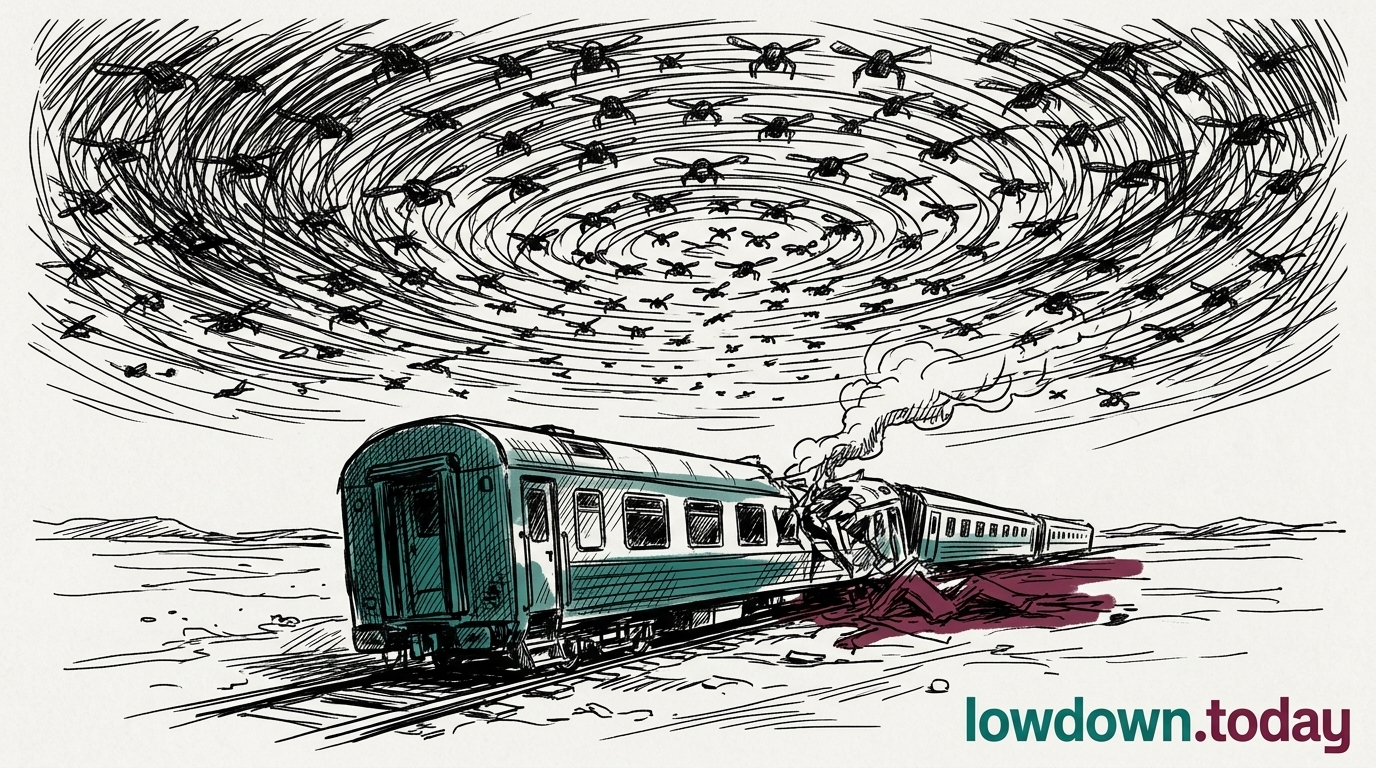
Ukraine's interception rate reached 89.9% in March as domestically produced drones costing under $2,000 each displaced $13.5 million Patriot rounds for most Shahed kills.

ConflictDeveloping
Key takeaway

Sub-$2,000 interceptor drones now handle most Shahed kills, loosening Ukraine's dependence on US missile supply.

C4ISRNET reported on 1 April that Ukraine's air defence interception rate reached 89.9% in March, the highest monthly figure of the entire war, up from 85.6% in February and 80.2% in December 2025⁠1. Over 2,300 Russian aerial targets were destroyed. Interceptor drones now account for over 30% of all air defence kills, and more than 70% of Shahed downings specifically.

The economics reshape the attrition calculus. A single interceptor drone costs under $2,000. A PAC-3 MSE round costs $13.5 million. Zelenskyy told the BBC on 26 March that 800 US-made interceptors were consumed in three days of the Iran war, compared to 700 Ukraine received over its entire winter. At 60 to 65 Patriot missiles produced per month, replacing those 800 rounds takes over a year.

Russian attack volumes rose 23.5% month on month: 6,600 aerial threats in March, up from 5,345 in February. The 948-drone barrage on 24 March remains the single largest attack of the war. The absolute number of threats slipping through is not falling proportionally to the interception rate. But the cost curve has shifted: Ukraine is spending thousands per kill where it once spent millions. The Pentagon's planned $750 million diversion from the PURL fund loses some leverage if Ukraine's primary air defence tool is domestically produced.

Deep Analysis

In plain English

Ukraine is now shooting down almost 90% of Russian drone and missile attacks. In March, over 2,300 Russian aerial threats were destroyed. The interesting part is how: rather than using expensive American missiles costing $13.5 million each, Ukraine increasingly uses small interceptor drones costing under $2,000 to ram or detonate Russian Shahed drones mid-flight. These interceptor drones now handle over 70% of all Shahed kills. This matters because the US recently suggested diverting money intended for Ukraine's air defence to restock American weapons used in the Iran war. If Ukraine can defend itself primarily with cheap domestically made drones rather than expensive American missiles, it is less exposed to that diversion.

Deep Analysis
Root Causes

The interceptor drone's emergence as a primary air defence tier reflects two pressures: the shortage of Patriot rounds (800 consumed in three days of Iran-war operations, ) and Ukraine's three years of operational data on Shahed flight patterns, which enabled development of guidance algorithms for sub-$2,000 drones to intercept a target costing $20,000-$50,000.

The cost structure also reflects Ukraine's wartime industrial development. A country that had no missile industry before 2022 now manufactures the most cost-effective Shahed-killing system in the world. That transition took three years of battlefield learning, not a research programme.

Escalation

Russia has responded to declining Shahed effectiveness by increasing barrages (6,600 threats in March, up 23.5%). The logic is to saturate defences. Ukraine's response is to scale interceptor drone production. Both sides are locked in an industrial capacity race rather than a technology race, favouring whichever side can scale manufacturing faster.

What could happen next?
  • Opportunity

    Ukraine's interceptor drone model offers NATO allies a cost-effective supplement to high-end air defence against drone threats, with potential technology transfer implications for European air defence architecture.

  • Consequence

    If Russia responds by switching from Shaheds to cruise missiles or ballistic weapons, Ukraine's sub-$2,000 interceptors may become less effective, restoring dependency on Patriot-class systems.

First Reported In

Update #9 · Ukraine halves Russia's Baltic oil exports

C4ISRNET· 1 Apr 2026
Read original →
Different Perspectives
Government of Latvia
Latvia abstained on 22 September when the EU renewed its individual sanctions for 36 months at the price of delisting Alisher Usmanov and Mikhail Fridman, and promised national sanctions of its own. Riga's abstention marks how far a frontline member state will go to keep listed names listed.
India's Ministry of External Affairs
After the House passed the Graham bill on 16 September, India's foreign ministry said it would keep buying energy on market terms and protect its trade. Russia supplied 30.3% of India's crude imports in fiscal 2026, so the tariff decision due around 18 October falls directly on New Delhi.
Kaja Kallas, EU foreign policy chief
Kallas answered the US licence on 10 October by saying Europe would not ease pressure, and EU ministers adopted a 22nd package of nearly 1,600 listings two days later. Brussels is tightening as Washington loosens, though TASS reported the package adds no significant new trade restrictions.
Donald Trump and the US Treasury
The Treasury licensed Russian diesel imports until 7 April 2027 on the day of Trump's call with Putin, and Trump then told reporters Ukraine should find a new leader. Washington is trading sanctions relief for fuel supply while pressing Kyiv to halt the refinery strikes behind the shortage.
Kremlin and Deputy Prime Minister Alexander Novak
After the 9 October call the Kremlin said Russia was ready to supply oil and petroleum products to American and global markets, and Novak brought forward the end of diesel export curbs. Moscow is selling the shortage back as goodwill, with volumes that Decree No. 686 now hides from outside checks.
Volodymyr Zelenskyy, President of Ukraine
Zelenskyy called GL 135 an investment in prolonging the war and offered to stop striking Russian refineries if Russia stops destroying Ukraine's energy system. Answering Trump's call for a new leader, he set a total 60-day ceasefire as the condition for elections, which puts the next move on Moscow.
