Skip to content
Briefings are running a touch slower this week while we rebuild the foundations.See roadmap
Russia-Ukraine War 2026
3MAR

Ukraine's STING Drone Intercepts at 500 km for First Time

2 min read
09:47UTC

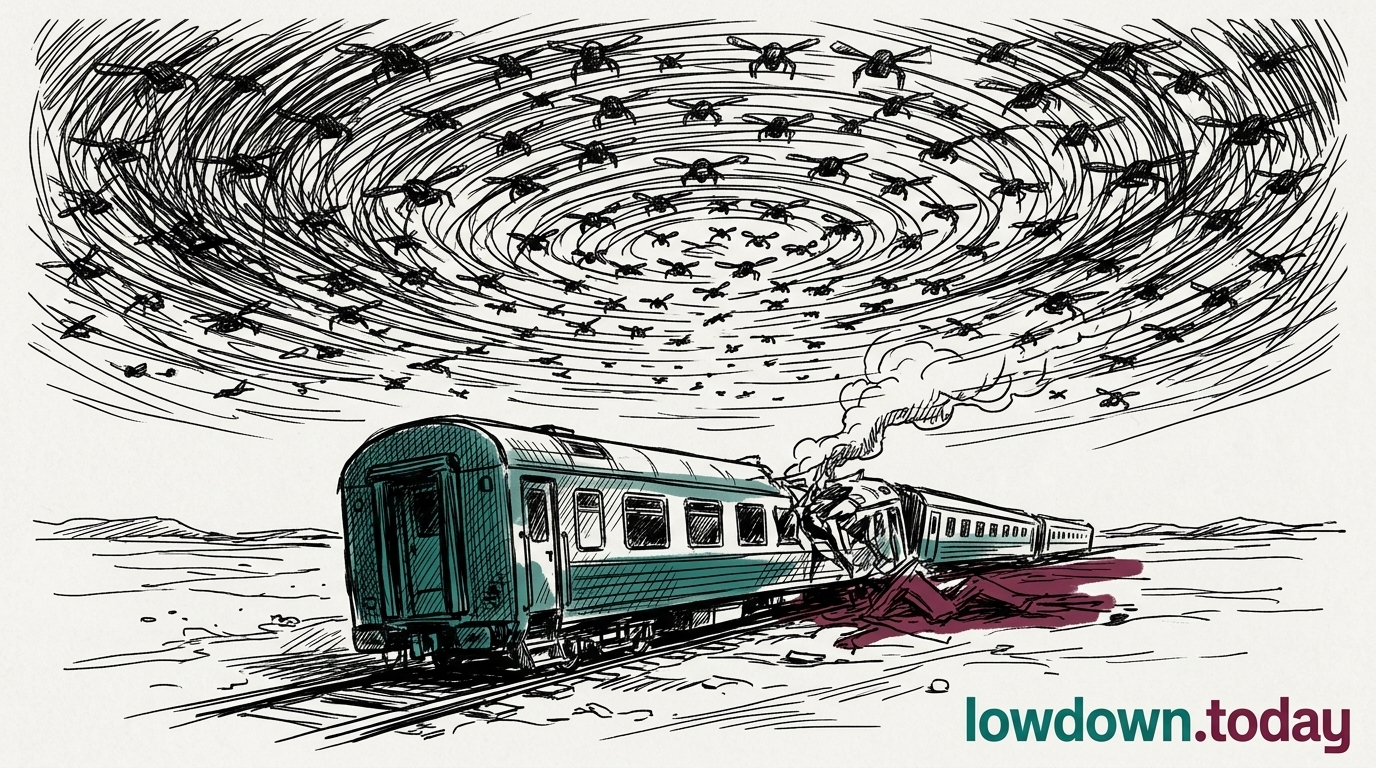
A Ukrainian operator destroyed two Shahed drones simultaneously from 500 km using STING and HORNET VISION Ctrl technology, a 15-20 times multiplication of previous engagement range.

ConflictDeveloping
Key takeaway

500 km STING interception creates theatre-wide air defence coverage from rear-area positions beyond Russian artillery range.

On 4 April, an operator with the callsign Hulk in Ukraine's Bulava unit destroyed two Shahed-type drones simultaneously from 500 km using STING interceptor drones equipped with HORNET VISION Ctrl technology. Previous operational range was 20 to 30 km. At 500 km, a single crew covers an area comparable to England from a position beyond Russian counter-battery range.

The multiplication effect compounds Ukraine's existing trajectory. March's 89.9% interception rate was achieved across 6,600 Russian attacks, a 23% monthly increase in volume. Interceptor drones already account for 30% of all aerial kills. At under $2,000 per STING versus $13.5 million per PAC-3 MSE , the cost calculus was already shifting before the range breakthrough.

Mass deployment is the declared intent but the timeline is unconfirmed. The 5 April overnight interception of 76 of 93 Shaheds (82%) is consistent with a smaller raid rather than a capability drop, and it does not yet demonstrate HORNET VISION Ctrl at scale. The claim warrants validation over several weeks of operational data.

Deep Analysis

In plain English

Ukraine developed a new capability to shoot down Russian drones from 500 kilometres away, roughly the distance from London to Edinburgh. Previously, the same drones could only engage targets 20-30 kilometres away. One Ukrainian operator destroyed two Russian drones simultaneously from this record distance. If this technology is deployed widely, Ukrainian defenders could protect the entire country from drone strikes while stationed far behind the front line, out of range of Russian artillery.

What could happen next?
  • Consequence

    Air defence operators can be stationed 400-500 km behind the front line, beyond Russian counter-battery range, while maintaining full theatre coverage.

  • Opportunity

    Cost asymmetry of $2,000 per STING kill versus $13.5 million per PAC-3 round makes sustained high interception rates financially viable without Western missile resupply.

First Reported In

Update #11 · Russia Sells Less Oil but Earns More

Ukrainska Pravda / Defence Express· 5 Apr 2026
Read original
Causes and effects
This Event
Ukraine's STING Drone Intercepts at 500 km for First Time
If mass-deployed as claimed, HORNET VISION Ctrl transforms Ukrainian air defence from point coverage to a theatre-wide interception grid, with operators protected 400-500 km behind the front line.
Different Perspectives
North Korea / DPRK
North Korea / DPRK
ISW confirmed the first mounting of DPRK Type-75 MLRS on Russian autonomous UGVs near Kharkiv on 7 June, the latest step in a supply axis that escalated from shells in 2023 to troops in 2024. Pyongyang gains live battlefield data on its ordnance and on Russia's uncrewed-systems programme.
IAEA / Rafael Grossi
Grossi confirmed Chornobyl structural damage with nuclear material metres away and could not attribute the ZNPP 15-hour blackout during the agreed repair window. Six ceasefires brokered and broken at ZNPP, compounded by Rosatom's May attack on IAEA neutrality, have eroded his ability to enforce the windows he negotiates.
Emmanuel Macron / France
Macron co-signed the E3 framework whose line-of-contact baseline marks Europe's first formal acceptance that 1991 borders are not the opening position. France's role carries weight because Macron had previously proposed a European force for Ukraine, and the framework's multinational force point is the vehicle for that.
Keir Starmer / E3
Keir Starmer / E3
Starmer, Macron and Merz met Zelenskyy on 7 June and backed a five-point framework taking the line of contact as the talks baseline, conceding roughly one fifth of Ukraine in exchange for a multinational force and frozen assets. With US mediation ended, the NATO Ankara summit on 7-8 July is the next test.
Vladimir Putin / Kremlin
Putin used SPIEF to reject Zelenskyy's summit letter, citing 'elements of rudeness', and repeated the pre-agreed treaty precondition that has frozen every diplomatic round since May. The SPIEF platform's message of investor confidence was punctured by naval fires visible from St Petersburg, which Moscow declined to dispute in scale.
Ukraine / Unmanned Systems Forces
Commander Brovdi confirmed USF units tracked and set fire to Boikyi at Kronstadt, while Code 9.2 struck the Chonhar Bridge the following day. Ukraine is sequencing strikes for rear-area interdiction and political timing rather than ground gains, trading the Baltic Fleet's home base for the logistics squeeze Russia cannot absorb without rationing its own occupied territory.
