Skip to content
Welcome, thoughtbot's Giant Robots listeners!Start here
Pandemics and Biosecurity
3OCT

CEPI funds a fourth Ebola vaccine

3 min read
13:42UTC

CEPI awarded Public Health Vaccines LLC 1.9 million dollars on 9 June for a fourth Bundibugyo candidate, bringing the portfolio to four across three platforms. Africa CDC still flags the missing bedside test.

ScienceDeveloping
Key takeaway

CEPI now funds four Bundibugyo vaccine candidates, yet no rapid diagnostic test for the virus exists.

CEPI, the Coalition for Epidemic Preparedness Innovations, awarded Public Health Vaccines LLC 1.9 million dollars on 9 June to generate master viral seed stock for a fourth Bundibugyo vaccine candidate on the rVSV platform⁠1. CEPI is the Oslo-based public-private coalition that funds early-stage pandemic vaccine development. The rVSV platform takes a harmless virus and engineers it to carry the pathogen's immune markers, the same approach behind the licensed Zaire Ebola vaccine.

The award brings CEPI's Bundibugyo portfolio to four candidates across three platforms, roughly 63.7 million dollars in total, advancing on the three-platform commitment of early June. Master seed stock sits at the front of the bottleneck most vaccine timelines hide. The rVSV process depends on specialised cell-culture inputs that take months to establish, which is why funding the seed stock now, rather than when a candidate is ready for human testing, shortens the path to a Phase 1 trial later.

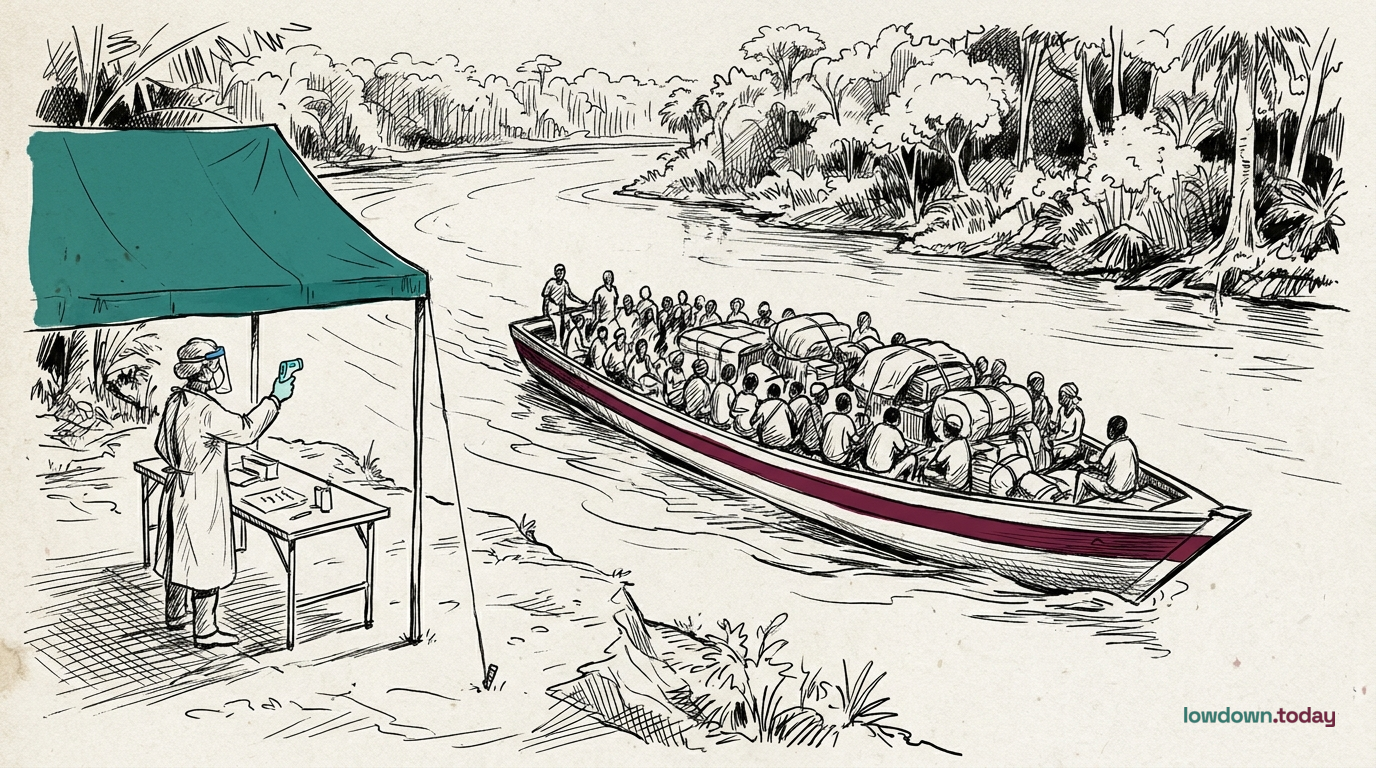
Africa CDC flags the gap underneath all of it. No Bundibugyo-specific rapid diagnostic test exists, so every suspected case still waits on a PCR laboratory assay, the polymerase chain reaction method that amplifies viral genetic material, rather than a bedside test that returns an answer in minutes. In Ituri's insecure health zones, the lag between swab and result is the same lag that keeps patients out of isolation and prolongs every transmission chain.

Deep Analysis

In plain English

Vaccines work by training the immune system to recognise a pathogen before it causes illness. Four organisations are now working on four different experimental vaccines against Bundibugyo Ebola, using three different biological platforms, different technical approaches to triggering immunity. This week, CEPI (the Coalition for Epidemic Preparedness Innovations) gave a US company $1.9 million to create a starter batch of viral material needed to begin one of those vaccine programmes. None of these vaccines will be ready to dose people during this outbreak. Vaccine development takes at least 12 to 18 months to reach first human trials. The investment now is for the next outbreak of this pathogen, not the one happening today. There is also still no rapid bedside test to confirm Bundibugyo Ebola infection; every diagnosis currently requires a specialised laboratory.

What could happen next?
  • Opportunity

    A four-platform portfolio across rVSV, mRNA and ChAdOx1 gives at least one candidate a reasonable probability of reaching Phase 1 human trials within 12 months, providing safety data that was entirely absent when this outbreak began.

    Medium term · Reported
  • Risk

    Without a Bundibugyo-specific rapid diagnostic test, vaccine trial enrolment will remain PCR-gated, constraining the speed at which Phase 1 and Phase 2 enrolment can proceed once a candidate reaches human trials.

    Medium term · Assessed
  • Precedent

    CEPI activating a four-platform portfolio during an active PHEIC, rather than after containment, establishes a new operational tempo for the 100 Days Mission framework.

    Long term · Assessed
First Reported In

Update #7 · Bundibugyo's fork stays open

CEPI· 16 Jun 2026
Read original →
Different Perspectives
IGWG co-chair Tovar da Silva Nunes
The Brazilian co-chair closed the eighth pathogen-sharing session on 18 September without an agreed annex text, the second session in a row to end that way. He presented the outcome as continued commitment, with adoption due at the World Health Assembly in May 2027.
Fraport
Fraport
The Frankfurt Airport operator has told staff to watch for fever, hessenschau reported, after six airport workers caught malaria. Germany does not require insecticide spraying of arriving aircraft cabins, and parasite genotyping to trace the source is due at the end of October.
European Centre for Disease Prevention and Control
ECDC reported the eight Frankfurt Airport malaria cases on 18 September and considers repeated arrivals of infected mosquitoes on aircraft likely. It has not ruled out local mosquitoes, and awaits genotyping due at the end of October.
Pan American Health Organization
PAHO counted 53,957 measles cases in the Americas by 19 September and is supporting Peru's response in Puno and Arequipa. It warns that October's Señor de los Milagros festivities and Pope Leo XIV's November visit could increase transmission.
Bangladesh Directorate General of Health Services
The DGHS recorded 1,030 measles-related deaths and 172,720 suspected cases by 14 September, after a campaign that reached 19.75 million children. Its disease-control director, Halimur Rashid, said further vaccination rounds were expected within two weeks.
Minapharm
Minapharm
The Egyptian drugmaker and its Berlin subsidiary ProBioGen were awarded up to US$16.5m by CEPI on 27 August to take a Bundibugyo vaccine into a Phase 1 trial in Africa. Final manufacture is planned for Cairo, making it CEPI's first Bundibugyo candidate with an African producer.
