Skip to content
You can now search across every topic, entity and event.What's new
Media's AI Pivot
17JUN

Publishers bill AI £500 a piece

3 min read
09:26UTC

The Movement for an Open Web signed 31 UK publisher sites to contracts charging AI crawlers £500 per scraped article, enforced through small-claims court rather than copyright law.

IndustryDeveloping
Key takeaway

Thirty-one UK publishers will invoice AI scrapers £500 an article and chase non-payers through small-claims court.

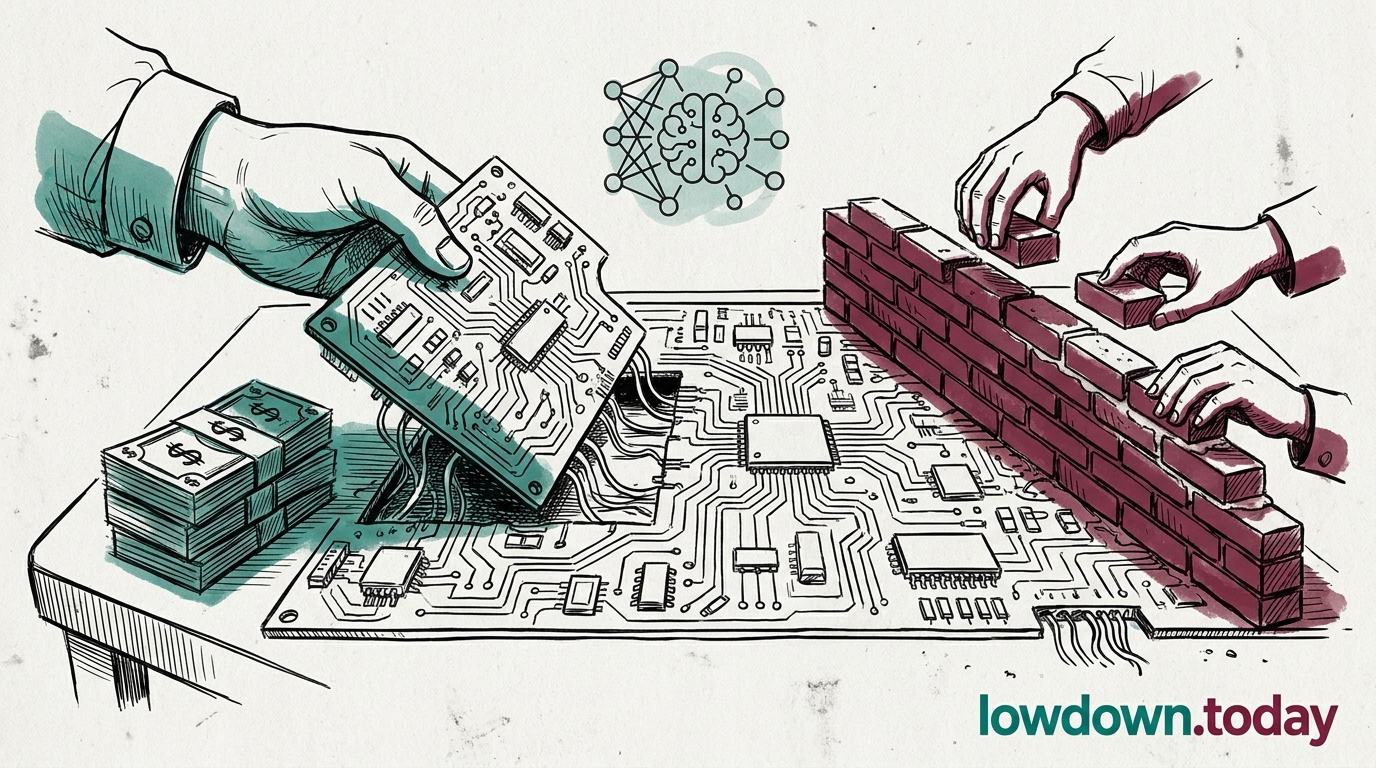
The Movement for an Open Web (MOW), a UK publisher advocacy group, launched Search-Only Contracts on Monday 15 June with 31 founding publisher sites, among them Trusted Reviews (Candr Media), road.cc and ebiketips.co.uk (F-At) 1. Each contract adds a clause to the site's terms and conditions and its robots.txt, the file that tells web crawlers which pages they may copy, charging £500 per article scraped without permission. MOW named OpenAI's ChatGPT, Google Gemini and Claude as the targets.

MOW built the enforcement route to give the charge teeth. Rather than bring a copyright case, which needs specialist counsel and deep pockets, a publisher files through the county-court Moneyclaim service for a filing fee of about £50 and represents itself in small claims 2. MOW co-founder Tim Cowan, a lawyer, has turned scraping into a small-debt collection problem rather than an intellectual-property fight. A model trained on a thousand articles from one site now carries a £500,000 invoice that does not require a barrister to lodge.

The pricing sits at the opposite end of the scale from the negotiated route. News Corp disclosed an anticipated $1.5bn settlement with Anthropic struck across its whole catalogue ; MOW prices the trespass per article, per site, for publishers too small to command a settlement table. Where a global publisher negotiates a nine-figure deal, a cycling-news site invoices line by line through the same court that handles unpaid utility bills. The mechanism is untested in court, and whether judges uphold the terms-and-conditions charge against an AI firm that disputes it remains unproven.


Deep Analysis

In plain English

When you read an article online, AI companies such as OpenAI, Google and Anthropic send automated programs called crawlers to copy that article into their training databases or use it to answer questions directly. Publishers do not get paid for this copying. The Movement for an Open Web, a UK publisher group, launched a scheme on 15 June that lets any publisher add a clause to their website's terms saying: if an AI crawler copies my articles without permission, it owes me £500 per article. To collect that money, publishers can use an online court service called Moneyclaim, which costs about £50 to file and does not require a lawyer. The first 31 sites to sign up include Trusted Reviews and road.cc.

Deep Analysis
Root Causes

The £500 per-article rate emerges from a specific legal design choice: English small-claims jurisdiction tops out at £10,000, making county-court self-representation viable for batches of up to 20 articles per filing. Tim Cowan's design converts what would otherwise be a high-cost IP litigation matter into a consumer-debt collection problem.

Prior publisher-licensing deals, including the News Corp anticipated Anthropic settlement and Reach plc's pay-per-usage AWS arrangement, all required publishers to initiate formal negotiations or class-action participation. The MOW scheme inverts that: it creates individual publisher rights any site operator can exercise without joining a coalition, reducing the collective-action barriers that have stalled larger licensing attempts.

What could happen next?
  • Opportunity

    Small publishers that cannot afford IP litigation now have a low-cost enforcement route against AI scrapers; if even 1% of 31,000 UK publisher sites adopt the scheme, the potential liability exposure for AI companies scales to hundreds of millions of pounds annually.

    Medium term · Assessed
  • Risk

    US-incorporated AI companies may contest English court jurisdiction and T&C contract formation, stalling enforcement before a single county-court judgement is obtained.

    Short term · Assessed
  • Precedent

    If a county-court Moneyclaim judgement is obtained against an AI company, it becomes the first court-determined per-article price for AI scraping in any English-language jurisdiction, creating a valuation anchor for licensing negotiations globally.

    Medium term · Assessed
First Reported In

Update #6 · Fox buys Roku's data layer for $22bn

Press Gazette· 17 Jun 2026
Read original
Causes and effects
This Event
Publishers bill AI £500 a piece
The scheme turns scraping from a contested copyright question into an uncontested small debt any junior can lodge without a barrister.
Different Perspectives
Italian market: Fastweb signed, Mediaset and RAI did not
Fastweb, the Italian broadband operator, signed Section 2 as a deployer, while Mediaset and the state broadcaster RAI are both absent. Italy therefore shows the split in miniature: a telecommunications company with one obvious deployment surface accepted the standard, and the two companies that actually broadcast to Italian audiences did not.
Paramount Skydance and its French exposure
Paramount filed a stipulation not to close on 24 July and had trial specialists admitted three days later, after nine months arguing that antitrust risk was regulatory rather than judicial. Its 22 July European clearance obliges it to divest a stake in the Universal International Pictures distribution venture and to strike no Universal distribution deal in Europe for a decade.
Time and the agent-advertising camp
Time and Mobian treat AI agent traffic as sellable inventory rather than leakage, on a site where bots now outnumber humans most days. Chief operating officer Mark Howard frames agent impressions as an extension of sponsorship, against an industry consensus still pursuing compensation for scraping.
German broadcasters
German broadcasters
ARD, ZDF, RTL and ProSiebenSat.1 are all absent from the list, making Germany the largest single national bloc of non-signatories. Their position rests on three defensible grounds: signature is voluntary, most deployed systems are grandfathered to 2 December 2026, and a broadcaster's compliance surface spans production, archive, advertising and distribution rather than one product. None has publicly explained the decision.
Synthesia and the signed vendor layer
Synthesia signed Section 1 alongside Getty Images, Google, Meta, Microsoft, Anthropic, OpenAI, Mistral and Aleph Alpha, accepting a documented marking standard for the product they sell. London-headquartered Synthesia is the only pure AI-video vendor on the providers list, and gains a compliance artefact to put in front of European media buyers at the moment those buyers acquire a live obligation.
European Commission
European Commission
The Commission published its initial signatory list on 31 July with roughly 190 organisations and let Article 50 take effect on 2 August as scheduled. Its own page stresses that adherence to the Code is voluntary while the transparency requirements are legal obligations, which frames non-signature as an evidentiary choice rather than a breach.


