Skip to content
You can now search across every topic, entity and event.What's new
Media's AI Pivot
17JUN

AI news use rises as trust stays low

3 min read
09:26UTC

The Reuters Institute found weekly AI chatbot use for news reached 10% globally in 2026, while trust in those answers held at 20%, and just 6% in the UK.

IndustryDeveloping
Key takeaway

Global AI news use hit 10% on a 20% trust base, lowest of all in the UK.

The Reuters Institute for the Study of Journalism, the Oxford research centre behind the annual Digital News Report (DNR), published its 2026 edition on Tuesday 16 June.1 It put weekly use of AI chatbots for news at 10% globally, up from 7% a year earlier. Trust in the answers those chatbots give sits at 20% worldwide, and at just 6% in the UK, the lowest of any country surveyed.

That means barely one UK reader in seventeen trusts what an AI news answer tells them. Overall trust in news fell to 37%, the lowest the survey has recorded since 2015. Among chatbot news users, 42% click through to the original source, the slice of the audience publishers license their archives to Reach. Usage doubled in Greece, South Korea and Spain over the year while staying flat across the US, UK, France and Germany.

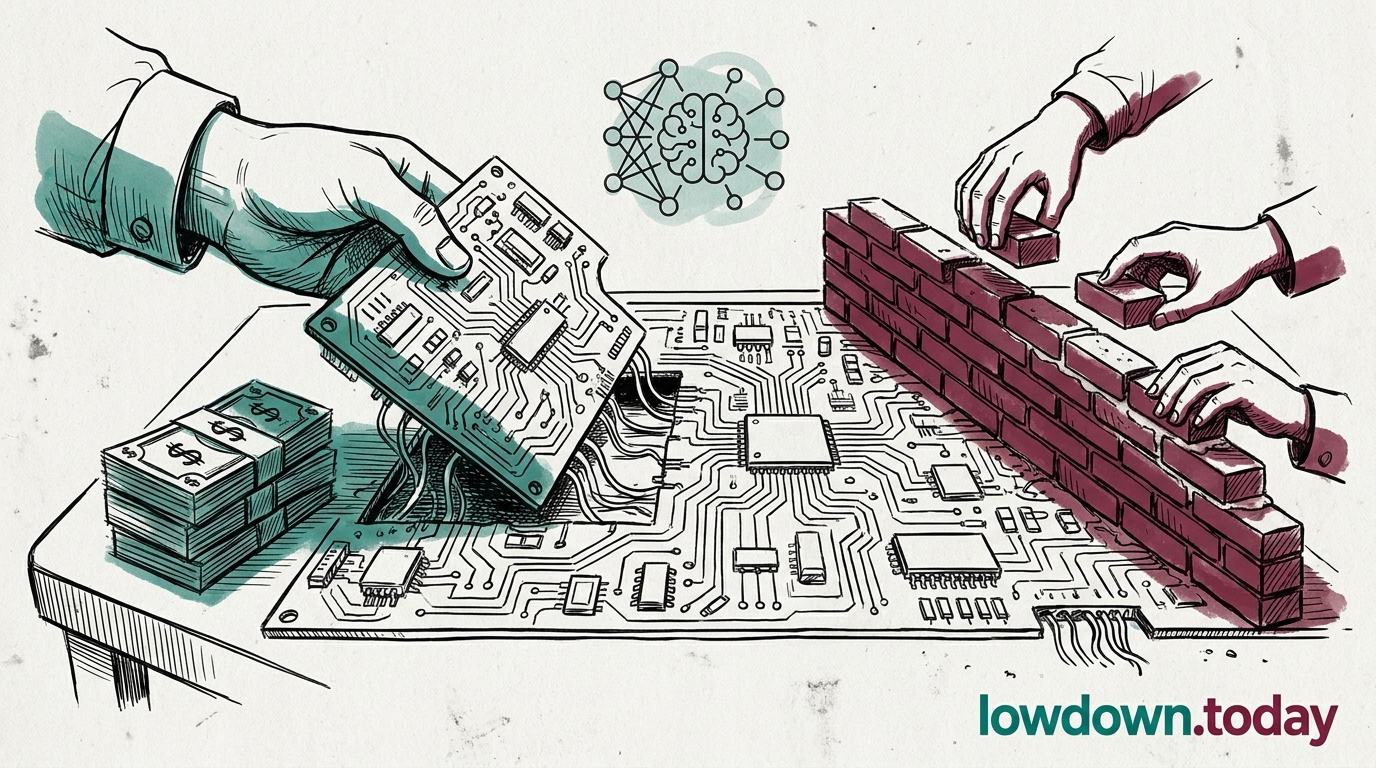
A paradox now sits under every licensing deal: readers Reach for AI news faster than they trust it, and publishers, nearly all of whom already use AI , are selling into an audience that disbelieves the output. That gap is why UK publishers spent June building legal walls, the Competition and Markets Authority's (CMA) opt-out order against Google and the £500-per-article crawler charges launched by 31 sites .


Deep Analysis

In plain English

The Reuters Institute for the Study of Journalism (based at Oxford University) publishes the world's most widely cited annual study of how people consume news. The 2026 edition, released on 16 June, found that one in ten people globally now uses an AI chatbot at least once a week to follow news stories, up from one in fourteen the year before. But the numbers also show deep distrust: globally, only 20% of people trust AI chatbot answers about news. In the UK, that falls to just 6%, the lowest of any country surveyed. That is a striking gap: people are using AI for news faster than they trust it. The report also found that 42% of people who use AI chatbots for news then click through to read the original sources, suggesting that AI may be sending some readers to news websites rather than replacing them.

First Reported In

Update #7 · WBD rebuilds its ad stack on agentic AI

Reuters Institute for the Study of Journalism· 28 Jun 2026
Read original
Different Perspectives
Italian market: Fastweb signed, Mediaset and RAI did not
Fastweb, the Italian broadband operator, signed Section 2 as a deployer, while Mediaset and the state broadcaster RAI are both absent. Italy therefore shows the split in miniature: a telecommunications company with one obvious deployment surface accepted the standard, and the two companies that actually broadcast to Italian audiences did not.
Paramount Skydance and its French exposure
Paramount filed a stipulation not to close on 24 July and had trial specialists admitted three days later, after nine months arguing that antitrust risk was regulatory rather than judicial. Its 22 July European clearance obliges it to divest a stake in the Universal International Pictures distribution venture and to strike no Universal distribution deal in Europe for a decade.
Time and the agent-advertising camp
Time and Mobian treat AI agent traffic as sellable inventory rather than leakage, on a site where bots now outnumber humans most days. Chief operating officer Mark Howard frames agent impressions as an extension of sponsorship, against an industry consensus still pursuing compensation for scraping.
German broadcasters
German broadcasters
ARD, ZDF, RTL and ProSiebenSat.1 are all absent from the list, making Germany the largest single national bloc of non-signatories. Their position rests on three defensible grounds: signature is voluntary, most deployed systems are grandfathered to 2 December 2026, and a broadcaster's compliance surface spans production, archive, advertising and distribution rather than one product. None has publicly explained the decision.
Synthesia and the signed vendor layer
Synthesia signed Section 1 alongside Getty Images, Google, Meta, Microsoft, Anthropic, OpenAI, Mistral and Aleph Alpha, accepting a documented marking standard for the product they sell. London-headquartered Synthesia is the only pure AI-video vendor on the providers list, and gains a compliance artefact to put in front of European media buyers at the moment those buyers acquire a live obligation.
European Commission
European Commission
The Commission published its initial signatory list on 31 July with roughly 190 organisations and let Article 50 take effect on 2 August as scheduled. Its own page stresses that adherence to the Code is voluntary while the transparency requirements are legal obligations, which frames non-signature as an evidentiary choice rather than a breach.


