Skip to content
You can now search across every topic, entity and event.What's new
Media's AI Pivot
17MAY

CMA orders a Google AI opt-out tool

3 min read
14:38UTC

The UK Competition and Markets Authority ordered Google on 3 June to give news publishers tools to withhold their content from AI search, the first binding order of its kind.

IndustryDeveloping
Key takeaway

Britain's competition regulator forced Google to let publishers keep search traffic while blocking AI scraping.

The UK Competition and Markets Authority (CMA), Britain's main competition regulator, ordered Google on Wednesday 3 June to give news publishers working tools to opt out of having their content scraped for AI Overviews, AI Mode and model fine-tuning, and to attribute publisher content with clear links inside AI-generated search results 1. AI Overviews is Google's AI-written summary that answers a query on the search page itself; AI Mode is its conversational search product. The CMA cited publisher traffic falling after AI Overviews rolled out and called the order a world first.

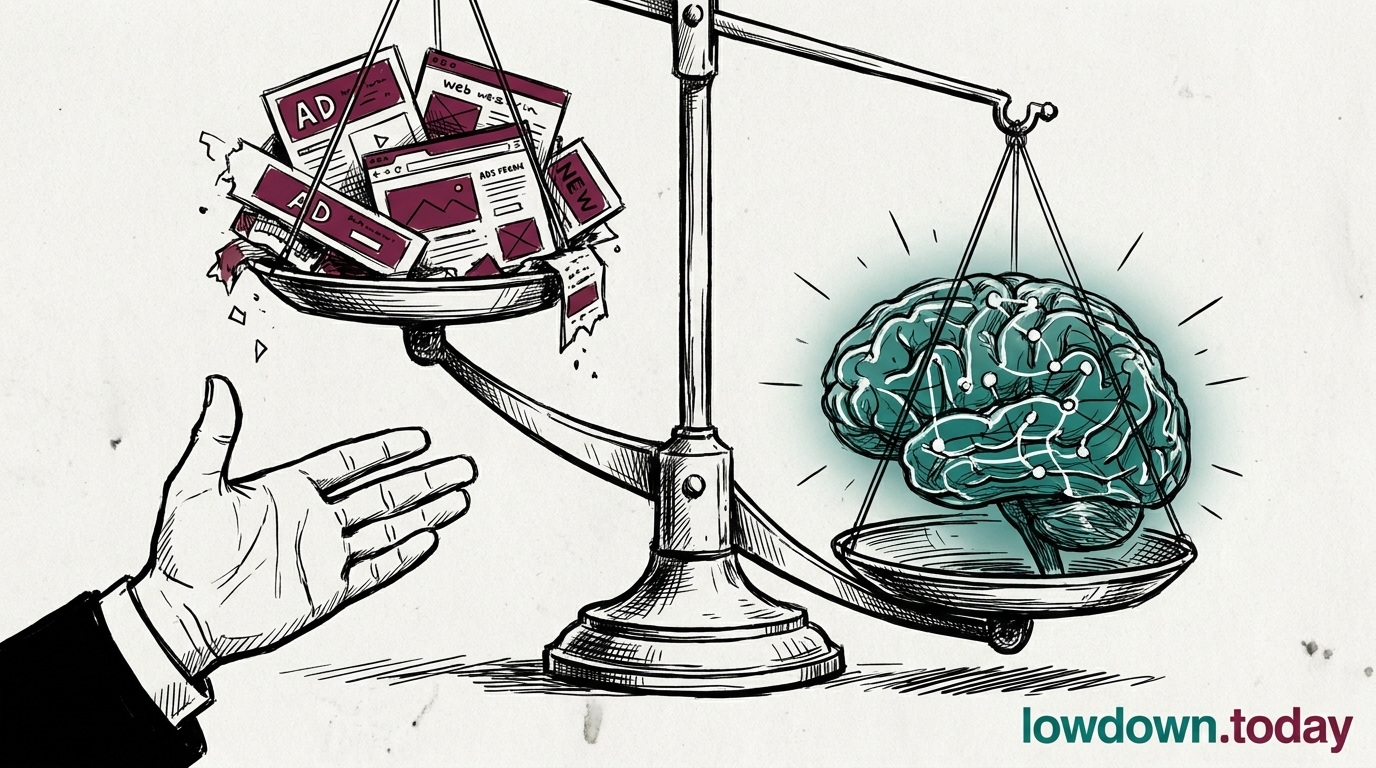
The mechanism matters more than the framing. A publisher who wanted to stay in Google Search had to accept being fed into Google's AI as the price of entry; opting out of the AI meant opting out of the traffic that pays the newsroom. The CMA order tries to split that bundle, letting a site keep its search ranking while withholding its words from the model. Google has not yet shown the tools, so whether they deliver that separation in practice stays unproven.

This sits inside the publisher-versus-AI economics thread the topic has tracked for two months. News Corp put a $1.5bn figure on a negotiated settlement with Anthropic ; Reach plc took the opposite route with a pay-per-usage licensing deal through Amazon Web Services . Those were private bargains struck one publisher at a time. The CMA order is a regulator setting terms for every UK publisher at once, and the leverage is different: Google cannot negotiate the CMA away the way it can negotiate a single licensing fee. That shift from private deal to mandated remedy is what the publishers in the next move stopped waiting on Google to honour.


Deep Analysis

In plain English

Google's AI Overviews feature answers your search questions directly on the results page, without requiring you to click through to the website that published the information. UK news sites and blogs have seen their visitor numbers drop sharply as a result, because fewer people click through when Google already provides the answer. The UK's Competition and Markets Authority (CMA), which is the government body that polices fair competition, ordered Google on 3 June to let publishers choose whether Google's AI can use their content. Publishers must be able to say no to AI scraping without losing their search rankings. The CMA called it a world first, because no regulator had previously made such a requirement enforceable.

Deep Analysis
Root Causes

The CMA's intervention traces to a structural asymmetry in web architecture. Robots.txt, the protocol publishers use to tell crawlers which pages to index, predates generative AI by 25 years. It was designed for search indexing, not for model training or real-time AI summarisation. Publishers who block AI crawlers via robots.txt lose search-engine ranking alongside AI-scraping protection because the same crawler serves both purposes for Google.

The CMA's order targets this conflation directly by requiring Google to separate opt-out mechanisms for AI Overviews, AI Mode and model fine-tuning independently from search indexing. If technically delivered, that separation resolves the 25-year-old design flaw at the cost of significant Google engineering effort and potential search-result quality degradation.

What could happen next?
  • Precedent

    The CMA order is the first binding regulatory instrument requiring a search platform to separate AI-scraping opt-outs from search-indexing opt-outs; EU and US regulators are watching for enforcement precedent.

    Short term · Reported
  • Risk

    Publishers who opt out of AI Overviews may lose search visibility in AI Mode results, creating an effective penalty for exercising the right the CMA has created.

    Short term · Assessed
  • Consequence

    Google faces engineering costs to deliver separate opt-out controls across AI Overviews, AI Mode and model fine-tuning pipelines; the order timeline has not been published, and non-compliance penalties remain unspecified.

    Medium term · Assessed
First Reported In

Update #6 · Fox buys Roku's data layer for $22bn

TechXplore· 17 Jun 2026
Read original
Causes and effects
This Event
CMA orders a Google AI opt-out tool
The order tries to break the bundle that forced publishers to feed Google's AI in exchange for staying in search results.
Different Perspectives
Media buy-vs-build strategists
IBC's nominee list and FOX's producer-level FoxNXT hiring show rights-holders choosing between buying agentic tools from named vendors or building them in-house. They read Fox's quiet hiring and the IBC pairings as the reference signals that will shape their own procurement decisions this quarter.
Eurovision Sport and European Athletics
Eurovision Sport and European Athletics ran every AI commentary stream at the U18 Championships labelled as AI-generated from 16 July, ahead of Article 50's 2 August requirement. They expect the model to extend to the senior Birmingham championships in August, pending operational sign-off.
Camb.AI and WSC Sports
Camb.AI supplied labelled AI commentary for Eurovision Sport's Rieti championships, while WSC Sports packaged its Magicrop clip-cutting into a TikTok distribution deal on 10 July. Both vendors gain reference customers and pricing power precisely while incumbent broadcasters stay unsigned on EU labelling and undecided on build-versus-buy.
European Commission and Paramount Skydance
The European Commission cleared the deal's $24bn Gulf financing under the Foreign Subsidies Regulation on 14 July, while Paramount pressed its case that the state suit is a flawed application of antitrust law. Both expect the merger to close once the 22 July competition ruling and any US injunction resolve.
Rob Bonta and the twelve-state coalition
Twelve Democratic state attorneys general, led by California's Rob Bonta, sued in San Francisco on 13 July seeking a TRO to block the Paramount-WBD merger, arguing federal clearance does not resolve state-level antitrust claims. They expect the suit to bite even without a final win, by holding the deal shut past Brussels' 22 July ruling.
Red Bull Ventures
Red Bull Ventures
Red Bull Ventures joined TwelveLabs' $100m Series B on 1 July to back its sports-video vertical, the one capital move that shipped on schedule this fortnight. Investing in the vendor layer rather than waiting on regulators lets it back the tooling broadcasters queue behind Brussels and the FCC to use.
