Skip to content
You can now search across every topic, entity and event.What's new
Media's AI Pivot
15JUL

Two EU clocks strike on 22 July

2 min read
13:12UTC

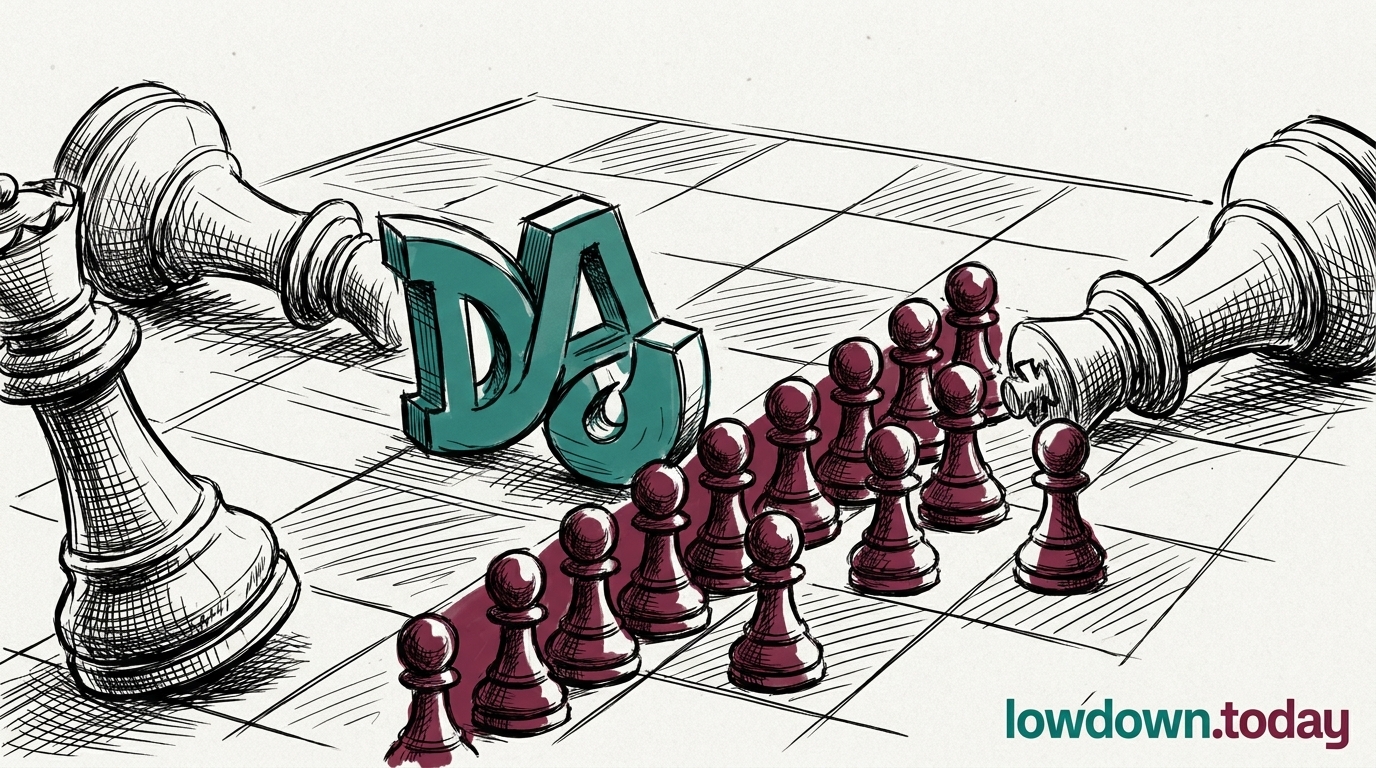
The EU's AI content-marking Code sets its signatory cutoff at 18:00 CEST on 22 July, the same calendar day Brussels rules on Paramount-WBD, with no broadcaster yet signed.

IndustryDeveloping
Key takeaway

The merger decision and the AI-marking Code cutoff both land on 22 July, with no broadcaster yet signed.

The European Commission confirmed on its own site that companies must file to join the Code of Practice on marking AI-generated content by 18:00 CEST on Wednesday 22 July to make the first published signatory list. 1 The Code is the voluntary industry standard that sits under the EU AI Act: firms that sign commit to labelling synthetic audio, image and video before Article 50, the Act's binding transparency obligation, applies to new deployments from 2 August.

That cutoff falls on the same day Brussels decides the Paramount-WBD competition review. The Commission finalised the Code on 10 June and confirmed on 7 July that it remains under adequacy assessment . As of 15 July it names no signatories, and no EU broadcaster, streamer or media company has signed.

The Commission tried this same voluntary route with its 2018 Disinformation Code, drew near-zero uptake, and converted it to mandatory standards within roughly two years. The content-marking Code is tracing the same curve, which is why the first broadcaster to sign matters: it sets the disclosure template the rest copy, and dates the moment the industry stopped treating labelling as optional.

Smaller players have already moved. Camb.AI's labelled athletics streams and France Televisions' named-vendor disclosure show compliance is buildable now; the incumbents carrying the most synthetic content are the ones who have signed nothing.


Deep Analysis

In plain English

The EU wants AI-generated content, like AI-written articles or AI-voiced commentary, to be clearly labelled so viewers know what they are watching or reading. It built a voluntary rulebook, the Code of Practice, that companies can sign to show they are following the rules early. Companies that want to be on the first published list of signatories have to sign by 22 July at 6pm Brussels time. As of 15 July, no European broadcaster, streamer or media company had signed. That same date, 22 July, is also when EU regulators are due to decide on the separate Paramount-Warner Bros. Discovery merger. Two unrelated EU deadlines landing on the same day is a coincidence of scheduling, not a legal connection, but it means that single date carries two different stories for the media industry to watch.

Deep Analysis
Root Causes

The Code of Practice is a voluntary instrument that only becomes practically binding through Article 50's machine-readable labelling requirement, which takes effect 2 August regardless of who signs the Code. That timing gap, a voluntary standard finalised weeks before the law it operationalises takes effect, is what let broadcasters delay signing without breaching anything: there is no penalty yet for staying off the list, only a future penalty for unlabelled AI content after 2 August.

The convergence with the Paramount-WBD competition-review deadline is coincidental scheduling rather than a shared legal cause, but it means whichever regulator moves first on 22 July sets the day's dominant story for the sector.

What could happen next?
  • Risk

    If no broadcaster signs by 22 July, the Code's first published list may launch with zero media-sector representation, undercutting its credibility as an industry compliance benchmark.

First Reported In

Update #9 · State AGs sue as EU clears Paramount-WBD

European Commission· 15 Jul 2026
Read original
Different Perspectives
Media buy-vs-build strategists
IBC's nominee list and FOX's producer-level FoxNXT hiring show rights-holders choosing between buying agentic tools from named vendors or building them in-house. They read Fox's quiet hiring and the IBC pairings as the reference signals that will shape their own procurement decisions this quarter.
Eurovision Sport and European Athletics
Eurovision Sport and European Athletics ran every AI commentary stream at the U18 Championships labelled as AI-generated from 16 July, ahead of Article 50's 2 August requirement. They expect the model to extend to the senior Birmingham championships in August, pending operational sign-off.
Camb.AI and WSC Sports
Camb.AI supplied labelled AI commentary for Eurovision Sport's Rieti championships, while WSC Sports packaged its Magicrop clip-cutting into a TikTok distribution deal on 10 July. Both vendors gain reference customers and pricing power precisely while incumbent broadcasters stay unsigned on EU labelling and undecided on build-versus-buy.
European Commission and Paramount Skydance
The European Commission cleared the deal's $24bn Gulf financing under the Foreign Subsidies Regulation on 14 July, while Paramount pressed its case that the state suit is a flawed application of antitrust law. Both expect the merger to close once the 22 July competition ruling and any US injunction resolve.
Rob Bonta and the twelve-state coalition
Twelve Democratic state attorneys general, led by California's Rob Bonta, sued in San Francisco on 13 July seeking a TRO to block the Paramount-WBD merger, arguing federal clearance does not resolve state-level antitrust claims. They expect the suit to bite even without a final win, by holding the deal shut past Brussels' 22 July ruling.
Red Bull Ventures
Red Bull Ventures
Red Bull Ventures joined TwelveLabs' $100m Series B on 1 July to back its sports-video vertical, the one capital move that shipped on schedule this fortnight. Investing in the vendor layer rather than waiting on regulators lets it back the tooling broadcasters queue behind Brussels and the FCC to use.
