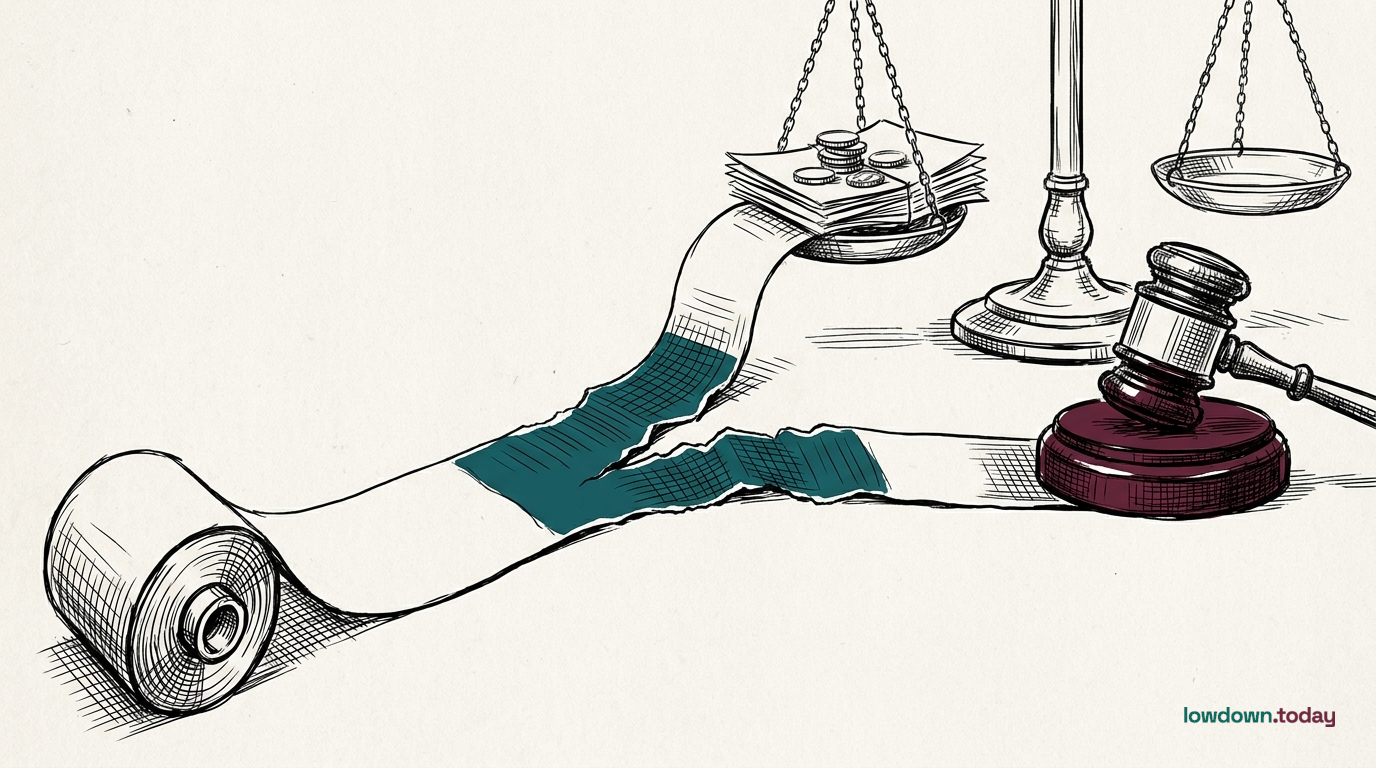
The Movement for an Open Web (MOW), a UK publisher advocacy group, launched Search-Only Contracts on Monday 15 June with 31 founding publisher sites, among them Trusted Reviews (Candr Media), road.cc and ebiketips.co.uk (F-At)1. Each contract adds a clause to the site's terms and conditions and its Robots.txt, the file that tells web crawlers which pages they may copy, charging £500 per article scraped without permission. MOW named OpenAI's ChatGPT, Google Gemini and Claude as the targets.
MOW built the enforcement route to give the charge teeth. Rather than bring a copyright case, which needs specialist counsel and deep pockets, a publisher files through the county-court Moneyclaim service for a filing fee of about £50 and represents itself in small claims2. MOW co-founder Tim Cowan, a lawyer, has turned scraping into a small-debt collection problem rather than an intellectual-property fight. A model trained on a thousand articles from one site now carries a £500,000 invoice that does not require a barrister to lodge.
News Corp expects an unspecified HarperCollins share of the $1.5bn Bartz class fund; MOW instead proposes a per-article charge for access to news sites. The class fund cannot be treated as News Corp's individual payout or compared directly with that charge. The mechanism is untested in court, and whether judges uphold the terms-and-conditions charge against an AI firm that disputes it remains unproven.





