Skip to content
Briefings are running a touch slower this week while we rebuild the foundations.See roadmap
Media's AI Pivot
10MAY

Avid embeds Google Gemini in Media Composer

4 min read
16:44UTC

Avid and Google Cloud announced a multi-year deal at NAB Show 2026 on 16 April embedding Gemini and Vertex AI directly into Media Composer, putting Google's agentic AI inside the dominant non-linear editor used across professional broadcast and post-production worldwide.

IndustryDeveloping
Key takeaway

Avid plus Google Cloud puts Gemini inside the world's dominant broadcast editor, deepening vendor lock-in at the tooling layer.

Avid Technology and Google Cloud announced a multi-year strategic partnership on Thursday 16 April 2026 at NAB Show 2026 in Las Vegas (18 to 22 April), embedding Google's Gemini models and Vertex AI directly into Avid Media Composer, the dominant NLE (non-linear editor) used across professional broadcast and post-production globally 1. Named capabilities include multimodal intelligent metadata enhancement, automated logging, and B-roll generation, with the agentic features running through the Vertex AI inference layer rather than through Avid's own model stack.

The deal converts Avid's installed base into a distribution channel for Google's agentic AI. Avid Media Composer is the editing tool that handles the bulk of the world's broadcast video output, sitting inside news, sport and post-production workflows at every major Western broadcaster. By placing Gemini inside the editor at the workflow level rather than as an external plug-in, Avid binds its customers to Google Cloud at the inference layer for any AI-assisted task that runs in the timeline. The partnership pattern matches the Microsoft Office plus Copilot deal of 2024, which similarly converted an installed-base licence into a vendor-locked AI distribution surface.

The structural alternative formed in the same fortnight. The IBC 2026 Accelerator's SMART STORIES consortium , with nine major news organisations including the BBC, AP and NBCUniversal, is developing an open standard for portable story context that any compliant editor can read. The two consortia encode opposite theories of where the workflow value lives. Avid plus Google plus Nvidia's GPU stack is vendor lock-in deepening at the tooling layer; SMART STORIES tries to commoditise the layer above it, making story context portable between competing editors. The broadcast industry has a long history of forcing open standards on tool vendors when lock-in threatens cross-organisation workflow integrity rather than cost; DVB, SMPTE and HbbTV are the precedents. Whether the same reflex holds for agentic AI is the standards question the next 18 months will resolve. Adobe's competing move at the same layer adds a third axis to the same battle.


Deep Analysis

In plain English

Avid makes the video editing software used by most professional TV broadcasters and film studios worldwide. On 16 April 2026, Avid and Google announced a multi-year deal to build Google's AI directly into Avid's editing software. In practice, this means an editor working on a BBC or Al Jazeera production could have an AI assistant automatically identify and label every clip by its content, suggest relevant archive footage, and generate filler shots automatically. The deal matters for the industry because Avid's software is so widely used that Google's AI technology now has a fast route into professional broadcast workflows without having to convince each broadcaster individually. It also raises a question for broadcasters: once their editing workflow depends on Google Cloud's AI, switching to a different AI provider later becomes much more disruptive and expensive.

Deep Analysis
Root Causes

Google Cloud's pursuit of the Avid partnership reflects the structural economics of enterprise AI distribution: reaching professional broadcast clients through organic sales cycles requires five to seven years of relationship development and procurement processes. Avid's existing multi-decade relationships with broadcasters, post-production houses, and sports networks give Google a compressed distribution path.

The same logic drove Apple's 2019 partnership with Zeiss for AR glasses optics distribution and Microsoft's 2021 integration of Teams into the Avid editorial workflow. Each time, a hyperscaler used an established professional media tooling provider to bypass standard enterprise sales cycles.

The named capabilities (multimodal metadata enhancement, automated logging, B-roll generation) are precisely the workflows where professional broadcast editors report the highest time-cost: metadata tagging and clip logging can account for 40-60% of an editor's non-creative time. Automating these tasks with Gemini's multimodal capabilities reduces the time cost of content preparation before the creative edit begins.

What could happen next?
  • Risk

    Non-Western broadcasters with data sovereignty requirements — particularly Al Jazeera (Qatar), government broadcasters in India, and Gulf state networks — face a structural incompatibility between the Avid / Google Cloud integration and their domestic data-localisation regulations.

    Short term · 0.75
  • Precedent

    The partnership uses Avid's installed base as a distribution channel for hyperscaler AI — a model likely to be replicated by Microsoft (through its existing Avid MediaCentral integrations) and AWS (through its media-and-entertainment vertical partnerships), creating a three-way hyperscaler competition for the same broadcast infrastructure layer.

    Short term · 0.7
  • Consequence

    Adobe's Firefly AI Assistant in Premiere Pro launched on 15 April 2026 ({{EVREF:event-8}}), one day before the Avid / Google announcement — compressing the window in which Avid's Google-AI differentiation is visible before Adobe matches it in the lower-cost NLE segment.

    Immediate · 0.8
First Reported In

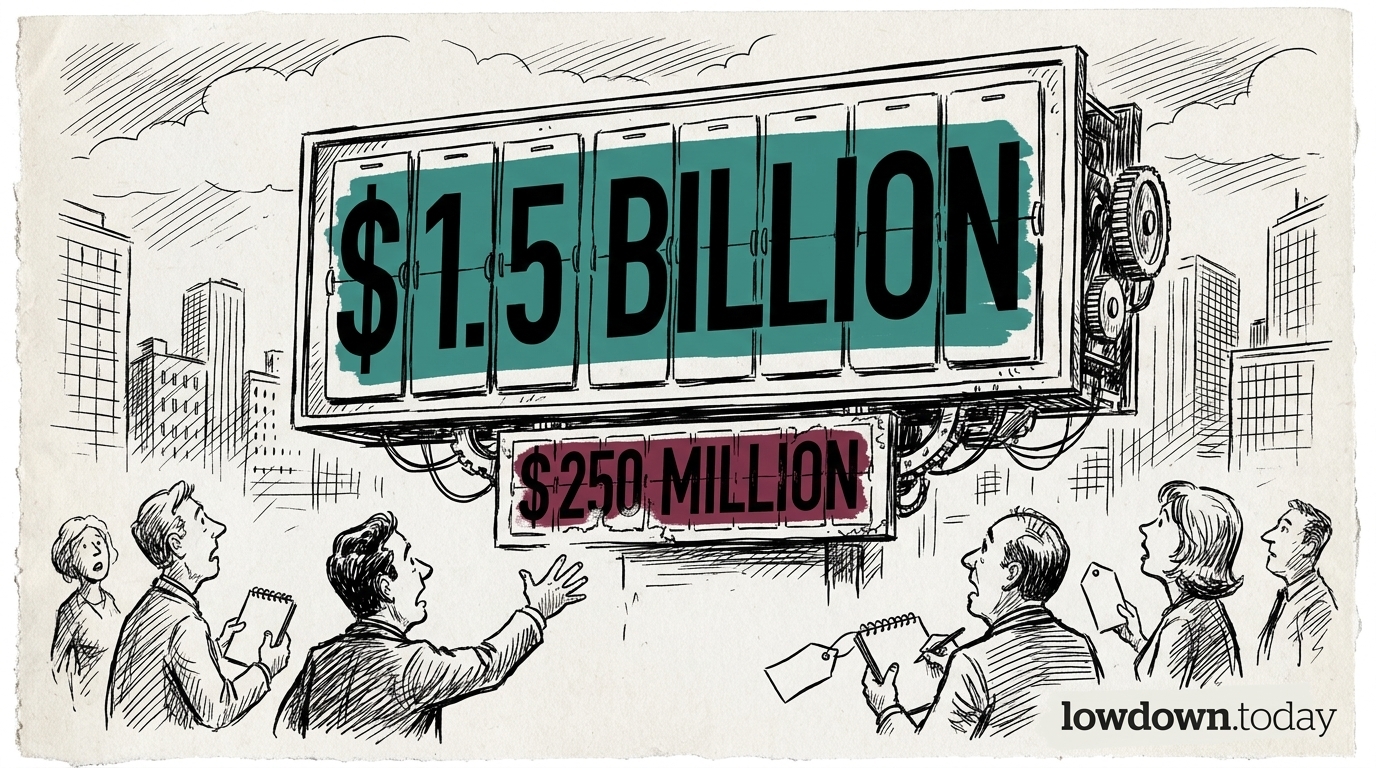
Update #1 · News Corp names $1.5bn AI settlement

Google Cloud Press Corner· 10 May 2026
Read original
Causes and effects
This Event
Avid embeds Google Gemini in Media Composer
The deal converts Avid's installed base of broadcast editing infrastructure into the distribution channel for Google's agentic AI, deepening vendor lock-in at the editing-tool layer just as the SMART STORIES open-standards counter forms in the same fortnight.
Different Perspectives
Sport rights holders (DAZN and Genius Sports)
DAZN's 30 April TikTok Serie A livestream and Genius Sports' Moment Engine launch mark the shift from social as the clip-reel to social as the live channel. Rights holders are ceding first-window distribution control in exchange for monetisation share and audience access, with DAZN's AI Delta Protocol reducing transport costs to make free livestreams viable on a P&L.
SMART STORIES consortium (IBC Accelerator)
Nine organisations including AP, BBC, NBCUniversal, Sky and ITV are building an open standard for story-context portability across agentic editing vendors. NBCUniversal VP Alex Bassett called the target 'something close to a minimum viable product rather than a simple proof of concept', with demonstrations due at IBC Amsterdam in September 2026.
EU regulators (AI Act Article 50)
Article 50 transparency obligations take effect 2 August 2026, with 84 days remaining and no major EU broadcaster publicly signed to the Code of Practice. The enforcement window coincides with the Q1 2026 earnings cycle, compressing the compliance decision horizon for RTL Group, M6 and ProSiebenSat.1.
Reach plc (UK mid-tier publisher)
Reach's April trading update disclosed a pay-per-usage AWS deal alongside Q1 group revenue down 6.9% and digital revenue down 8.1%. The framing treats usage-based licensing as a structural hedge against ad-revenue decline, with 'active discussions with several other tech platforms' signalling deliberate counterparty diversification.
News Corp (US tier-1 publisher)
Robert Thomson named the $1.5bn anticipated Anthropic settlement on the Q3 FY2026 earnings call, using 'anticipated' rather than 'agreed' as the settlement remains live. Reading a specific dollar figure into an SEC-filed transcript closes the information asymmetry that kept bilateral AI deal terms private across the industry.
