Skip to content
Briefings are running a touch slower this week while we rebuild the foundations.See roadmap
Media's AI Pivot
10MAY

Disney declares AI strategy, drops $1bn OpenAI stake

5 min read
16:44UTC

Josh D'Amaro used his first earnings call on 6 May to declare AI a three-pillar growth strategy, confirmed Disney would not renew its planned $1bn OpenAI investment after the Sora consumer product shut down on 26 April, and disclosed an internal token-tracking dashboard logging 16.4 billion AI tokens across 4,800 employees in nine workdays.

IndustryDeveloping
Key takeaway

Disney's Sora non-renewal and AI-token dashboard frame the same vendor-risk problem with procurement telemetry as the answer.

The Walt Disney Company chief executive Josh D'Amaro used his first earnings call on Wednesday 6 May 2026 to declare AI a three-pillar growth strategy across content creation, personalisation, and workforce productivity, with theme-park guest experience as a fourth surface 1. Disney's Q2 FY26 revenue rose 7% to $25.2 billion, with streaming income up 88% to $582 million 2. D'Amaro is the Bob Iger successor who took the chief executive seat in February 2026 after a year as theme-parks chair, and the call was his first formal articulation of an AI thesis in the role; the strategy frames AI as a top-line growth pillar rather than a back-office cost programme.

In the same call, D'Amaro confirmed Disney's decision not to renew the previously planned $1 billion investment in OpenAI after OpenAI shut down its Sora consumer video product on 26 April 2026, before any money changed hands 3. The original arrangement would have given Sora users animated access to more than 200 Disney-owned characters in exchange for the equity stake; the deal had no provision for product discontinuation. Sam Altman told Bloomberg he "felt terrible" telling D'Amaro that OpenAI was reallocating resources to robotics and autonomous software, and said talks continue 4. The framing matters legally and commercially: this is a decision not to renew a non-closed investment, not a hostile divorce. The vendor-risk signal is that an AI partner can withdraw a flagship consumer product before the equity round closes, leaving the brand-licensing partner with no recourse and no contingent IP rights.

The workforce signal sits underneath the strategy. Internal screenshots of a Disney AI Adoption Dashboard, obtained by Business Insider in mid-April 2026, tracked 16.4 billion AI tokens consumed by approximately 4,800 Disney Entertainment and ESPN tech employees over nine workdays, split 3.1 billion Claude tokens and 13.3 billion Cursor tokens, at an estimated combined cost of $812,000 for the period 5. A single power-user logged 460,000 invocations during the same window. Token-level telemetry implies API-key-level governance: profiling individual usage patterns is the precondition for applying enterprise rate-limit policy and chargeback accounting, and that governance layer typically lands 12 to 18 months before formal AI capex appears as a 10-Q risk factor. The vendor-risk story from the Sora withdrawal and the procurement-maturity story from the dashboard are the same story read from both ends. Disney has built measurement infrastructure that survives any single vendor decision, which is exactly what the Sora non-renewal teaches a procurement team to build. The structural alternative to bilateral AI vendor dependency is the open-standards work the SMART STORIES consortium is building one layer above the editing tools.


Deep Analysis

In plain English

Disney's new CEO, Josh D'Amaro, used his first earnings call on 6 May to tell investors that Disney would use AI in three main ways: to help create content, to personalise what viewers see on Disney+ and ESPN+, and to make its employees more productive. That last point is already happening: internal company data leaked to Business Insider showed Disney's tech staff used over 16 billion AI interactions in just nine working days, at a cost of roughly $812,000 for that period. The Sora story is about what Disney did not do. Disney had planned to invest $1 billion in a video-generation AI tool called Sora, made by OpenAI. OpenAI then quietly killed Sora in April 2026 to focus on other projects, before Disney's money changed hands. OpenAI's CEO Sam Altman said he 'felt terrible' telling Disney. Disney walked away with no money lost, but the episode shows how quickly AI product strategies can change, which is exactly why studios are cautious about committing to a single AI supplier.

Deep Analysis
Root Causes

The Sora discontinuation was a product-allocation decision by OpenAI reflecting the opportunity cost calculus of the robotics and autonomous software markets versus consumer video.

OpenAI's shift from consumer video tools toward agentic software infrastructure reflects a funding dynamic: the largest OpenAI investors (Microsoft, SoftBank) are pursuing industrial AI deployment, not consumer media creation. The discontinuation was not a product failure but a capital allocation choice driven by OpenAI's investor mix.

Disney's AI-strategy declaration in the same fortnight as the Sora exit reflects a CEO-level need to signal AI commitment to investors at a moment when the streaming income surge (+88% to $582m) is the headline growth story.

D'Amaro used the Sora exit as proof of his portfolio-management discipline rather than as a strategic setback, reframing a cancelled investment as evidence of rigour. The three-pillar framing (content creation, personalisation, workforce productivity) is deliberately broad enough to accommodate whichever vendors emerge as the leading tooling providers over the next 18 months.

What could happen next?
  • Precedent

    The Sora discontinuation, occurring before Disney's $1 billion investment closed, establishes that AI product lifecycles can be shorter than the investment decision cycles of major media companies — a vendor-risk pattern that will drive studio AI procurement toward multi-vendor strategies and shorter commitment windows.

    Medium term · 0.8
  • Risk

    Disney's internal AI tooling footprint is now large enough that a significant model capability improvement by a competing AI provider could create a switching-cost problem if Disney's fine-tuned models and workflow integrations are built against a single provider's API.

    Medium term · 0.65
  • Opportunity

    The SMART STORIES open-standard consortium ({{EVREF:event-4}}) is the structural alternative to bilateral AI vendor dependency that Disney's Sora exit illustrates: interoperable story-context formats reduce the cost of switching AI production tooling vendors.

    Long term · 0.6
First Reported In

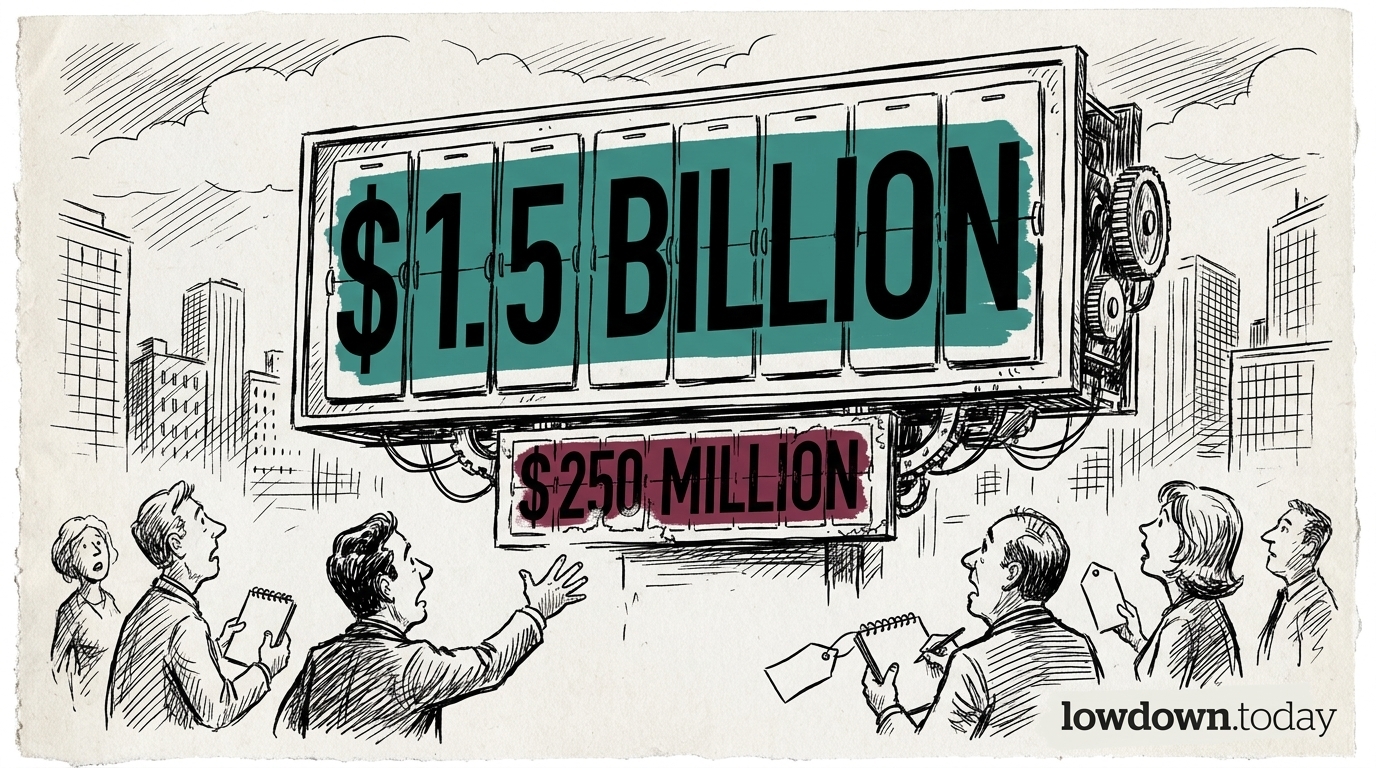
Update #1 · News Corp names $1.5bn AI settlement

The Walt Disney Company· 10 May 2026
Read original
Different Perspectives
Sport rights holders (DAZN and Genius Sports)
DAZN's 30 April TikTok Serie A livestream and Genius Sports' Moment Engine launch mark the shift from social as the clip-reel to social as the live channel. Rights holders are ceding first-window distribution control in exchange for monetisation share and audience access, with DAZN's AI Delta Protocol reducing transport costs to make free livestreams viable on a P&L.
SMART STORIES consortium (IBC Accelerator)
Nine organisations including AP, BBC, NBCUniversal, Sky and ITV are building an open standard for story-context portability across agentic editing vendors. NBCUniversal VP Alex Bassett called the target 'something close to a minimum viable product rather than a simple proof of concept', with demonstrations due at IBC Amsterdam in September 2026.
EU regulators (AI Act Article 50)
Article 50 transparency obligations take effect 2 August 2026, with 84 days remaining and no major EU broadcaster publicly signed to the Code of Practice. The enforcement window coincides with the Q1 2026 earnings cycle, compressing the compliance decision horizon for RTL Group, M6 and ProSiebenSat.1.
Reach plc (UK mid-tier publisher)
Reach's April trading update disclosed a pay-per-usage AWS deal alongside Q1 group revenue down 6.9% and digital revenue down 8.1%. The framing treats usage-based licensing as a structural hedge against ad-revenue decline, with 'active discussions with several other tech platforms' signalling deliberate counterparty diversification.
News Corp (US tier-1 publisher)
Robert Thomson named the $1.5bn anticipated Anthropic settlement on the Q3 FY2026 earnings call, using 'anticipated' rather than 'agreed' as the settlement remains live. Reading a specific dollar figure into an SEC-filed transcript closes the information asymmetry that kept bilateral AI deal terms private across the industry.
