Skip to content
Briefings are running a touch slower this week while we rebuild the foundations.See roadmap
Media's AI Pivot
10MAY

Nine newsrooms back SMART STORIES open standard

5 min read
16:44UTC

Associated Press, NBCUniversal, BBC, ITN, Channel 4, Sky, ITV, Al Jazeera and the Washington Post are jointly developing SMART STORIES, an IBC 2026 Accelerator open standard for story-context interoperability across vendor systems, with proof-of-concept demos due at IBC Amsterdam in September.

IndustryDeveloping
Key takeaway

Nine newsrooms backing SMART STORIES is the broadcast industry's standards reflex testing whether it can ship at agentic-AI velocity.

Nine major news organisations launched SMART STORIES: The Agentic Production Ecosystem as an official IBC 2026 Accelerator project on Thursday 30 April 2026, with the Associated Press, NBCUniversal, ITN, the BBC, Channel 4, Al Jazeera, The Washington Post, Sky and ITV jointly developing an open standard for story-context interoperability across vendor systems in agentic news production 1. Proof-of-concept demonstrations are scheduled for IBC in Amsterdam in September 2026. Alex Bassett, NBCUniversal's VP of Innovation, framed the goal as "something close to a minimum viable product rather than a simple proof of concept" 2, a signal that the consortium is targeting deployable specification rather than a research artefact.

The consortium's framing as "story context interoperability" targets a specific layer the broadcast industry has historically forced into open specification. DVB (Digital Video Broadcasting), SMPTE (Society of Motion Picture and Television Engineers) and HbbTV (Hybrid Broadcast Broadband TV) all emerged when vendor lock-in threatened cross-organisation workflow integrity, not when it merely threatened cost. The pattern: industry forces vendor compliance once the workflow-integrity cost of bilateral contracts exceeds the procurement convenience of negotiating each one. SMART STORIES sits in exactly that position relative to the Avid plus Google Cloud partnership announced 14 days earlier and Adobe's Firefly AI Assistant in Premiere Pro , both of which embed proprietary AI inside the editing layer.

Leverage runs through the signatory list itself. Nine named newsrooms covering US wire (AP), US broadcast (NBCU, Washington Post), UK PSB (BBC, Channel 4, ITV), UK news production (ITN), UK Comcast-owned (Sky) and Qatari (Al Jazeera) accounts is a procurement template European public-service broadcasters can demand from any vendor pitching agentic news tools. The risk to the consortium is internal: AP is co-championing SMART STORIES while running journalist buyouts in the same fortnight , and the open-standards posture costs more in coordination overhead than it saves in licence fees in the short run. Whether SMART STORIES ships at the September deadline or slips into 2027 will set the read on whether nine-organisation industry consortia can ship at agentic-AI velocity.


Deep Analysis

In plain English

Nine major news organisations (including the BBC, Associated Press, and Al Jazeera) announced in April 2026 that they are jointly building a shared technical standard for how AI systems should handle news stories. When an AI editor at one broadcaster prepares a story about, say, a ceasefire, it needs to know the full background: previous events, the key people, the verified facts. Today, each broadcaster's AI tools store that context in their own format, meaning if a broadcaster switches from one AI tool to another, all that story knowledge has to be rebuilt from scratch. SMART STORIES aims to create a common language that any AI production tool can use, so broadcasters are not locked into one vendor's proprietary format. The analogy is USB: before USB, every device used a different cable; after USB, any device from any maker could connect to any computer. SMART STORIES wants to do the same for AI storytelling.

Deep Analysis
Root Causes

The structural driver for SMART STORIES is the same driver that produced every major broadcast open-standard initiative: a market in which a small number of technology vendors can extract rents by controlling the dominant workflow layer, combined with a buyer community (broadcasters) large enough to fund an alternative.

In the current context, the vendors are OpenAI, Google, Anthropic, and AWS; the workflow layer is agentic story-context management (what happened, who was involved, what prior context is relevant); and the broadcaster community is the nine SMART STORIES members.

The timing reflects the AI hype cycle: the window for influencing the emerging agentic production workflow standard closes within 18-24 months, after which whichever vendor's story-context format has achieved sufficient adoption will become the de facto standard.

AP, NBC and BBC closed their consortium commitment four months before the August 2026 enforcement date for EU AI Act Article 50, following the same strategic logic that drove European broadcasters to form DVB in 1993, two years before the first DVB-T transmission, rather than waiting for the proprietary alternatives to consolidate.

What could happen next?
  • Precedent

    Nine major newsrooms coordinating a shared agentic-production standard represents the first organised broadcaster resistance to vendor lock-in in the AI production workflow layer — comparable to the DVB consortium's 1993 formation before a dominant proprietary digital TV standard could consolidate.

    Medium term · 0.75
  • Risk

    Without a certification body and compliance test suite, the standard may produce incompatible implementations — the same failure mode as early MPEG variants where 'compliant' files from different encoders were not actually interoperable in practice.

    Medium term · 0.7
  • Opportunity

    The EU AI Act Article 13 transparency requirements create a regulatory incentive for European broadcasters to adopt open story-context standards rather than proprietary ones — giving SMART STORIES a compliance tailwind in the EU market that bilateral vendor deals lack.

    Short term · 0.65
  • Consequence

    AP's concurrent journalist buyouts ({{EVREF:event-5}}) demonstrate that the cost of SMART STORIES participation — in-kind engineering resource — is being funded in part by workforce restructuring on the editorial side, a pattern likely to repeat across other consortium members.

    Immediate · 0.55
First Reported In

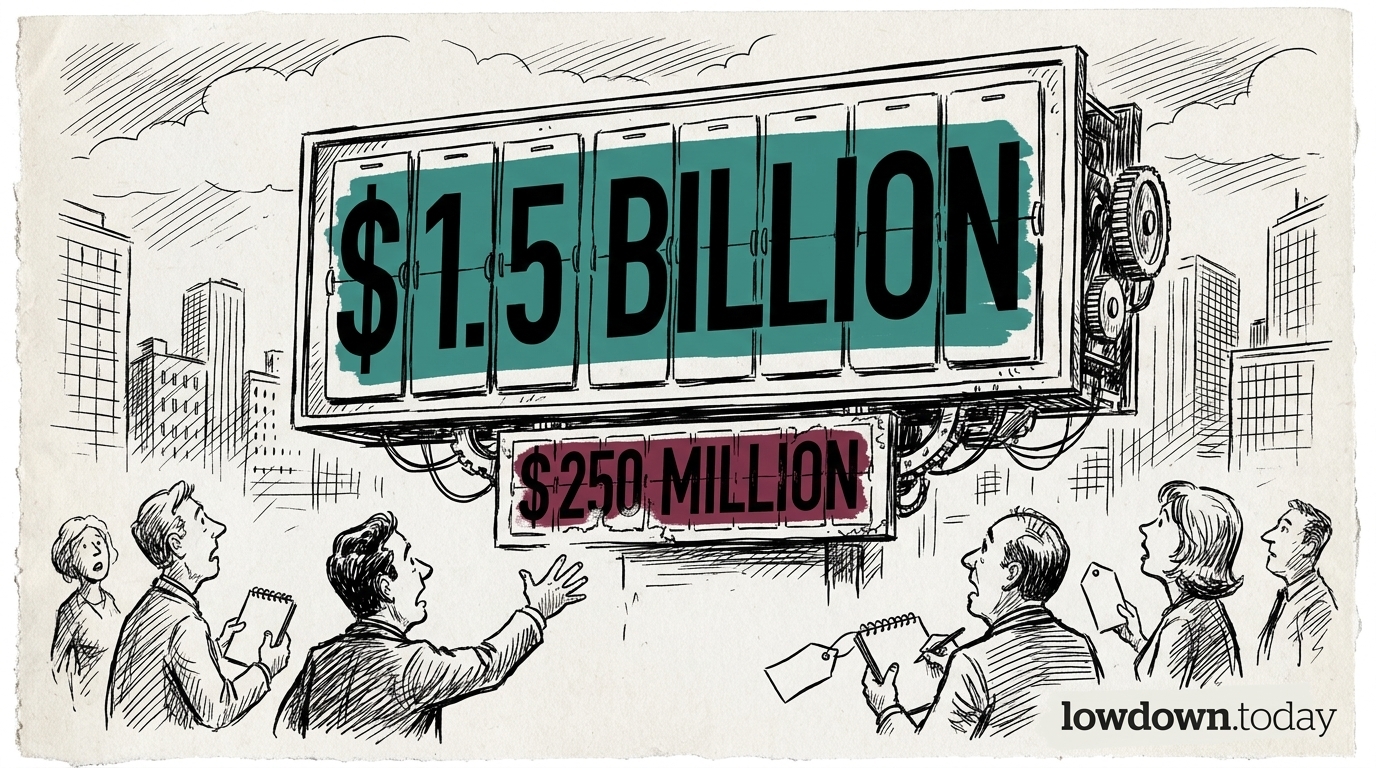
Update #1 · News Corp names $1.5bn AI settlement

IBC Show· 10 May 2026
Read original
Causes and effects
This Event
Nine newsrooms back SMART STORIES open standard
If SMART STORIES ships interoperable story-context primitives, vendor lock-in at the editing-tool layer becomes commercially harder to defend, forcing Adobe, Avid and Google to choose between proprietary stacks and standards-compliant ones.
Different Perspectives
Sport rights holders (DAZN and Genius Sports)
DAZN's 30 April TikTok Serie A livestream and Genius Sports' Moment Engine launch mark the shift from social as the clip-reel to social as the live channel. Rights holders are ceding first-window distribution control in exchange for monetisation share and audience access, with DAZN's AI Delta Protocol reducing transport costs to make free livestreams viable on a P&L.
SMART STORIES consortium (IBC Accelerator)
Nine organisations including AP, BBC, NBCUniversal, Sky and ITV are building an open standard for story-context portability across agentic editing vendors. NBCUniversal VP Alex Bassett called the target 'something close to a minimum viable product rather than a simple proof of concept', with demonstrations due at IBC Amsterdam in September 2026.
EU regulators (AI Act Article 50)
Article 50 transparency obligations take effect 2 August 2026, with 84 days remaining and no major EU broadcaster publicly signed to the Code of Practice. The enforcement window coincides with the Q1 2026 earnings cycle, compressing the compliance decision horizon for RTL Group, M6 and ProSiebenSat.1.
Reach plc (UK mid-tier publisher)
Reach's April trading update disclosed a pay-per-usage AWS deal alongside Q1 group revenue down 6.9% and digital revenue down 8.1%. The framing treats usage-based licensing as a structural hedge against ad-revenue decline, with 'active discussions with several other tech platforms' signalling deliberate counterparty diversification.
News Corp (US tier-1 publisher)
Robert Thomson named the $1.5bn anticipated Anthropic settlement on the Q3 FY2026 earnings call, using 'anticipated' rather than 'agreed' as the settlement remains live. Reading a specific dollar figure into an SEC-filed transcript closes the information asymmetry that kept bilateral AI deal terms private across the industry.



