Skip to content
Briefings are running a touch slower this week while we rebuild the foundations.See roadmap
Iran Conflict 2026
16MAY

Iran writes Hormuz toll into statute

3 min read
12:41UTC
ConflictDeveloping

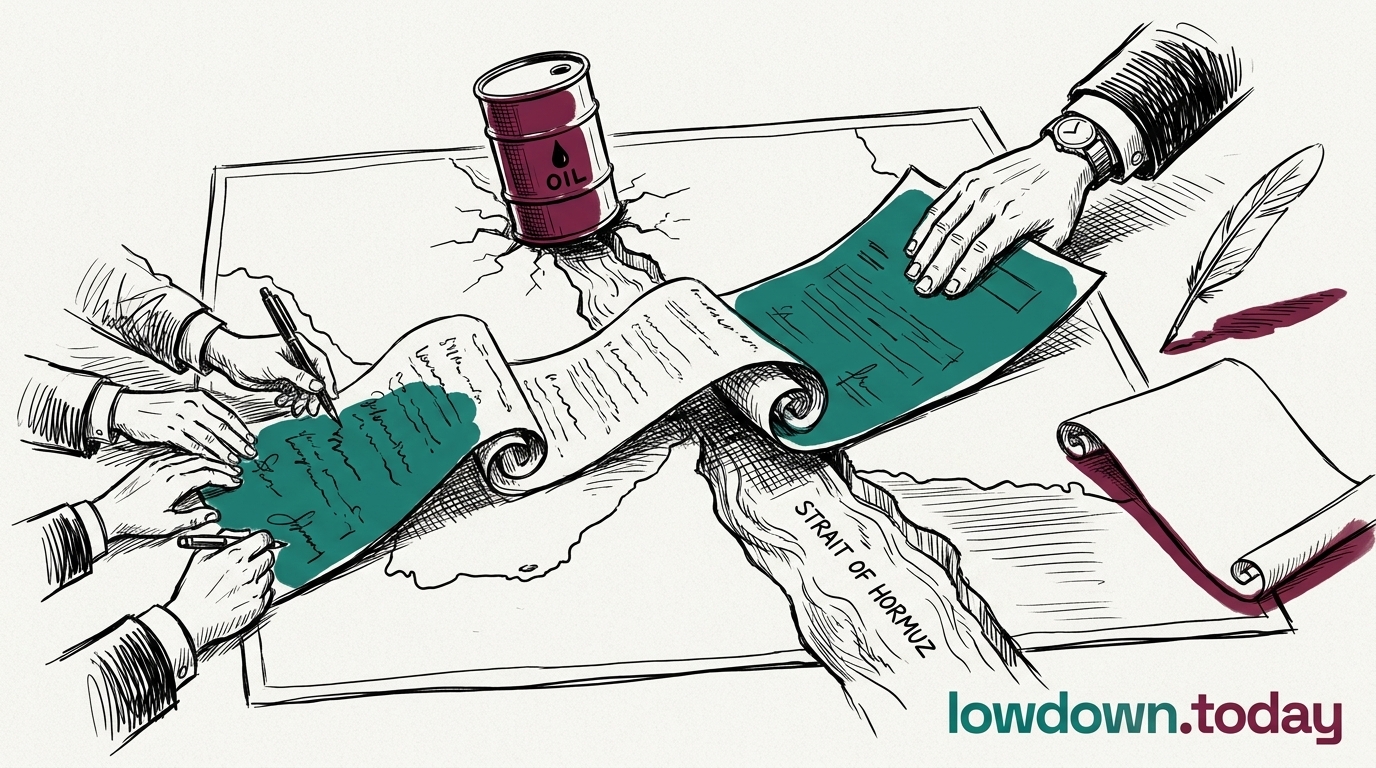
Iran's Islamic Consultative Assembly (the Majlis) is drafting legislation to formalise the strait of Hormuz toll as Iranian domestic law, with finalisation due next week, according to an unnamed lawmaker cited by Fars news agency. 1 The bill would codify what began as an IRGC field improvisation into statute, transforming a wartime military mechanism into a permanent legal claim over one of the world's critical waterways.

The significance of the timing cannot be overstated. IRGC Navy Commander Admiral Alireza Tangsiri, the man who personally built the toll and vetting system from scratch, was killed in an Israeli airstrike hours before this legislation was publicly confirmed. He was killed at 3am on Wednesday. By that afternoon, the Majlis legal committee in Tehran was drafting his toll system into permanent law. Twenty-six vessels have now transited under the IRGC vetting regime; operators submit IMO numbers, cargo manifests, and crew names to IRGC-connected intermediaries, receive a clearance code, and follow an approved route under escort past Larak Island. At least two paid in Chinese yuan. India continues to transit while denying it pays. 2

Iran's UN representative told the IMO this week that vessels linked to 'aggressor parties' have forfeited the right of innocent passage, the international law principle that merchant ships may transit straits freely. 3 Iran frames its vetting system not as a blockade but as legitimate self-defence, a framing designed to survive any post-ceasefire legal challenge.

The closest historical parallel is Egypt's 1957 Suez Canal nationalisation law, which survived the tripartite invasion and became the permanent legal basis for Egyptian canal authority. Iran appears to be following the same playbook: establish physical control during a crisis, then legislate before the crisis ends, so that any resolution begins from the new legal baseline rather than the pre-war status quo. The right of innocent passage existed for decades before this week. Iran told the IMO it no longer applies to hostile parties. If that position is codified in domestic law, every future negotiation over Hormuz will begin from the position that Iran holds a legal claim, not merely a physical one.

Deep Analysis

In plain English

Iran is writing a law that says it can permanently charge ships to pass through the Strait of Hormuz, not just during the war. About 20% of the world's oil travels through this narrow waterway. If that law passes, every barrel of oil, every container of goods, and every tonne of grain that moves through the strait costs more, because a toll gets baked into the price. That cost eventually lands on consumers worldwide in fuel prices, heating bills, and food costs. The clever part, from Iran's perspective, is that a law is much harder to undo than a military order: bombing a toll booth is one thing, repealing another country's legislation is something else entirely.

Deep Analysis
Root Causes

Iran is not merely closing a strait but creating a domestic legal framework that will require treaty-level renegotiation, not just military pressure, to dismantle.

The Majlis drafting process converts a wartime military mechanism into permanent domestic statute. Once codified, reversal requires legislative repeal, not military defeat.

The underlying structural cause is Iran's three-sided physical control of the strait, which no military operation can alter without permanent occupation.

First Reported In

Update #49 · Hormuz toll into law; Tangsiri killed

Bloomberg· 27 Mar 2026
Read original
Different Perspectives
India (BRICS meeting host, grey-market beneficiary)
New Delhi hosted the BRICS foreign ministers' meeting on 14 May that Araghchi attended under the Minab168 designation, giving India a front-row seat to Iran's diplomatic positioning. India's state refiners have been absorbing discounted Iranian crude through grey-market routing since April; Brent at $109.30 means every barrel sourced outside the formal market generates a structural saving.
Hengaw / Kurdish human rights monitors
Hengaw's daily reports from Iran's Kurdish provinces remain the sole independent cross-check on Iran's judicial activity during the conflict. Two executions across Qom and Karaj Central prisons on 15 May and five Kurdish detentions on 15-16 May indicate the wartime judicial pipeline is operating independently of military tempo.
Pakistan (mediator and bilateral partner)
Islamabad spent its diplomatic capital as the US-Iran MOU carrier to secure LNG passage for two Qatari vessels through a bilateral Pakistan-Iran agreement, spending its mediation credit for direct economic gain. China's public endorsement of Pakistan's mediatory role on 13 May is the structural reward.
China and BRICS bloc
Beijing endorsed Pakistan's mediatory role on 13 May, one day after the BRICS foreign ministers' meeting in New Delhi. Chinese state banks are processing PGSA yuan toll payments; China has not commented on its vessels' continued Hormuz passage, but benefits structurally from a non-dollar toll system it did not design.
Iraq (bilateral passage partner)
Baghdad negotiated a 2-million-barrel VLCC transit without paying PGSA yuan tolls, offering political alignment in lieu of cash. Iraq's position inside Iran's adjacent bloc makes it the natural first bilateral partner and a template for how Tehran structures passage deals with states that cannot afford Western coalition membership.
Bahrain and Qatar (Gulf signatories)
Both signed the Western coalition paper while hosting US Fifth Fleet and CENTCOM's Al Udeid base, respectively. Qatar occupies the sharpest contradiction: it is on coalition paper while simultaneously receiving LNG passage through the bilateral Iran-Pakistan track, a position Doha has tacitly accepted from both sides.