Skip to content
Briefings are running a touch slower this week while we rebuild the foundations.See roadmap
Iran Conflict 2026
16MAY

One ship through Hormuz in 24 hours

3 min read
12:41UTC

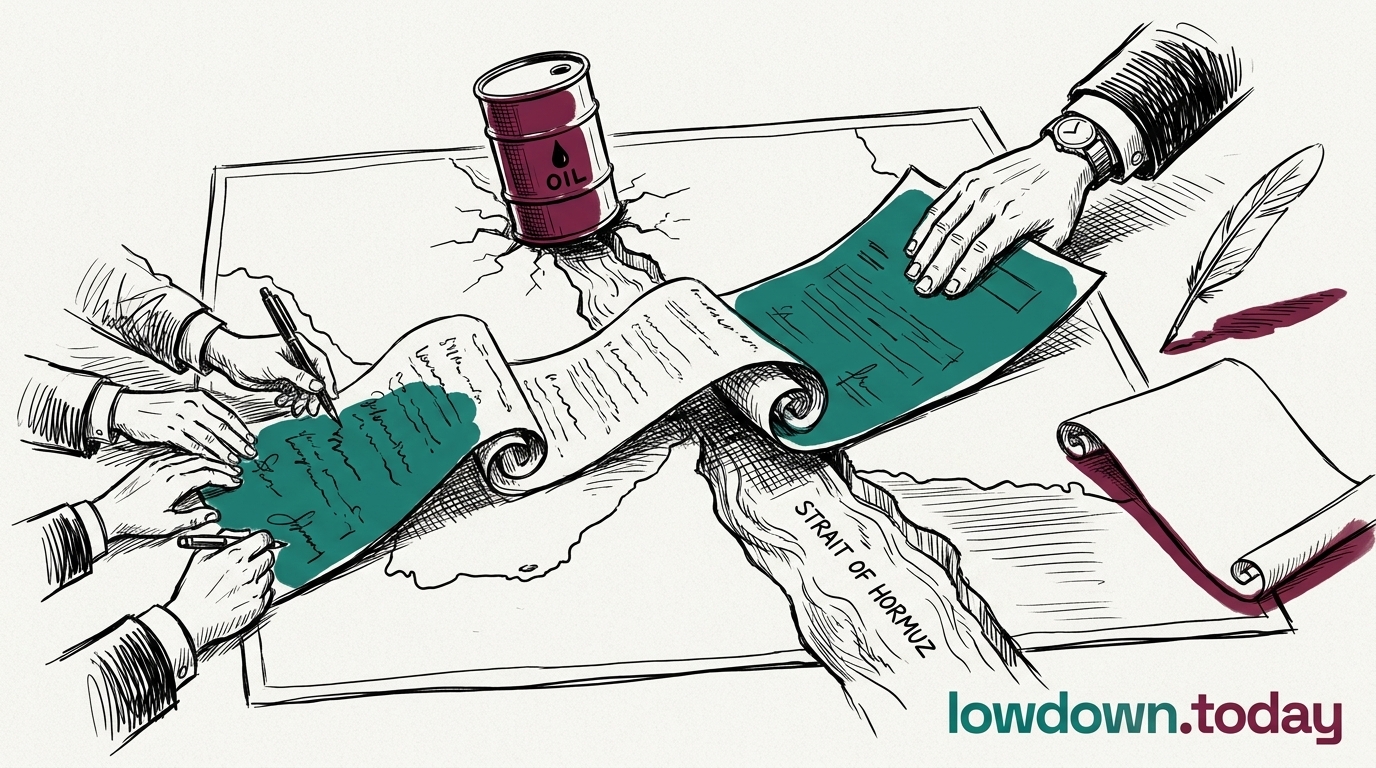
AIS vessel tracking data confirms what diplomatic language obscures: the Strait of Hormuz is effectively shut, with a single commercial transit recorded in a full day.

ConflictDeveloping
Key takeaway

Primary AIS data shows Hormuz is effectively closed; diplomatic framing overstates passage.

AIS (Automatic Identification System) monitoring data recorded one commercial cargo transit through the strait of Hormuz in the past 24 hours 1. The pre-war baseline was 30 to 50 daily transits carrying roughly 20 million barrels per day of crude and product exports. The diplomatic narrative of ships getting through collapses against this primary data.

Pakistan secured a second bilateral deal with Iran: 20 more vessels at two per day, bringing the total to approximately 40 Pakistani-flagged ships 2. Iran's state media framed it as a bilateral arrangement, not a concession on Hormuz sovereignty. Iran drew this distinction deliberately. Iran's five conditions for ending the war include permanent sovereignty over the strait; the Pakistan deal costs Tehran nothing on that legal question.

The IEA March report confirms nearly 20 million barrels per day of crude and product exports disrupted through Hormuz, substantially higher than the 8 mb/d production disruption commonly cited 3. Buried in the same report: demand growth revised down 210,000 barrels per day, an early recession signal. The Majlis toll bill is expected to be finalised this week. Passage would embed Hormuz control in Iranian domestic law, converting de facto IRGC control into a constitutional fact that no negotiator could concede.

Deep Analysis

In plain English

The Strait of Hormuz is a 33-kilometre-wide bottleneck in the Persian Gulf through which roughly 20% of the world's oil passes every day. In peacetime, 30 to 50 ships transit it daily. In the past 24 hours, one ship went through. Iran controls the strait because the narrow shipping channel runs through its territorial waters. It has been charging ships a toll of up to $2 million per vessel to pass. Most ships are not paying, and most are not transiting. The practical effect: oil, gas, and petrochemical supply chains are broken across Asia, Europe, and beyond. The IEA has released emergency reserves, but those cover about 20 days of the disruption at most.

Deep Analysis
Root Causes

Iran's control of Hormuz is not a wartime improvisation; it reflects decades of deliberate naval investment in asymmetric chokepoint denial capability. The IRGC Navy developed the toll system precisely because it understood Hormuz passage was its most durable strategic leverage.

The legal architecture underlying the closure combines de facto IRGC enforcement with Iran's domestic Majlis legislation and IMO notification. Each layer reinforces the others: IRGC control is enforceable, the Majlis bill makes it domestic law, and the IMO notification creates international legal precedent.

What could happen next?
  • Risk

    The IEA's 400 million barrel emergency reserve covers roughly 20 days of disruption; sustained closure beyond that point exhausts the buffer and triggers rationing.

    Short term · 0.75
  • Consequence

    Dow CEO's 250-275 day supply chain unwinding estimate means structural damage is locked in regardless of when the war ends.

    Medium term · 0.8
  • Risk

    Recession demand destruction already visible in IEA's -210,000 b/d revision may accelerate, masking the true supply shock until Hormuz reopens.

    Short term · 0.65
First Reported In

Update #51 · Iran hits aluminium plants; Hormuz emptying

International Maritime Organisation / UKMTO· 29 Mar 2026
Read original
Different Perspectives
India (BRICS meeting host, grey-market beneficiary)
New Delhi hosted the BRICS foreign ministers' meeting on 14 May that Araghchi attended under the Minab168 designation, giving India a front-row seat to Iran's diplomatic positioning. India's state refiners have been absorbing discounted Iranian crude through grey-market routing since April; Brent at $109.30 means every barrel sourced outside the formal market generates a structural saving.
Hengaw / Kurdish human rights monitors
Hengaw's daily reports from Iran's Kurdish provinces remain the sole independent cross-check on Iran's judicial activity during the conflict. Two executions across Qom and Karaj Central prisons on 15 May and five Kurdish detentions on 15-16 May indicate the wartime judicial pipeline is operating independently of military tempo.
Pakistan (mediator and bilateral partner)
Islamabad spent its diplomatic capital as the US-Iran MOU carrier to secure LNG passage for two Qatari vessels through a bilateral Pakistan-Iran agreement, spending its mediation credit for direct economic gain. China's public endorsement of Pakistan's mediatory role on 13 May is the structural reward.
China and BRICS bloc
Beijing endorsed Pakistan's mediatory role on 13 May, one day after the BRICS foreign ministers' meeting in New Delhi. Chinese state banks are processing PGSA yuan toll payments; China has not commented on its vessels' continued Hormuz passage, but benefits structurally from a non-dollar toll system it did not design.
Iraq (bilateral passage partner)
Baghdad negotiated a 2-million-barrel VLCC transit without paying PGSA yuan tolls, offering political alignment in lieu of cash. Iraq's position inside Iran's adjacent bloc makes it the natural first bilateral partner and a template for how Tehran structures passage deals with states that cannot afford Western coalition membership.
Bahrain and Qatar (Gulf signatories)
Both signed the Western coalition paper while hosting US Fifth Fleet and CENTCOM's Al Udeid base, respectively. Qatar occupies the sharpest contradiction: it is on coalition paper while simultaneously receiving LNG passage through the bilateral Iran-Pakistan track, a position Doha has tacitly accepted from both sides.