Skip to content
Briefings are running a touch slower this week while we rebuild the foundations.See roadmap
Iran Conflict 2026
15MAY

Iran claims progress, media says no rush

2 min read
13:51UTC

Tehran's Foreign Ministry says points were agreed; IRGC-aligned media says Hormuz stays closed until a deal suits Iran.

ConflictDeveloping
Key takeaway

Iran's Foreign Ministry signals openness while the IRGC signals control of Hormuz as leverage.

Iran's Foreign Ministry stated after the talks that "the two sides agreed on a number of points" without specifying which. Its spokesperson added: "Diplomacy never comes to an end." The language was conciliatory, leaving the door open to further rounds.

Fars News Agency, which is close to the IRGC, ran a harder line: "Iran is in no hurry, and until the US agrees to a reasonable deal, there will be no change in the status of the strait of Hormuz." Iranian state television described the session as "the third round of negotiations," a framing that implies two prior sessions were held without being publicly acknowledged.

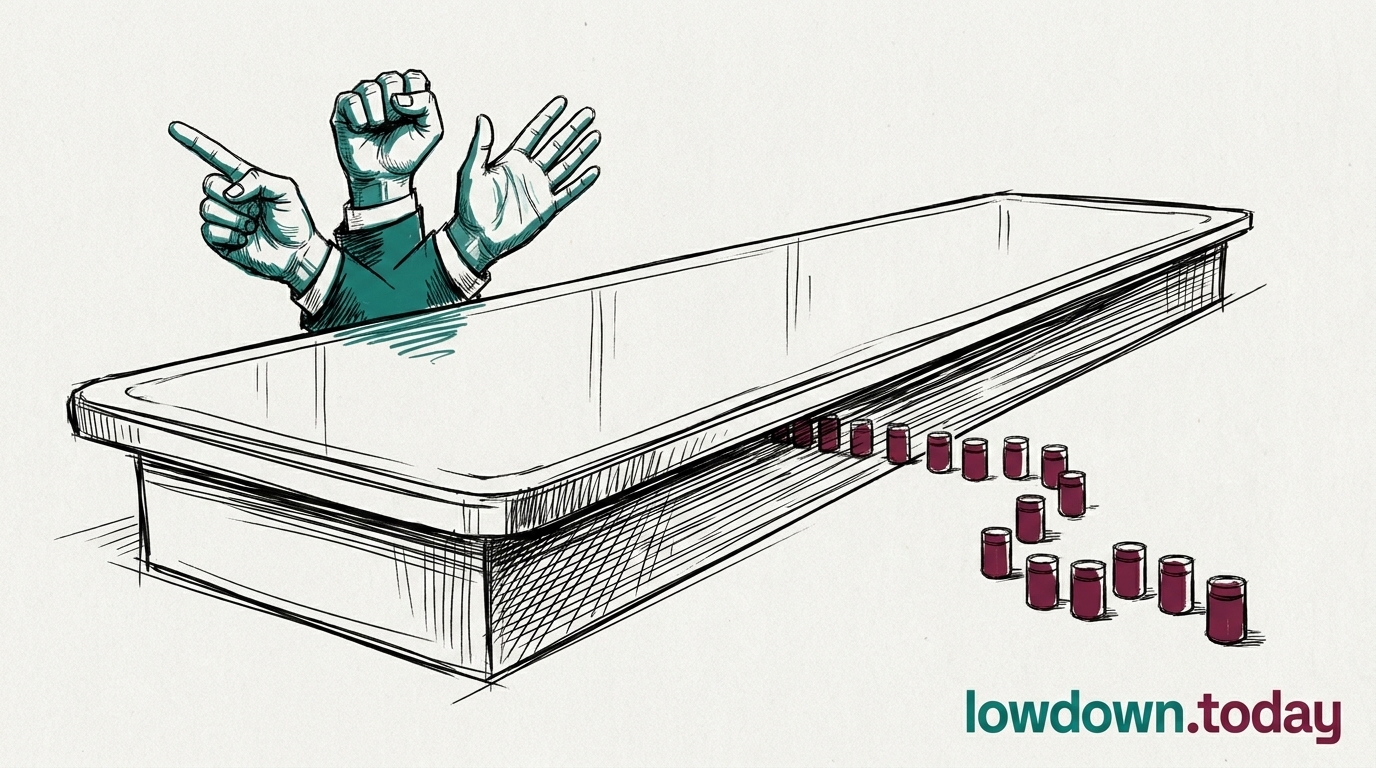
The two messages serve different audiences. The Foreign Ministry's tone is aimed outward, at Pakistan, the EU, and other mediators who need a signal that further talks are possible. Fars News speaks inward and to the IRGC's own constituency: the strait stays closed, Iran holds the leverage, there is no urgency. Parliament speaker Ghalibaf had already codified three ceasefire violations and two preconditions before arriving in Islamabad , setting the rhetorical floor below which no Iranian official can go without facing domestic blowback.

The "third round" claim is the most interesting detail. If two prior rounds occurred before the 11 April public opening at the Serena Hotel, they were conducted without any non-Iranian source reporting them. That would mean the Islamabad format had been tested in secret before it was unveiled, and it still failed.

Deep Analysis

In plain English

After the talks ended, Iran's Foreign Ministry said 'the two sides agreed on a number of points' but did not say what those points were. At the same time, Iran's state television, which reflects harder-line IRGC opinion, said the US had walked away due to 'overreach' and that Iran was 'in no hurry' to deal. These are two different institutions sending two different signals. The Foreign Ministry is signalling that diplomacy is still possible. The IRGC-aligned media is signalling that Iran has leverage and does not need to make concessions. The Iranian state TV claim that Islamabad was 'the third round' is particularly telling: it implies there were at least two rounds of talks before 11 April that were never publicly acknowledged. If true, both sides have more diplomatic contact than the public record shows.

Deep Analysis
Root Causes

The divergence between the Foreign Ministry and IRGC-aligned media reflects an institutional split inside the Iranian system that predates this conflict.

The Foreign Ministry under Araghchi represents a diplomatic professional class that sees negotiation as Iran's long-term interest. The IRGC-aligned media represents a faction whose institutional power and budget depend on a permanent state of confrontation with the US.

What could happen next?
  • Consequence

    Iran's unspecified 'agreed points' claim creates a public information vacuum that both sides can fill with incompatible narratives, making it harder to build the domestic political case in either country for resuming talks.

  • Risk

    If Tasnim's claim that Iran tabled joint framework initiatives is accurate and goes unconfirmed, it establishes a false record that Iran made no moves, which could be used domestically to justify a return to hostilities.

First Reported In

Update #66 · Islamabad collapses: 10 days to expiry

Fars News Agency· 12 Apr 2026
Read original
Causes and effects
This Event
Iran claims progress, media says no rush
The split between the Foreign Ministry's softer language and Fars News's harder line reveals competing signals from within the Iranian state about what Islamabad means.
Different Perspectives
Markets
Markets
Brent crude rose 2.2 per cent to $96.34 on 10 June, reversing a 7 per cent weekly decline built on deal optimism, as the overnight exchange repriced the Strait of Hormuz risk premium in a single session. The move reflects transit-risk repricing rather than supply shock: Iran's exports had already collapsed to below 300,000 barrels per day.
Pakistan
Pakistan
Pakistan's Naqvi channel, the only mediation track carrying both civilian and military buy-in, was stress-tested by live ordnance within 48 hours of the 6-7 June Tehran visit. Whether Washington informed Islamabad of the imminent strike plan while Naqvi was in Tehran remains undisclosed, putting the channel's neutrality under scrutiny.
Kuwait
Kuwait
Kuwait hosted the third Iranian strike on its soil since the 3 June airport drone attack, with Ali Al Salem airbase targeted in the three-country salvo. Its recent $1.98 billion Anduril Anvil counter-drone purchase signals it is rearming rather than reconsidering its hosting posture.
Bahrain
Bahrain
Bahrain absorbed the IRGC barrage via PAC-3 intercepts with its magazine already at 87 per cent depletion and no resupply before 2027. Sounding air-raid sirens over Manama, it faced the intercept burden with the thinnest defensive stack in the Gulf coalition.
Jordan
Jordan
Jordan reported all five incoming missiles intercepted with no injuries and no damage, a clean defensive performance that strengthens Amman's case for staying in the Western coalition without escalating its own posture. It now sits on Iran's target list for the first time despite not being a party to the Abraham Accords confrontation.
Iran / IRGC
Iran / IRGC
Foreign Minister Araghchi posted on X that US forces should 'leave our region if you want to be safe' and framed the exchange as a US defeat, while the IRGC claimed 21 targets hit and an F-35 hangar destroyed. The claims serve a domestic and Arab-audience framing rather than a verified battle-damage assessment.