Skip to content
Briefings are running a touch slower this week while we rebuild the foundations.See roadmap
Iran Conflict 2026
11MAY

Sanctioned LNG tanker sunk off Libya

4 min read
14:01UTC

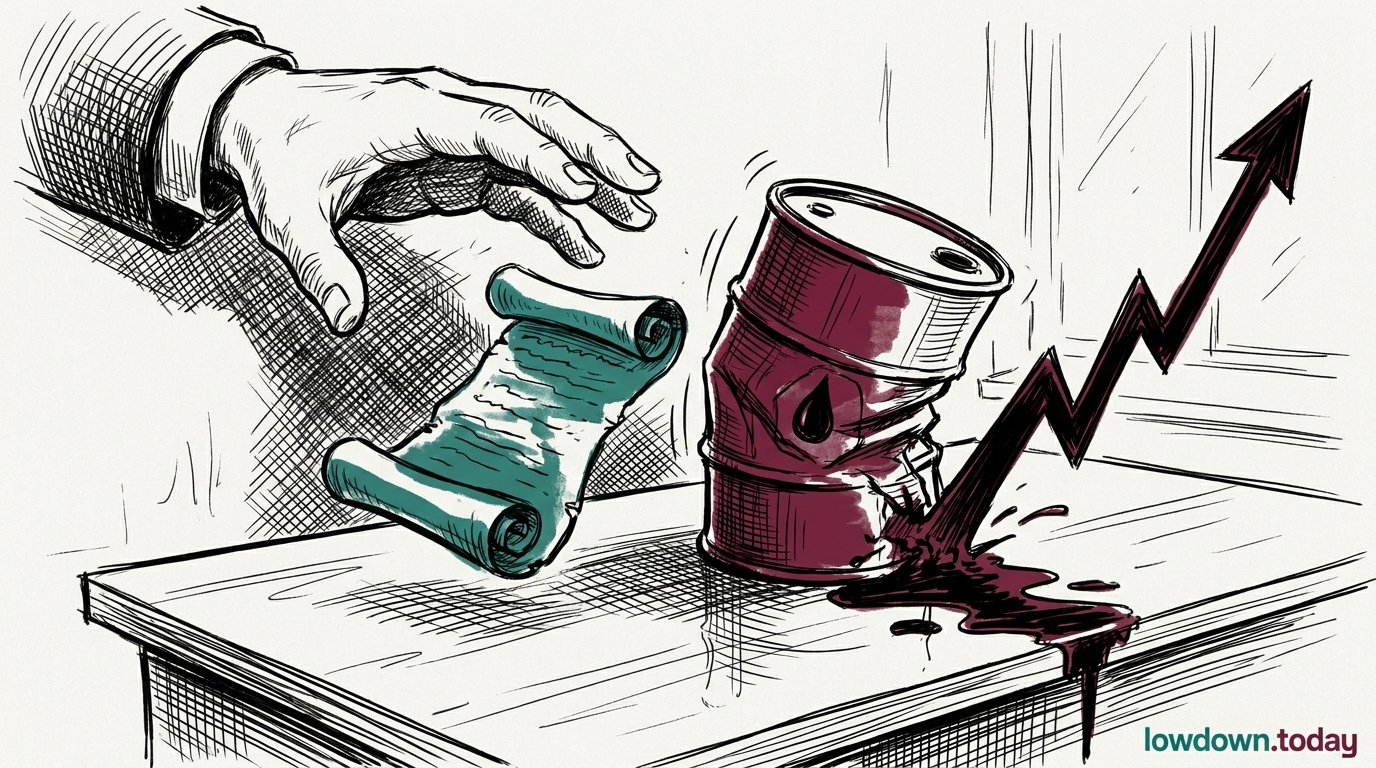
The sanctioned Russian carrier Arctic Metagaz was destroyed off Libya on 3 March, the first LNG tanker lost in modern conflict. If shadow fleet tankers can be sunk at sea, the economics of Russia's sanctions-evasion energy trade face a threat no waiver or discount can offset.

ConflictDeveloping
Key takeaway

Shadow fleet economics unravel if maritime insurance risk exceeds cargo value regardless of further strikes.

Multiple explosions struck the 277-metre sanctioned Russian LNG carrier Arctic Metagaz between Malta and the port of Sirte around 04:00 local time on 3 March 1. All 30 crew were evacuated alive 2. The vessel had departed Murmansk carrying cargo from Novatek's Arctic LNG 2 project — a facility under US, EU, and UK sanctions — and operated as part of Russia's shadow fleet, the tanker network that sails outside Western insurance, classification, and port-state inspection systems. It is the first confirmed destruction of an LNG carrier in any modern conflict.

Attribution remains unresolved. Russia's TASS attributed the attack to Ukrainian sea drones launched from positions off the Libyan coast 3. Ukraine's military has neither confirmed nor denied involvement. Ukrainian naval drones have operated as far as the Bosphorus; if Ukrainian, this strike would extend their documented operational range by roughly 1,000 km, placing much of the Mediterranean within reach.

The shadow fleet's defining characteristic — its separation from Western maritime infrastructure — doubles as its vulnerability. These vessels carry no Protection & Indemnity club insurance, receive no port-state inspections, and travel without naval escort. They evade sanctions by operating outside the system; that same isolation leaves them unprotected when someone decides to target them.

The sinking compounds an already severe revenue crisis. Russian oil and gas revenues fell 65% year-on-year in January, with Urals Crude at $38 against Brent at $62.50 . Arctic LNG 2 was the hedge — Asian demand replacing European buyers ahead of the EU's phased LNG ban beginning 25 April . That logic now faces a physical constraint. If shadow fleet tankers cannot safely transit the Mediterranean, the freight and security calculus for Chinese and Indian importers changes. The cargo discount on sanctioned Russian LNG may no longer compensate for the risk premium of a Mediterranean passage.


Deep Analysis

In plain English

Russia built a workaround fleet of old tankers — operating without Western insurance or tracking — to keep selling oil and gas despite sanctions. One of those ships, carrying Arctic gas to buyers outside Europe, was blown up near Libya, probably by Ukrainian underwater drones. LNG (liquefied natural gas) is stored at -162°C and is extremely flammable. That the vessel sank without a catastrophic cargo explosion is itself operationally significant. The attack means Russia's physical workaround for energy sanctions is now under threat. Even without further strikes, the demonstrated capability forces up war risk costs for every shadow fleet voyage through the Mediterranean.

Deep Analysis
Synthesis

This is the first live test of whether maritime interdiction can function as a sustained sanctions enforcement mechanism. Individual cargo destruction is economically marginal relative to Russia's total export revenues. The strategic value is in demonstrated capability: if Ukraine can credibly threaten shadow fleet vessels across the Mediterranean, war risk premiums spike fleet-wide. Russia's energy export costs rise without any further military action required.

Root Causes

The shadow fleet emerged from a structural gap in G7 price cap enforcement. Western classification societies and P&I clubs withdrew from Russian vessels in 2022, but no enforcement mechanism covered replacement registrars in Palau, Gabon, and Tanzania that absorbed the resulting demand. That vacuum was predictable; maritime interdiction risk was never priced into shadow fleet operating models.

Escalation

Russia faces a dilemma: retaliating against Ukrainian maritime assets risks escalating into NATO-adjacent waters, while inaction signals shadow fleet vessels are legitimate targets. Ukraine faces the mirror dilemma — claiming the strike maximises deterrence but forfeits deniability for future operations. Neither side holds a dominant de-escalation strategy, which makes further maritime operations more probable than a negotiated stand-down.

What could happen next?
  • Precedent

    First confirmed destruction of an LNG tanker in conflict establishes maritime energy infrastructure as a reachable military target, changing risk calculus for all shadow fleet operators globally.

    Immediate · Assessed
  • Risk

    Shadow fleet operators may suspend Mediterranean transits pending threat reassessment, directly disrupting Arctic LNG 2 delivery schedules before the EU's 25 April LNG ban takes effect.

    Short term · Assessed
  • Consequence

    Asian LNG buyers dependent on Russian Arctic supply must now price maritime war risk into procurement decisions, potentially accelerating diversification toward US or Qatari LNG.

    Medium term · Assessed
  • Opportunity

    US LNG exporters and Qatar could capture Arctic LNG 2 market share if Russia's supply reliability is structurally degraded by sustained maritime threat.

    Medium term · Suggested
First Reported In

Update #2 · Shadow fleet tanker sunk, talks seek venue

TASS· 5 Mar 2026
Read original
Different Perspectives
International human rights monitors (NetBlocks, IHR, Hengaw)
NetBlocks recorded 1,704 cumulative hours of near-total internet blackout for roughly 90 million Iranians on Day 74, while IHR documented ongoing executions under emergency provisions. These organisations are the only active monitoring windows into a civilian population cut off from the global internet for 71 consecutive days.
UK / France coalition
The Royal Navy confirmed HMS Dragon's Hormuz deployment on its own website on 11 May, converting a press-reported presence into declared force posture; UK and French defence ministers hosted a coalition meeting the same day. Britain and France are now the only named contributors to a Hormuz escort mission all five allies Trump originally asked had declined.
Saudi Aramco / Gulf producers
Saudi Aramco CEO Amin Nasser warned on 11 May that a Hormuz closure could remove 100 million barrels of weekly supply from global markets (roughly 15 million barrels per day for a week), a figure that dwarfs any OPEC+ swing capacity. The warning functions as both a price-floor signal and a public pressure on Washington to protect transit.
Beijing / Chinese Government
China has not publicly acknowledged the four Hong Kong-registered entities designated on 11 May or extended MOFCOM's Blocking Rules cover to HK-domiciled firms. Xi Jinping hosts Trump on 14–15 May having already de-risked state-bank balance sheets via NFRA's quiet loan halt, entering the summit partially compliant before any negotiation.
Tehran / Iranian Government
Foreign Minister Araghchi described Iran's 10-point counter-proposal as 'reasonable and responsible' via spokesman Baqaei on 11 May, and widened the mediator pool by meeting Turkish, Egyptian, and Dutch counterparts in a single day. Tehran is buying procedural runway while Trump's verbal rejection went unmatched by any written US counter.
Trump White House
Trump White House
Trump called the ceasefire 'on massive life support' and dismissed Iran's 10-point counter-proposal as 'a piece of garbage' on 11 May, while departing for Beijing two days later with no signed Iran instrument to show Congress. The verbal maximum and the paper void coexist: the administration is running a legal pressure campaign through Treasury while the president free-lances the rhetoric.



