Skip to content
Briefings are running a touch slower this week while we rebuild the foundations.See roadmap
Iran Conflict 2026
11MAY

Russia's wealth fund sheds $4.8bn

2 min read
14:01UTC

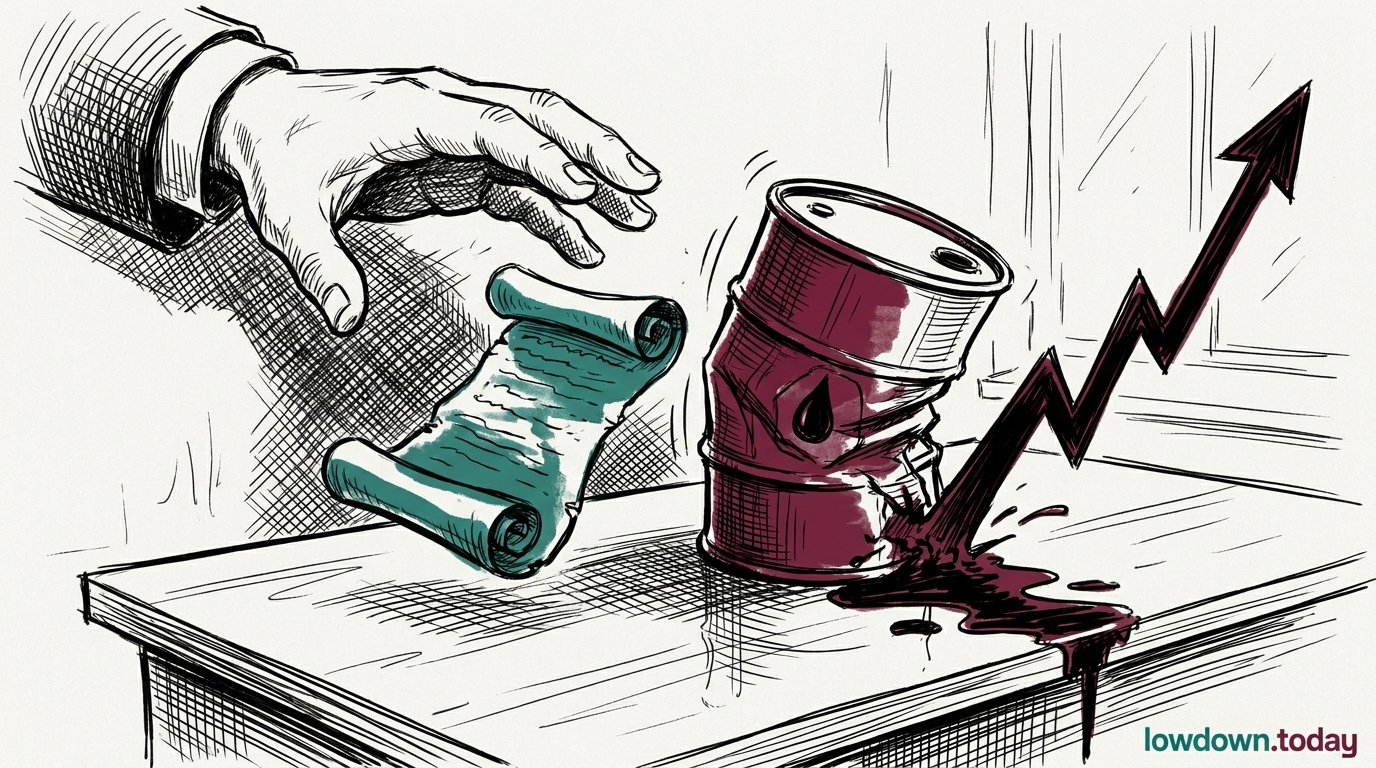
Rising oil prices could not prevent Russia's National Wealth Fund from haemorrhaging reserves as the business climate index turned negative for the first time in three years.

ConflictDeveloping
Key takeaway

Russia's financial buffers are shrinking despite oil prices above budget assumptions.

Russia's National Wealth Fund shed 400 billion roubles ($4.8 billion) in January and February 2026 1. The country's business climate index turned negative in March for the first time since October 2022. Fixed capital investment fell 2.3% in real terms during 2025.

The Urals benchmark has risen $11.30 to $73.24 per barrel, well above Russia's $59 budget assumption. Yet rising prices did not prevent the fund's decline. Russia is spending 38 to 40% of its federal budget on defence, the highest proportion since the Soviet era . Moscow dropped planned 10% cuts to non-military spending after the Iran-war oil price surge, only to face a revenue squeeze from the opposite direction: not low prices, but destroyed export capacity at Baltic ports.


Deep Analysis

In plain English

Russia has a 'rainy day fund' called the National Wealth Fund, similar to a national savings account. It lost $4.8 billion in just two months at the start of 2026, even while oil prices were high. Why? Russia is spending 38-40% of its entire government budget on the military, the highest proportion since the Soviet era. High oil prices were supposed to offset that. But Russia is spending the money faster than it earns it. Now the oil export damage from the Baltic port strikes compounds the problem: Russia has high oil prices but can't ship as much oil. The business climate index turned negative in March for the first time in years, suggesting the civilian economy is feeling the strain.

Deep Analysis
Root Causes

Russia's fiscal deterioration reflects the simultaneous pressure of three forces. First: record defence spending at 38-40% of the federal budget, consuming reserves faster than revenues replenish them.

Second: investment collapse, with fixed capital investment down 2.3% in 2025, meaning Russia is not building the productive capacity needed to sustain long-term revenue growth. Third: the Baltic port disruption now compressing both the volume and revenue sides of the oil export equation simultaneously.

The business climate index turning negative for the first time since October 2022 is the civilian economy signal. It precedes consumer confidence deterioration by two to three quarters. If sustained, it indicates Russian business investment is contracting under war conditions despite high nominal oil prices.

What could happen next?
  • Consequence

    At current NWF depletion rates, Russia may need to cut non-military spending or increase deficit financing within 12-18 months, creating domestic economic pressure on the war effort.

First Reported In

Update #9 · Ukraine halves Russia's Baltic oil exports

Moscow Times· 1 Apr 2026
Read original
Different Perspectives
International human rights monitors (NetBlocks, IHR, Hengaw)
NetBlocks recorded 1,704 cumulative hours of near-total internet blackout for roughly 90 million Iranians on Day 74, while IHR documented ongoing executions under emergency provisions. These organisations are the only active monitoring windows into a civilian population cut off from the global internet for 71 consecutive days.
UK / France coalition
The Royal Navy confirmed HMS Dragon's Hormuz deployment on its own website on 11 May, converting a press-reported presence into declared force posture; UK and French defence ministers hosted a coalition meeting the same day. Britain and France are now the only named contributors to a Hormuz escort mission all five allies Trump originally asked had declined.
Saudi Aramco / Gulf producers
Saudi Aramco CEO Amin Nasser warned on 11 May that a Hormuz closure could remove 100 million barrels of weekly supply from global markets (roughly 15 million barrels per day for a week), a figure that dwarfs any OPEC+ swing capacity. The warning functions as both a price-floor signal and a public pressure on Washington to protect transit.
Beijing / Chinese Government
China has not publicly acknowledged the four Hong Kong-registered entities designated on 11 May or extended MOFCOM's Blocking Rules cover to HK-domiciled firms. Xi Jinping hosts Trump on 14–15 May having already de-risked state-bank balance sheets via NFRA's quiet loan halt, entering the summit partially compliant before any negotiation.
Tehran / Iranian Government
Foreign Minister Araghchi described Iran's 10-point counter-proposal as 'reasonable and responsible' via spokesman Baqaei on 11 May, and widened the mediator pool by meeting Turkish, Egyptian, and Dutch counterparts in a single day. Tehran is buying procedural runway while Trump's verbal rejection went unmatched by any written US counter.
Trump White House
Trump White House
Trump called the ceasefire 'on massive life support' and dismissed Iran's 10-point counter-proposal as 'a piece of garbage' on 11 May, while departing for Beijing two days later with no signed Iran instrument to show Congress. The verbal maximum and the paper void coexist: the administration is running a legal pressure campaign through Treasury while the president free-lances the rhetoric.



