Skip to content
Welcome, thoughtbot's Giant Robots listeners!Start here
Iran Conflict 2026
10MAY

US drops its uranium ship-out demand

3 min read
14:22UTC

The New York Times, citing two US officials, reported Washington has accepted that Iran can dilute its 440.9 kg of enriched uranium at home rather than ship it abroad.

ConflictDeveloping
Key takeaway

Washington conceded the exact dilution-in-Iran line Tehran set, narrowing the dispute to duration and verification.

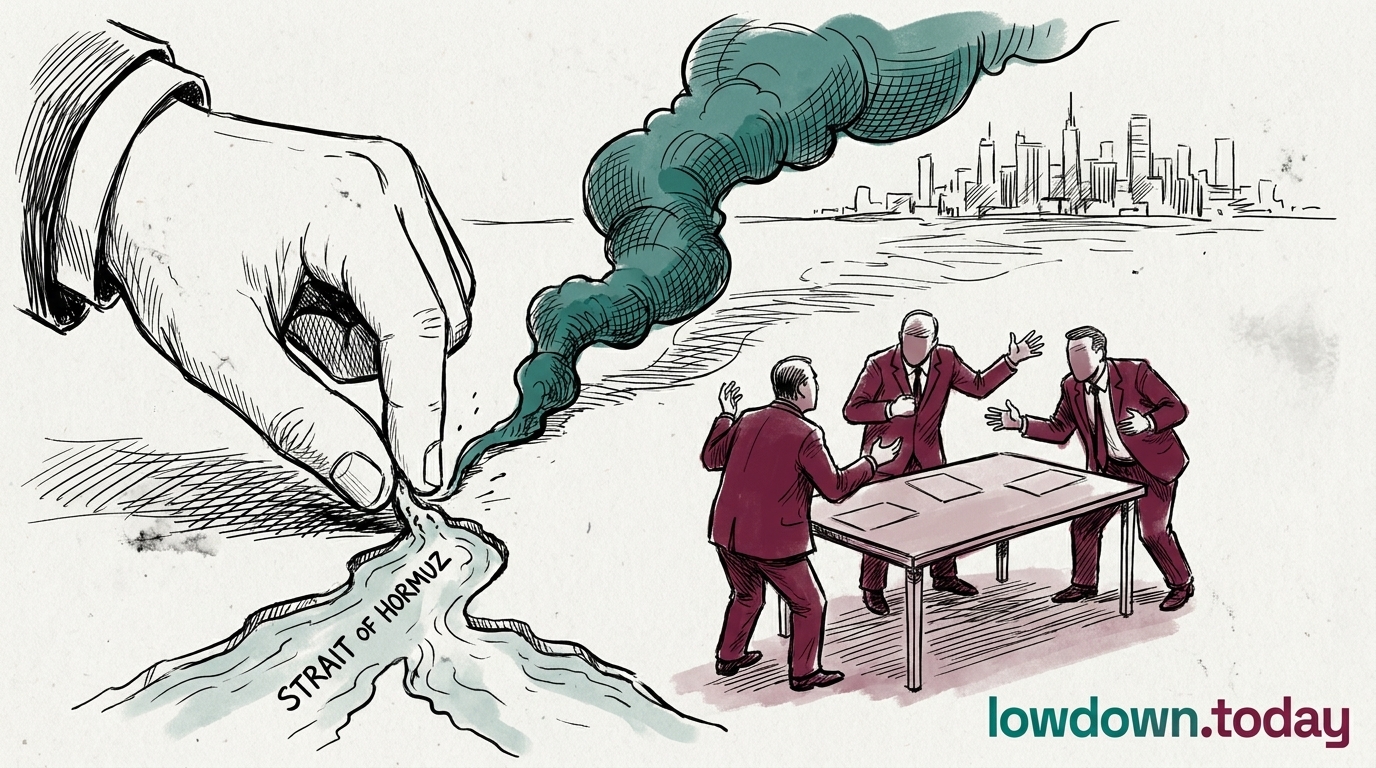
The New York Times reported on Saturday, citing two US officials, that the United States has dropped its demand that Iran ship its 440.9 kg of 60 per cent enriched uranium out of the country, accepting dilution inside Iran as the working mechanism⁠1. Washington had insisted the highly enriched uranium leave Iranian soil, most recently through a Russia-custody arrangement Vladimir Putin reaffirmed at St Petersburg. Tehran refused throughout.

The shift matters because of whose line it crosses. Foreign Minister Abbas Araghchi had named dilution inside Iran as a non-negotiable red line as recently as Friday, so the position Washington just conceded is the one Tehran had set as the wall the deal could not breach. It is the first substantive American give in 106 days of war, and the rhetoric, not the substance, had moved until now.

The concession narrows the open dispute to two questions. The first is duration: Washington wants a 20-year enrichment suspension while Tehran is still discussing roughly 15. The second is verification, the harder of the two, because the UN nuclear watchdog, the IAEA, remains locked out of every facility struck since February. Diluting 60 per cent uranium to reactor grade leaves the material in Iranian hands, so without inspectors on the floor no outside party can confirm the dilution happened.

The White House declined to comment, and Iran issued no public statement on the terms⁠2. A give sourced to two anonymous officials, with both governments silent on the record, may yet prove deal-spin rather than a fixed position. What is not in doubt is that the substance moved for the first time since the talks began.

Deep Analysis

In plain English

Iran has been building up a stockpile of uranium enriched to 60 per cent purity, partway to weapons grade. The US originally demanded Iran ship that stockpile out of the country so it could not be used quickly to make a bomb. Iran refused, citing national sovereignty. Now, according to The New York Times, the US has backed down from that demand. Instead of shipping the uranium abroad, Iran would dilute it by mixing it with other material to make it less dangerous, while keeping it inside Iran. The remaining arguments are about how long Iran must stop enriching uranium (the US wants 20 years, Iran wants around 15) and how inspectors will verify what happens.

Deep Analysis
Root Causes

Washington's original ship-out demand rested on the Putin brokerage track: Russia would hold the uranium in custody, providing a physical guarantee outside Iranian control. That track collapsed when IRGC factional pressure made any arrangement resembling the surrender of sovereign nuclear assets politically untenable for Mojtaba Khamenei. Dilution inside Iran became the only option Tehran's domestic coalition could accept.

A secondary structural driver is the five-year enrichment-duration gap: the US demands 20 years, Iran has offered approximately 15. The concession on location shifts the negotiating battlefield to duration and verification, where the gap is arithmetic rather than existential, making a deal marginally more tractable even as it concentrates verification risk on IAEA inspector access.

What could happen next?
  • Consequence

    IAEA verification requirements now become the single most contentious technical issue: Iran must grant inspector access to four currently denied facilities for dilution monitoring to be credible.

    Immediate · Assessed
  • Risk

    Dilution inside Iran preserves enrichment infrastructure. A deal collapse within the moratorium window leaves Iran closer to breakout than before the war because centrifuge capacity survived the air campaign.

    Medium term · Assessed
  • Precedent

    Accepting dilution-in-place, if verified, would establish a new non-proliferation template weaker than Libya 2003 but stronger than JCPOA 2015 on the HEU question.

    Long term · Reported
First Reported In

Update #127 · US drops red line; signature still slips

The New York Times· 14 Jun 2026
Read original →
Different Perspectives
Office for Budget Responsibility
The OBR's 28 October forecast assumed $82 oil for 2026 and 2027, from market prices for the ten working days to 19 August, and blamed dearer wholesale energy on the war without naming Iran. It expects CPI inflation close to 4% in early 2027 even at that price.
Hengaw, Kurdish rights group
Hengaw reported the 3 November hangings of Amirhossein Maleki and Amirhossein Ebrahimi in Isfahan, saying Ebrahimi was tortured into confessing and that nine of 12 people sentenced to death in the case have now been hanged. Iran's judiciary holds that the defendants killed members of the security forces.
FINTRAC, Canada's financial intelligence unit
FINTRAC worked with the US Treasury on the 6 November designation of eight money services businesses in British Columbia, Ontario and Quebec. Treasury says the businesses still operate, some under new names, so closing them falls to Ottawa.
Abdul Qadir al-Dakhil, Governor of Nineveh
Al-Dakhil cancelled three Mosul International Airport contracts on 7 November over alleged links to armed groups, after meeting Prime Minister Ali al-Zaidi in Baghdad. He named no group or company, and said the contracts will go to international companies.
Kuwait
Kuwait
Kuwait condemned the Houthi missile fired towards the Madinah region on 5 November and restated its support for Saudi Arabia, the Qatar News Agency reported. Its state tanker company, Kuwait Oil Tankers Company, is among the Gulf state fleets on Iran's expanded Hormuz list.
Scott Bessent, US Treasury Secretary
Treasury designated an alleged Chandigarh false-flag network on 4 November and eight Canadian exchangers on 6 November, while State sanctioned alleged MANPADS intermediaries. None of the actions touches an oil buyer; they target the paper, cash and procurement around Iran's trade.

Written with AI from Lowdown's published reporting. Not individually reviewed by an editor. Editorial standards.
