Skip to content
You can now search across every topic, entity and event.What's new
Iran Conflict 2026
10MAY

Rubio names uranium; Iran denies a deal

3 min read
14:22UTC

Marco Rubio publicly named the turnover of highly enriched uranium as a US deal criterion on Sunday 24 May; an Iranian official denied any such agreement the same day.

ConflictDeveloping
Key takeaway

Washington named uranium turnover a red line while Tehran denied agreeing to it, leaving the nuclear clause unsettled.

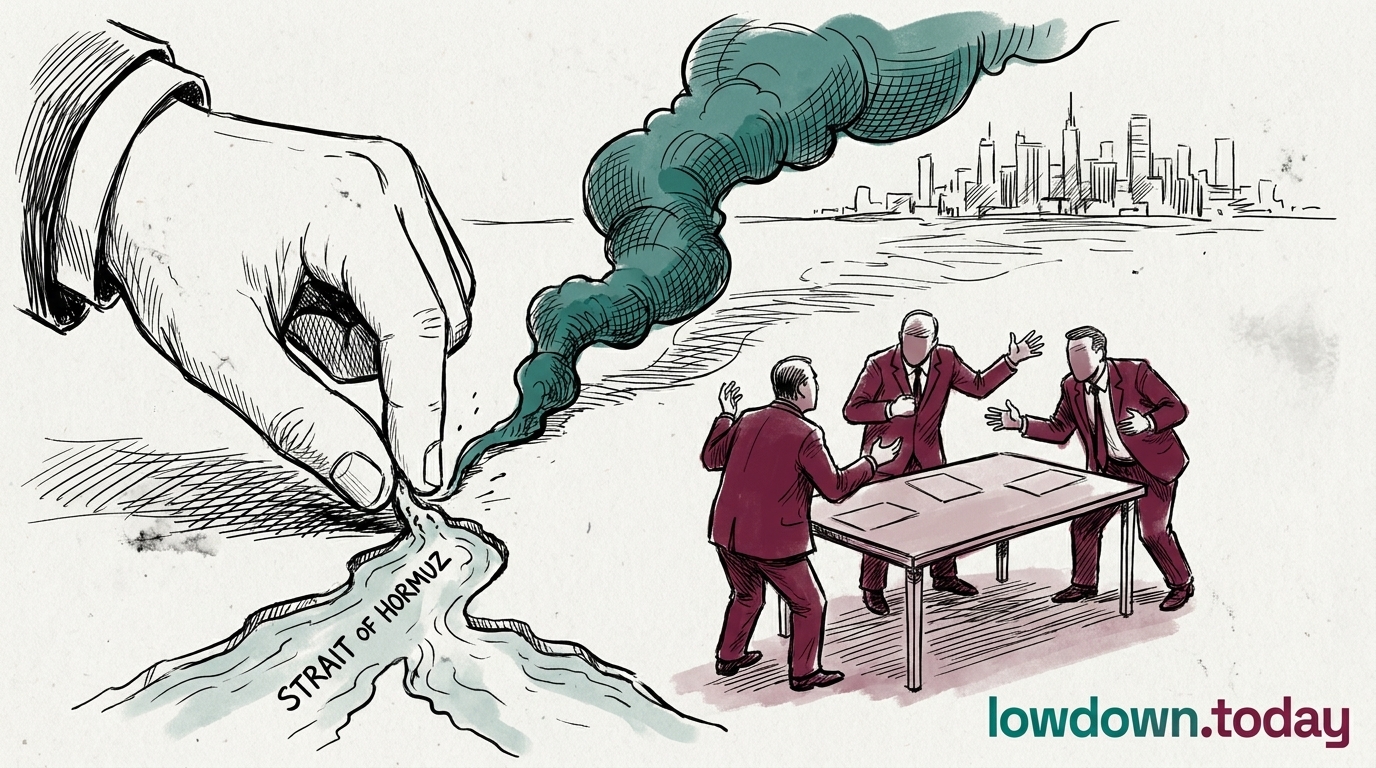
Marco Rubio, the US Secretary of State, publicly named the turnover of highly enriched uranium (HEU), the weapons-relevant material Iran has stockpiled, as a US criterion for any agreement on Sunday 24 May, alongside reopening the strait without tolls and stopping Iran short of a nuclear weapon 1. The same day, a senior Iranian official, relayed through Reuters and the Farsi outlet Ecoiran, said flatly that Iran had "not agreed to the removal of highly enriched uranium reserves" and that nuclear questions sit outside the current text 2.

Highly enriched uranium can be refined toward weapons grade far faster than the low-enriched fuel used in power reactors, which is why its disposal is the single concession the US most wants and Iran most resists. Naming it publicly turns a negotiating position into a stated red line, harder to climb down from once it is on the record.

This advances a contradiction first surfaced on 23-24 May . Three accounts of one clause now run side by side: US broadcaster CBS News reports Iran agreed "in principle" to dispose of its HEU, the Iranian official denies any such agreement, and foreign ministry spokesman Esmail Baghaei keeps nuclear out of the present talks altogether, deferring it to a 60-day second phase after any war-ending deal is signed 3.

The three cannot all be true. Either Iran has conceded the stockpile, has refused it, or has parked it for a later round, and the gap is not rhetorical drift but a measure of how far apart the parties remain on the question the war was nominally fought to settle. A single agreement cannot carry three nuclear terms, which is why the public optimism and the substance of the text keep pointing in different directions.


Deep Analysis

In plain English

Highly enriched uranium (HEU) is uranium processed to a very high purity level, the type you need to build a nuclear weapon. Iran has an estimated 540 kilograms of it, which is enough material for several bombs if further processed. On 24 May, US Secretary of State Marco Rubio publicly said Iran had agreed to hand over or remove this stockpile as part of the deal. On the same day, an Iranian senior official said through Reuters that Iran had agreed to no such thing. A third US news network, CBS, reported that Iran had agreed "in principle" to dispose of the stockpile. All three accounts ran simultaneously. The reason is that the draft agreement deliberately used vague language, "negotiate removal", that each side could read differently. For Rubio it meant an agreement to remove; for Iran it meant an agreement to talk about it later. This is the hardest problem in the deal, because whatever the text says, Iran's Supreme Leader has already ordered the uranium to stay inside Iran.

Deep Analysis
Root Causes

The three-account contradiction on HEU has a specific structural cause: the Axios MOU draft commits Iran to "negotiate" enrichment suspension and HEU removal rather than to remove HEU immediately. Rubio read "negotiate removal" as equivalent to "agreed to remove"; Iran's unnamed senior official read it as "agreed to discuss in Phase 2"; CBS read it as "agreed in principle". All three readings are defensible from the same deliberately ambiguous text.

Iran's Supreme Leader Mojtaba Khamenei's 21 May directive ordering the 60%-enriched uranium stockpile to remain inside the country adds a sovereign constraint on top of the textual ambiguity: even if the clause says "removal", the Supreme Leader has ordered retention. The IAEA remains locked out of Iranian nuclear sites since the Majlis voted 221-0 on 11 April, meaning no third-party verification of any HEU clause is currently possible.

What could happen next?
  • Risk

    If the HEU clause cannot be made precise before signing, the MOU's 60-day Phase 2 nuclear negotiation begins with both sides holding incompatible legal interpretations of the starting position.

  • Consequence

    Rubio's public naming of HEU turnover as a US criterion, without Iranian confirmation, raises the domestic US political cost of accepting any HEU deal weaker than full removal.

First Reported In

Update #108 · US strikes Bandar Abbas as deal talk stalls

CBS News· 26 May 2026
Read original
Different Perspectives
Oil markets / Lloyd's of London
Brent fell to near $87.33 on 80 per cent deal-probability pricing, but Lloyd's has not de-listed Hormuz from its war-risk register and shipping diversions continue at 139 vessels. Insurance markets are lagging futures: physical risk remains while financial markets have spent the good news before the paper exists.
India
India
Modi is expected to raise the deaths of three Indian sailors in the 11 June CENTCOM strike on the MT Settebello with Trump at G7 sidelines, the first non-party leader to put the blockade's human cost into a formal bilateral. New Delhi is also a major Iranian oil buyer whose import volumes the sanctions-relief terms will govern.
Israel (Netanyahu)
Israel (Netanyahu)
Netanyahu stated Israel is not party to the deal on 12 June; Defence Minister Katz ruled out the Lebanon withdrawal Iran's draft demands, inserting a third blocker the US-Iran negotiating channel cannot resolve. Israel's position tethers Hormuz reopening to a Lebanon settlement Washington has not brokered.
Pakistan (mediator, Sharif/Naqvi)
Sharif declared a final agreed text on 12 June before either principal confirmed it, running two Tehran visits in under a week without securing a written IRGC or Khamenei response. Islamabad's incentive to claim a diplomatic win outpaces its standing to deliver either capital's signature.
Iran foreign ministry (Araghchi)
Araghchi declared digital signing within days while setting dilute-in-Iran as a non-negotiable red line on the 440.9 kg HEU stockpile, a standing Tehran position he cannot override without authorisation from Khamenei, reachable only by courier. The FM track is sprinting to close before the IRGC reasserts control.
Trump administration / CENTCOM
Vance called the deal still TBD on 12 June while CENTCOM downed Iranian drones over Hormuz for a second consecutive night and the White House register stayed blank. Washington holds the ship-out position on HEU and has not signed an Iran instrument in over 100 days of conflict.



