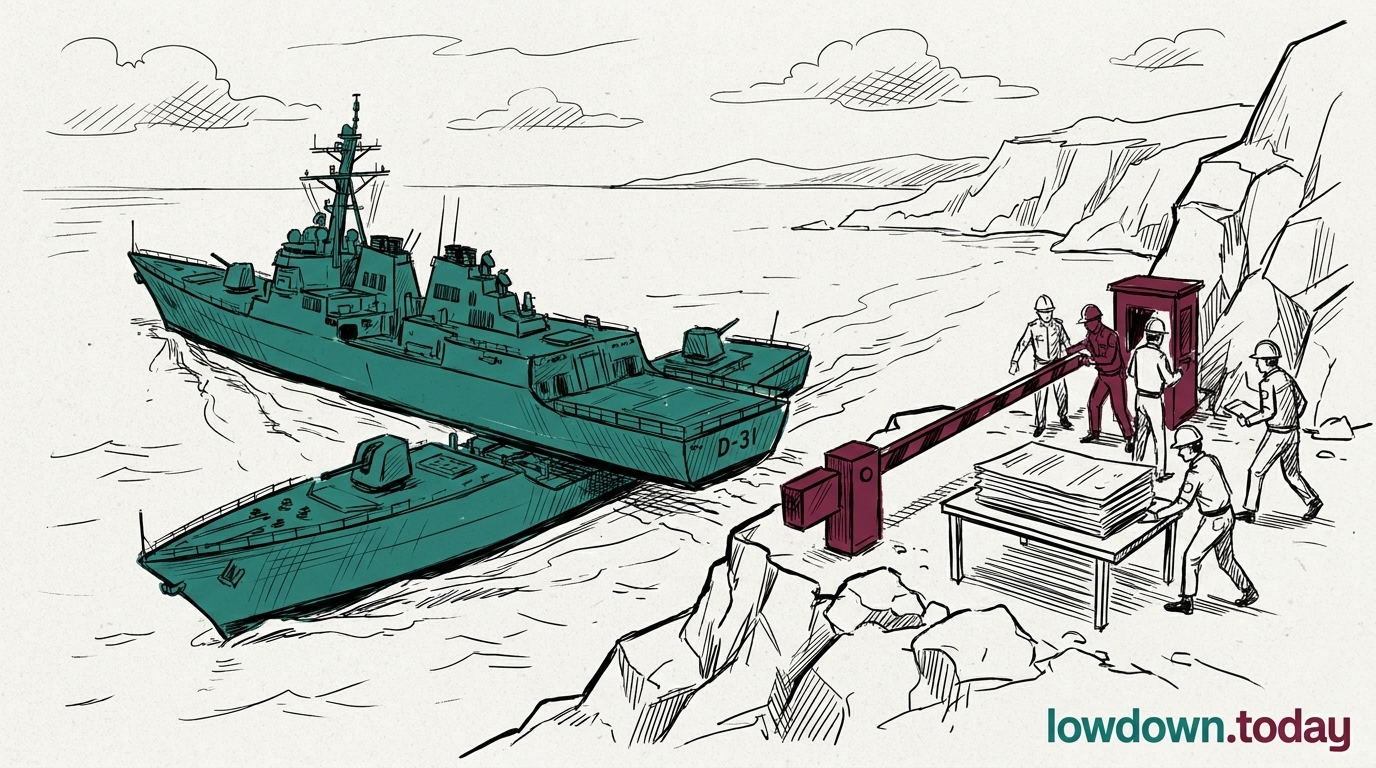
Iran extended its declared maritime control area on Monday 4 May to cover Fujairah and Khorfakkan, the two Gulf of Oman ports the UAE relied on to bypass the blocked Strait of Hormuz1. Iranian drones and missiles struck the Fujairah oil terminal the same day, the first attack on UAE territory since the Trump ceasefire of 16 April. UAE air defences engaged 15 missiles and four drones; one drone got through and sparked a fire at the terminal, wounding three Indian nationals2. A UAE-linked tanker was struck twice in the strait, and South Korean-operated HMM Namu (Hyundai Merchant Marine) caught fire while at anchor off the UAE the same day.
The expansion drags two Emirati ports inside the kinetic zone for the first time in the war. Fujairah and Khorfakkan sit on The Gulf of Oman side of the peninsula and were the workaround the UAE used to keep crude flowing while the strait was closed; Iran's announcement removes the workaround. Emirati shippers that diverted to Fujairah after the 28 February escalation are now back inside the same risk envelope they thought they had left behind. UAE quit OPEC (Organisation of the Petroleum Exporting Countries) on Friday 1 May and turned to Asian buyers when Brussels declined the first post-conflict tanker; the new zone closes the maritime route for that trade until either the Iranian announcement is rolled back or Emirati air defences carry the full intercept load.
Pete Hegseth, the US Defence Secretary, told reporters the ceasefire 'remains in place' despite the kinetic exchange, the first explicit administration position that engagement and ceasefire status can coexist3. The contradiction is now operational policy: the Trump 16 April ceasefire still names the regime even as Iranian munitions land on UAE soil and American destroyers sink Iranian small craft in the same week.


