Skip to content
Briefings are running a touch slower this week while we rebuild the foundations.See roadmap
Iran Conflict 2026
3MAY

Rubio sets the US sequence on oath

3 min read
10:26UTC

In his first war testimony, Marco Rubio told the Senate the strait reopens before any centrifuge talks, with no sanctions relief for reopening alone.

ConflictDeveloping

Secretary of State Marco Rubio gave the SFRC (Senate Foreign Relations Committee) his first testimony since the war began, on 2 June. He laid out the US order of operations under oath: the Strait of Hormuz reopens first, then 30, 60 or 90-day technical talks on cutting or cancelling enrichment 1. Reopening alone buys Tehran nothing. "We have not offered Iran any sanctions relief" for that first step, Rubio told the committee 2.

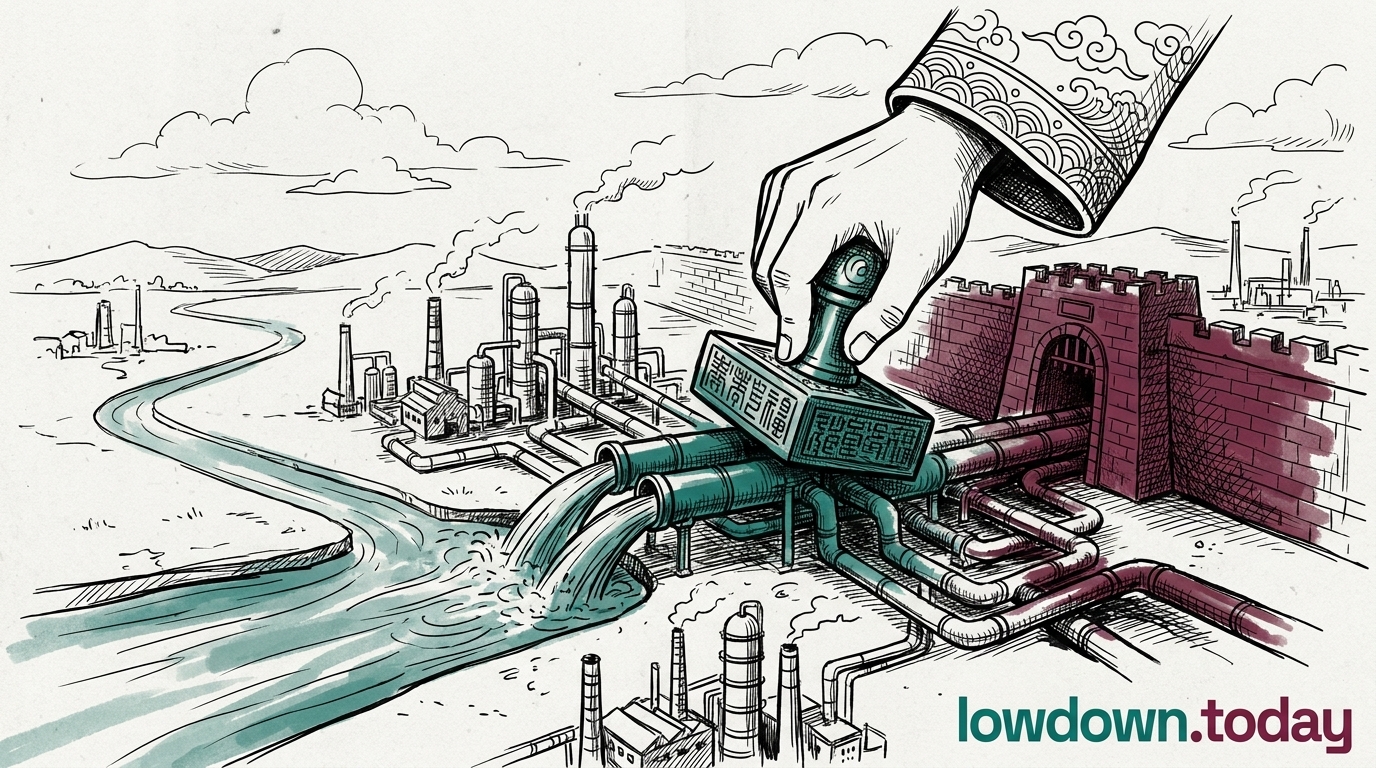
The sequence answers a question the war has dodged for three months, which side moves first. Washington wants the strait open before the centrifuges are discussed, and the same week it cut the IRGC's stablecoin toll rail through OFAC , the demand to reopen Hormuz is the diplomatic face of that financial squeeze. Iran must give up the chokepoint leverage before it gains anything at the table.

Rubio also gave the first US read on the Supreme Leader's channel. Mojtaba Khamenei "appears increasingly engaged, although all of his communications have been in writing and through intermediaries" 3. On the 440.9 kg enriched uranium stockpile, Rubio offered no new custody plan: it is, he said, "still buried deep in a mountain somewhere" 4. Washington has a sequence and a read on Tehran's top channel, but no answer yet on where the uranium goes.

Deep Analysis

In plain English

US Secretary of State Rubio told Congress on 2 June that Iran must reopen the Strait of Hormuz first, before any nuclear talks begin and before any sanctions are lifted. He laid out a timeline of 30, 60 or 90 days of technical negotiations that would only start after Iran acts. Iran's leverage in these negotiations is the Hormuz closure itself. Rubio is asking Tehran to relinquish that leverage before Washington offers anything in return. He also confirmed for the first time that Supreme Leader Mojtaba Khamenei is sending written messages through intermediaries, a slow channel that sits awkwardly against the 30/60/90-day timetables Rubio proposed.

Deep Analysis
Root Causes

The sequencing deadlock has one structural driver: Iran's only strategic leverage is the Strait of Hormuz. Reopening it for free removes Tehran's ability to compel a sanctions-relief deal.

The Hormuz toll mechanism and the PGSA architecture (built at significant political cost inside Iran between March and May 2026) were designed specifically to create a concession Iran could offer in exchange for something. Asking Iran to dismantle that mechanism before talks produce a verified commitment violates the basic exchange logic that any negotiated settlement requires.

Rubio's characterisation of Mojtaba Khamenei as writing-only-through-intermediaries is the public US record that the Supreme Leader is engaging. It simultaneously constrains Tehran's ability to deny talks are happening and confirms that the channel is indirect and slow, meaning that the 30/60/90-day timelines Rubio proposed require Khamenei to sanction moves faster than his communication channel permits.

Escalation

Rubio's testimony does not escalate the military situation but hardens the US diplomatic position. The explicit statement that no sanctions relief accompanies a Hormuz reopening reduces the probability of a rapid deal and increases the risk that Iran will interpret the framework as structurally bad-faith.

What could happen next?
  • Risk

    Iran's SNSC will likely read the no-sanctions-relief condition as confirming that Hormuz reopening is a unilateral concession, reinforcing the hardliners' argument that Araghchi's diplomacy delivers nothing.

  • Consequence

    The 440.9 kg enriched uranium stockpile remains in Iranian territory with no agreed custody plan; every week without an agreement extends the proliferation-risk window Rubio acknowledged but did not resolve.

First Reported In

Update #116 · Washington signs a sanction, not a strike

Al Jazeera· 3 Jun 2026
Read original
Different Perspectives
Markets
Markets
Brent crude rose 2.2 per cent to $96.34 on 10 June, reversing a 7 per cent weekly decline built on deal optimism, as the overnight exchange repriced the Strait of Hormuz risk premium in a single session. The move reflects transit-risk repricing rather than supply shock: Iran's exports had already collapsed to below 300,000 barrels per day.
Pakistan
Pakistan
Pakistan's Naqvi channel, the only mediation track carrying both civilian and military buy-in, was stress-tested by live ordnance within 48 hours of the 6-7 June Tehran visit. Whether Washington informed Islamabad of the imminent strike plan while Naqvi was in Tehran remains undisclosed, putting the channel's neutrality under scrutiny.
Kuwait
Kuwait
Kuwait hosted the third Iranian strike on its soil since the 3 June airport drone attack, with Ali Al Salem airbase targeted in the three-country salvo. Its recent $1.98 billion Anduril Anvil counter-drone purchase signals it is rearming rather than reconsidering its hosting posture.
Bahrain
Bahrain
Bahrain absorbed the IRGC barrage via PAC-3 intercepts with its magazine already at 87 per cent depletion and no resupply before 2027. Sounding air-raid sirens over Manama, it faced the intercept burden with the thinnest defensive stack in the Gulf coalition.
Jordan
Jordan
Jordan reported all five incoming missiles intercepted with no injuries and no damage, a clean defensive performance that strengthens Amman's case for staying in the Western coalition without escalating its own posture. It now sits on Iran's target list for the first time despite not being a party to the Abraham Accords confrontation.
Iran / IRGC
Iran / IRGC
Foreign Minister Araghchi posted on X that US forces should 'leave our region if you want to be safe' and framed the exchange as a US defeat, while the IRGC claimed 21 targets hit and an F-35 hangar destroyed. The claims serve a domestic and Arab-audience framing rather than a verified battle-damage assessment.