Skip to content
Briefings are running a touch slower this week while we rebuild the foundations.See roadmap
Iran Conflict 2026
25APR

Tehran denies ceasefire extension as venue shifts

3 min read
20:34UTC

Iran's foreign ministry spokesperson told Shafaqna the ceasefire extension is not confirmed and a Pakistani delegation is expected in Tehran, not Islamabad.

ConflictDeveloping
Key takeaway

The ceasefire text is being drafted in Tehran and carried by a Pakistani army chief, without Washington.

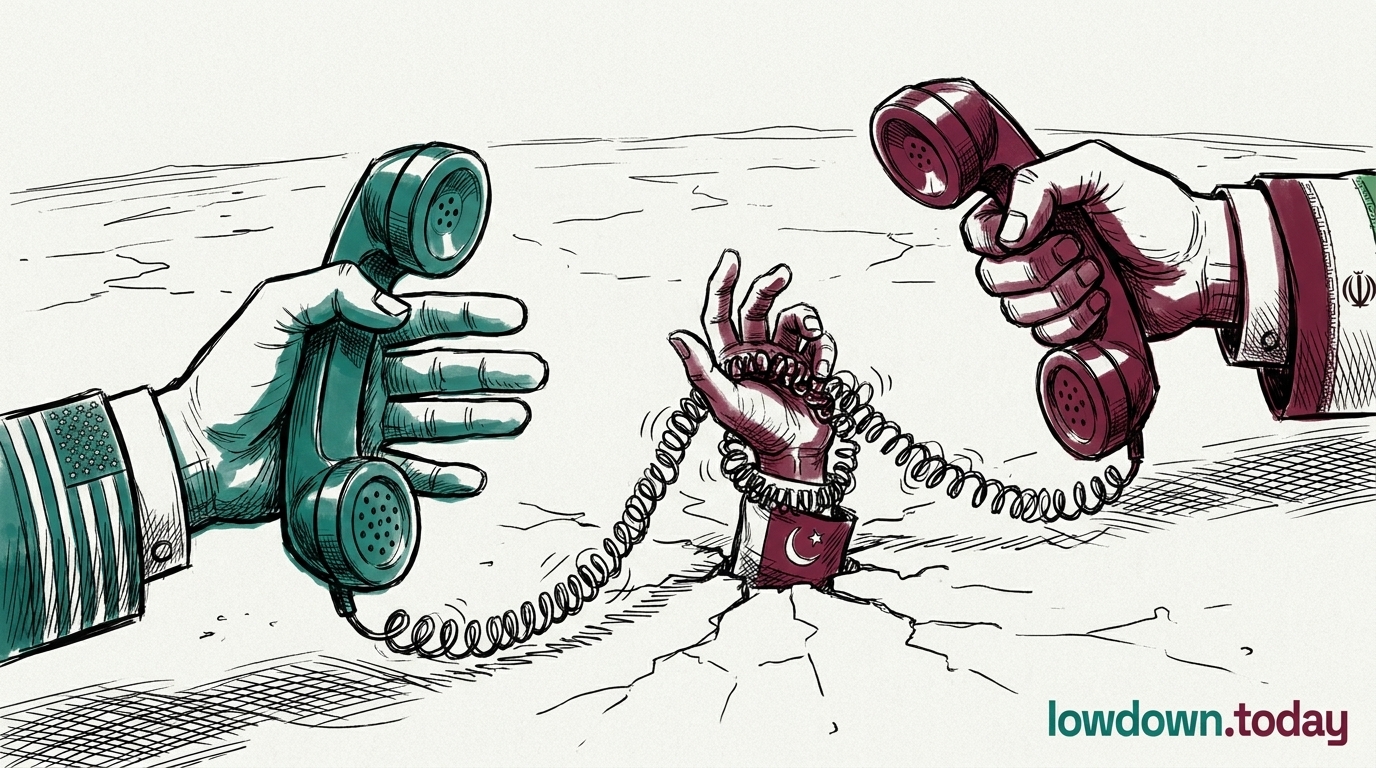
Iran Foreign Ministry spokesperson Ismail Baqaei told Shafaqna on 20 April that Iran "does not confirm" ceasefire-extension speculation and that "message exchanges continue" 1. He also said a Pakistani delegation was expected in Tehran rather than in Islamabad, a venue shift that moves the mediation's centre of gravity.

The channel has moved from a US-facing triangular format, which ran through the Islamabad talks under Vice President JD Vance, to a direct Iran-Pakistan bilateral carried by Pakistan Army Chief Field Marshal Asim Munir . Diplomacy now runs through a serving soldier, in Tehran, without Washington in the room. Baqaei's denial directly contradicted the wire-service reporting that had cited regional officials on an in-principle two-week extension , the same reporting the oil market priced as authoritative on Friday.

For European foreign ministries tracking the process, the Tehran venue alters the process operationally. Text drafted in Tehran and carried by Munir does not pass through a US interagency. White House Press Secretary Karoline Leavitt's statement that the US had not formally requested the extension is consistent with that absence; the United States is being briefed on the process rather than running it. A counter-view from Pakistani diplomats is that Islamabad's dual-track, mediating in Tehran while Pakistani F-16s reinforce Saudi airspace, is the pragmatic posture of a state with hard stakes on both sides of The Gulf. That is plausible. It is also a posture Washington used to occupy by default.

Deep Analysis

In plain English

Iran's foreign ministry spokesman said on 20 April that Iran was not confirming any ceasefire extension and that a Pakistani delegation was coming to Tehran, not Islamabad. The venue shift matters: instead of Pakistan hosting the meeting on neutral ground, Iran is making Pakistan come to it. The Pakistani diplomat carrying this process is not a foreign minister but the head of the army, Field Marshal Asim Munir. When a soldier carries diplomatic messages rather than a diplomat, it usually signals that the military side of the receiving country is the real decision-maker. That fits with what happened in the strait, where Iran's military fired on ships its own foreign ministry had cleared to cross.

Deep Analysis
Root Causes

Iran's foreign ministry has lost institutional credibility inside the strait (Araghchi's corridor fired on within 24 hours) and inside its own government (Tabnak order pre-dating the civilian announcement). Baqaei's ceasefire-extension denial is the ministry defending its last remaining function, controlling what Iran says publicly about the diplomatic track, against a context where what it says no longer controls what the Guard Corps does.

The Pakistan-Tehran bilateral exists because both states share a structural need: Iran needs a ceasefire that does not require direct negotiation with Washington or concessions that the Majlis must ratify; Pakistan needs the Gulf corridor stable for its own oil imports and for the credibility of Munir's mediation role, which is the only instrument Islamabad has to maintain influence in the Gulf framework.

What could happen next?
  • Consequence

    Diplomacy channelled through Munir rather than through Araghchi's civilian ministry confirms the IRGC as Iran's effective decision-maker, narrowing the space for civilian-ministry concessions at the ceasefire table.

First Reported In

Update #74 · Two unsigned rulebooks collide at Hormuz

Shafaqna· 20 Apr 2026
Read original
Different Perspectives
International human rights monitors (NetBlocks, IHR, Hengaw)
NetBlocks recorded 1,704 cumulative hours of near-total internet blackout for roughly 90 million Iranians on Day 74, while IHR documented ongoing executions under emergency provisions. These organisations are the only active monitoring windows into a civilian population cut off from the global internet for 71 consecutive days.
UK / France coalition
The Royal Navy confirmed HMS Dragon's Hormuz deployment on its own website on 11 May, converting a press-reported presence into declared force posture; UK and French defence ministers hosted a coalition meeting the same day. Britain and France are now the only named contributors to a Hormuz escort mission all five allies Trump originally asked had declined.
Saudi Aramco / Gulf producers
Saudi Aramco CEO Amin Nasser warned on 11 May that a Hormuz closure could remove 100 million barrels of weekly supply from global markets (roughly 15 million barrels per day for a week), a figure that dwarfs any OPEC+ swing capacity. The warning functions as both a price-floor signal and a public pressure on Washington to protect transit.
Beijing / Chinese Government
China has not publicly acknowledged the four Hong Kong-registered entities designated on 11 May or extended MOFCOM's Blocking Rules cover to HK-domiciled firms. Xi Jinping hosts Trump on 14–15 May having already de-risked state-bank balance sheets via NFRA's quiet loan halt, entering the summit partially compliant before any negotiation.
Tehran / Iranian Government
Foreign Minister Araghchi described Iran's 10-point counter-proposal as 'reasonable and responsible' via spokesman Baqaei on 11 May, and widened the mediator pool by meeting Turkish, Egyptian, and Dutch counterparts in a single day. Tehran is buying procedural runway while Trump's verbal rejection went unmatched by any written US counter.
Trump White House
Trump White House
Trump called the ceasefire 'on massive life support' and dismissed Iran's 10-point counter-proposal as 'a piece of garbage' on 11 May, while departing for Beijing two days later with no signed Iran instrument to show Congress. The verbal maximum and the paper void coexist: the administration is running a legal pressure campaign through Treasury while the president free-lances the rhetoric.