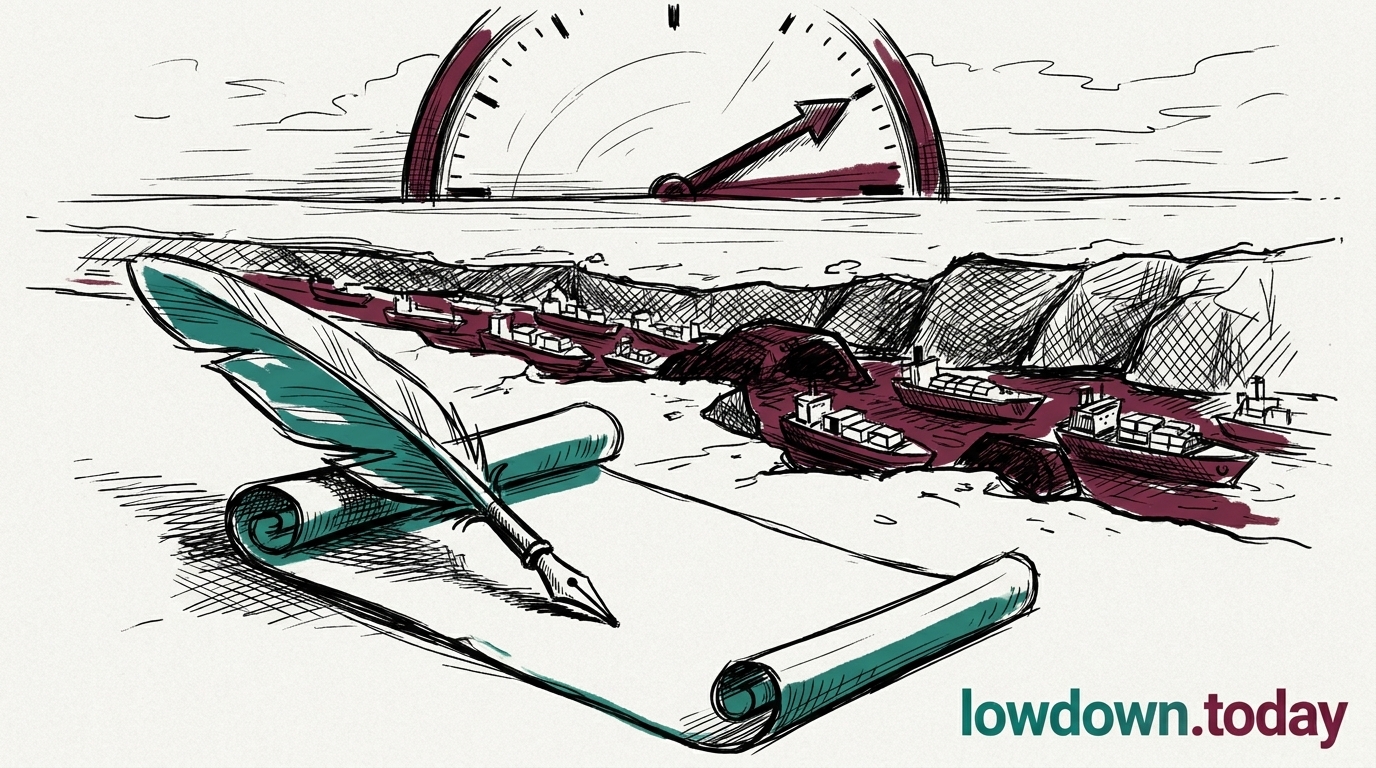
Donald Trump on Thursday 23 April ordered the US Navy to "shoot and kill any Iranian vessel laying mines in the strait", with minesweepers to clear it "at a tripled up level"1. US Central Command (CENTCOM), which runs Middle East operations, saw its cumulative intercept count climb from 28 on Day 54 to 31 vessels directed to turn around or return to port by Friday. No published military order accompanied the instruction.
The instruction tightens rules of engagement in one of the world's most congested maritime chokepoints without anything a Navy lawyer can point to in writing. CENTCOM officers are operating on the 28 February strike authorisation that Congress never ratified, layered with verbal presidential force authority. No published military order and no Iran executive instrument accompany the command, the same paper gap that has run across 55 days of war.
The mine-clearance assumption sits awkwardly against prior Pentagon internal estimates that Hormuz mine clearance requires six months of sustained operations. "Tripled up" minesweeper cadence compresses that timeline only if deployment assets match the talking point, and at the moment those assets remain on escort duty rather than clearance. The ratio of talk to hull matters because every additional mine-layer attempt the Navy engages under verbal authority expands the legal exposure of the officers executing it.
Kingsley Wilson's refusal to comment on internal deliberations on the same day kept the Pentagon's written record deliberately thin. Three separate lines now converge on unsigned coercion: verbal force authority in the strait, unsigned sanctions via OFAC NSPM-2, and an internal Pentagon memo threatening allies. Each runs on paper that does not yet exist.


