Skip to content
Briefings are running a touch slower this week while we rebuild the foundations.See roadmap
Iran Conflict 2026
21APR

Iran fires missiles at US in Kuwait

3 min read
10:51UTC

Iran fired two ballistic missiles at US forces in Kuwait late on 31 May; CENTCOM and Kuwaiti air defences intercepted both, and Kuwait invoked Article 51 of the UN Charter.

ConflictDeveloping
Key takeaway

Iran and the US traded live ballistic-missile fire over Kuwait inside the same day both called a ceasefire.

Iran fired two ballistic missiles at US forces in Kuwait late on Sunday 31 May; CENTCOM (US Central Command) and Kuwaiti air defences intercepted both, with CENTCOM confirming the engagement at 08:26 the next morning 1. Kuwait hosts US forces and opened fire again early on Monday 1 June against incoming drone and missile fire, an advance on the IRGC's Sirik Island strike and the projectiles Kuwait intercepted the same day . Kuwait has invoked Article 51, the UN Charter provision granting a state the right to self-defence against armed attack.

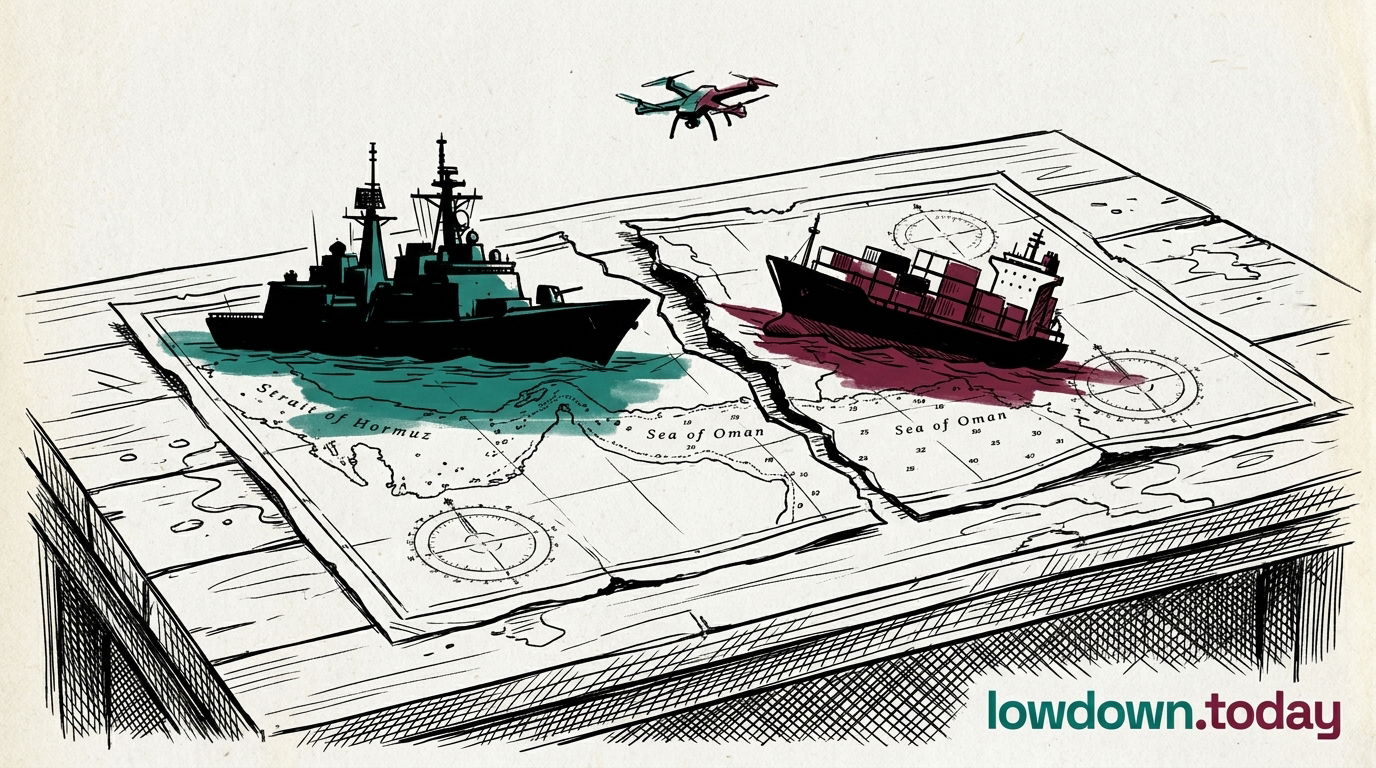
This is a direct exchange between Iran and the United States, distinct in kind from the commercial harassment of shipping in the Gulf. State forces fired ballistic missiles at a state's troops, and that state's air defences answered. The word "ceasefire" and live ballistic-missile intercepts now coexist in the same 24 hours.

Iran and the US kept shooting through a truce they both still invoke. A single missed interception over a Gulf base could pull Washington back into open war while its negotiators still call a deal close. The interception record holding is the only thing keeping the missile track and the diplomatic track from colliding.

Deep Analysis

In plain English

Kuwait is a small Gulf Arab country that hosts US military bases. Iran fired two ballistic missiles, guided weapons that travel through the upper atmosphere before diving at their target, at those US bases on the night of 31 May. Kuwait's own air defence systems, working alongside US forces, shot both missiles down before they hit. Kuwait then had to activate its defences again in the early hours of 1 June as more incoming fire arrived. Kuwait formally invoked Article 51 of the UN Charter, which is the UN rule that gives countries the right to defend themselves when attacked. This is the legal step a country takes when it wants the international community to recognise it is acting in self-defence, not as an aggressor.

Deep Analysis
Root Causes

The IRGC's decision to target Kuwait with ballistic missiles has a specific enabling condition: Kuwait's 1991 Status of Forces Agreement with the United States has never been publicly renegotiated to include an explicit clause about collective response obligations, which means US forces at Ali Al Salem and Ahmed Al Jaber air bases operate on a bilateral arrangement that does not automatically draw in Article 5-style allied commitments.

Kuwait cannot invoke NATO mutual defence; it can only invoke the UN Charter.

The second structural driver is the IRGC's Decentralised Mosaic Defence doctrine (activated 28 February 2026), which devolved ballistic missile launch authority to 31 provincial units. Ceasefire or diplomatic tracks coordinated by the Foreign Ministry do not automatically reach those units, which is why strikes continued even when Araghchi was at the table.

What could happen next?
  • Risk

    If Kuwait absorbs another ballistic missile strike and the US again limits its response to interception without an offensive counter-strike, Iran's provincial IRGC units will calibrate that as a confirmed ceiling of US retaliation risk, likely increasing strike frequency.

  • Precedent

    Kuwait's multiple Article 51 invocations create an accumulating legal record. A future UNSC resolution or coalition response would cite this documented pattern of armed attacks on a UN member state.

First Reported In

Update #115 · Iran moves first, Trump moves by phone

CBS News· 2 Jun 2026
Read original
Different Perspectives
Israel
Israel
The IDF struck a Lebanese army unit on 6 June, killing a colonel, and privately told Moscow that shelling near Bushehr was accidental, per Putin's SPIEF disclosure. Israel is advancing in Lebanon past an unenforced ceasefire text while maintaining a back-channel to Russia on nuclear-site deconfliction.
Lebanon
Lebanon
President Aoun told CNN on 5 June that Iran uses Lebanon as a bargaining chip and urged Hezbollah toward diplomacy; on 6 June an IDF strike killed a Lebanese army colonel on the Khardali-Nabatieh road. The Lebanese state is publicly rejecting Iranian tutelage while the army sustains casualties from Israeli fire and the Washington framework remains unenforced.
Bahrain
Bahrain
Bahrain's US Fifth Fleet headquarters was among the targets in the 5-6 June two-country salvo; its PAC-3 magazine stands at 87 per cent depletion with an 18-month resupply gap and no comparable arms sale has been announced. The state is defending a critical US regional command on a thinning interceptor stock.
Kuwait
Kuwait
Kuwait received a $1.98bn US counter-drone sale approval on the same day IRGC missiles targeted its bases; it expelled two Iranian diplomats on 4 June and filed a formal protest. The arms approval gives Kuwait a future capability but leaves a 6-18 month delivery gap that the salvo tempo is already pressing.
Russia
Russia
Putin reaffirmed Russia's offer to hold Iran's 440.9 kg HEU at SPIEF on 6 June, said Russia is not arming Iran, and disclosed that both the US and Israel privately told Moscow that shelling near Bushehr was accidental. The restatement casts Moscow as the only remaining mediator both sides call, a position serving Russian interests whatever the nuclear file produces.
Iran
Iran
The IRGC, per Iranian state media, fired seven ballistic missiles at US bases in Kuwait and Bahrain, the largest two-country salvo of the war, and framed the launches as lawful retaliation; Foreign Minister Araghchi rejected Aoun's bargaining-chip accusation and Velayati warned Beirut against diplomatic naivety. Tehran has sent no HEU counter-proposal since Araghchi confirmed no progress on 4 June.