Skip to content
Briefings are running a touch slower this week while we rebuild the foundations.See roadmap
Iran Conflict 2026
21APR

France pledges 80 per cent frigate readiness

3 min read
10:51UTC

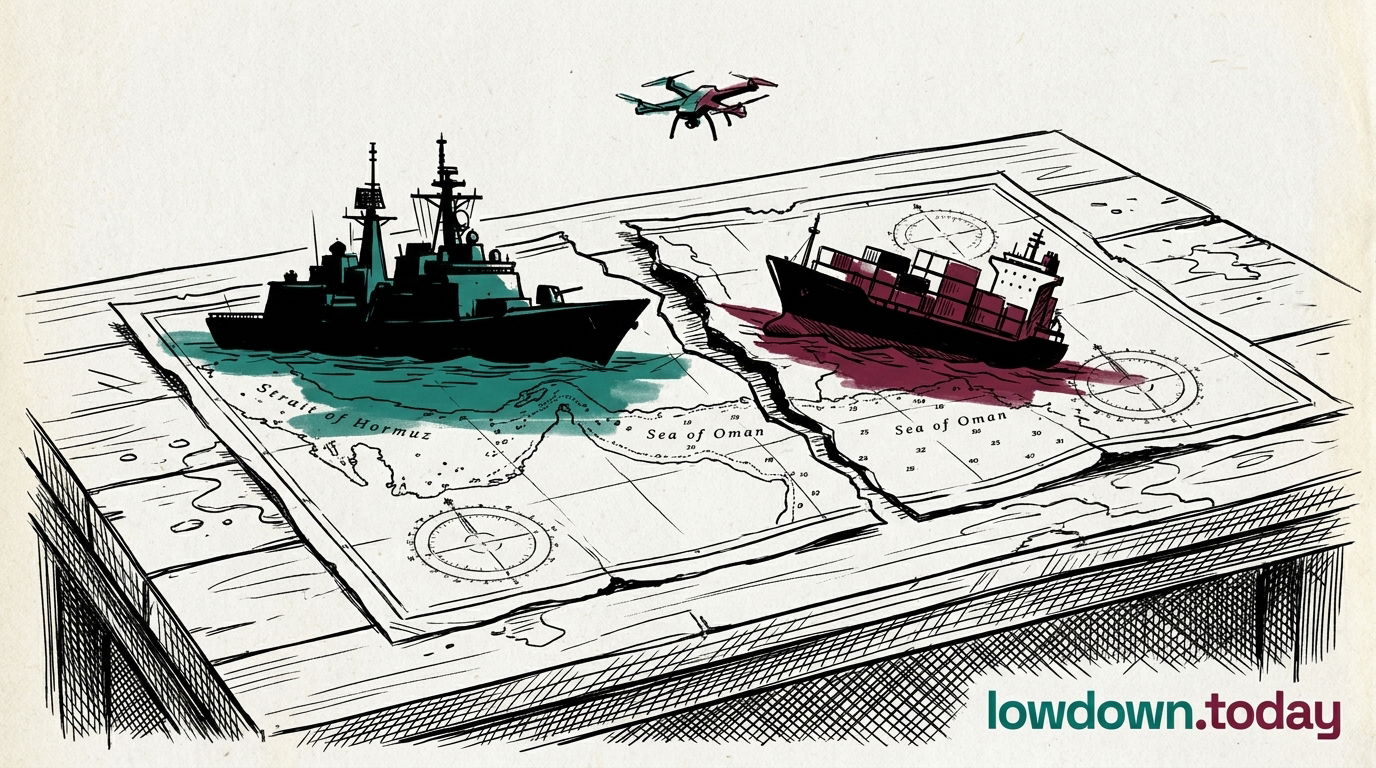
The French Navy announced steps to bring frigate availability to 80 per cent, the first quantitative tempo commitment any Hormuz coalition member had put on the record since the Northwood planning summit.

ConflictDeveloping
Key takeaway

France's 80 per cent frigate target is the coalition's first numerical tempo commitment; engagement rules unfiled.

The French Navy announced steps on 18 May to bring frigate availability to 80 per cent, the first quantitative tempo commitment any coalition member had placed on the record since the Northwood planning summit . The 80 per cent target sits well above NATO surface-fleet norms; the Royal Navy operates at roughly 50-55 per cent availability across its Type 23 and Type 45 fleets, and the French Marine Nationale has averaged in the high 60s on its FREMM and Aquitaine-class hulls in recent annual reports.

The number translates into hulls at sea. France runs 11 multi-mission and air-defence frigates; an 80 per cent availability ceiling puts roughly nine at deployable readiness. That is the operational base the French chain of command needs to sustain a continuous Hormuz contribution alongside its existing Atlantic, Indian Ocean and Mediterranean commitments, without rotating crews into burnout. Tempo commitments are the unsexy heart of coalition mathematics: any navy can sortie a flagship for a press release, but only a sustained availability number translates into deployable presence inside an open-ended mission window.

The French commitment lands against the same operational picture the Italian minesweeper deployment exposed. Admiral Brad Cooper's 90 per cent mine-elimination claim implies a mature, low-tempo posture; an 80 per cent French frigate availability commitment implies the opposite, a coalition planning for a multi-quarter Hormuz operation in which residual mine risk and Iranian fast-attack-craft probing continue. Cooper's numbers and the European tempo numbers cannot both be the operational truth.

France has not yet published the rules-of-engagement framework that would let it operate alongside US assets under a single command structure. The 80 per cent number is therefore a force-generation commitment ahead of a legal framework, the same sequencing the Italian deployment displays. The coalition member that drafts the engagement framework first sets the operational rulebook Washington has to live with, and Paris's number puts France at the head of that drafting queue.

Deep Analysis

In plain English

France's navy announced it aims to have 80 per cent of its frigates combat-ready at any given time. In practical terms, that means roughly 12 of France's 15 major warships would be available for deployment simultaneously, compared to the usual eight or nine. This matters for the Hormuz crisis because France is the second-largest naval power in the coalition after the United States. Getting more French ships ready to deploy strengthens the coalition's ability to keep the oil shipping route open, and signals to Iran that European commitment to Hormuz security extends beyond political signalling alone.

What could happen next?
  • Consequence

    An 80 per cent French frigate readiness target adds approximately three extra hull deployments to the coalition's available force, meaningfully strengthening escort capacity for tanker convoys through Hormuz.

  • Risk

    Sustained high readiness targets without supplementary maintenance funding risk crew fatigue and mechanical failures, potentially producing the opposite effect within 12 months.

First Reported In

Update #101 · Barakah hit, Trump posts, Italy sends minesweepers

Naval News· 18 May 2026
Read original
Causes and effects
This Event
France pledges 80 per cent frigate readiness
France has put a measurable readiness number against a coalition mission, narrowing the gap between political pledges and deployable hulls.
Different Perspectives
Israel
Israel
The IDF struck a Lebanese army unit on 6 June, killing a colonel, and privately told Moscow that shelling near Bushehr was accidental, per Putin's SPIEF disclosure. Israel is advancing in Lebanon past an unenforced ceasefire text while maintaining a back-channel to Russia on nuclear-site deconfliction.
Lebanon
Lebanon
President Aoun told CNN on 5 June that Iran uses Lebanon as a bargaining chip and urged Hezbollah toward diplomacy; on 6 June an IDF strike killed a Lebanese army colonel on the Khardali-Nabatieh road. The Lebanese state is publicly rejecting Iranian tutelage while the army sustains casualties from Israeli fire and the Washington framework remains unenforced.
Bahrain
Bahrain
Bahrain's US Fifth Fleet headquarters was among the targets in the 5-6 June two-country salvo; its PAC-3 magazine stands at 87 per cent depletion with an 18-month resupply gap and no comparable arms sale has been announced. The state is defending a critical US regional command on a thinning interceptor stock.
Kuwait
Kuwait
Kuwait received a $1.98bn US counter-drone sale approval on the same day IRGC missiles targeted its bases; it expelled two Iranian diplomats on 4 June and filed a formal protest. The arms approval gives Kuwait a future capability but leaves a 6-18 month delivery gap that the salvo tempo is already pressing.
Russia
Russia
Putin reaffirmed Russia's offer to hold Iran's 440.9 kg HEU at SPIEF on 6 June, said Russia is not arming Iran, and disclosed that both the US and Israel privately told Moscow that shelling near Bushehr was accidental. The restatement casts Moscow as the only remaining mediator both sides call, a position serving Russian interests whatever the nuclear file produces.
Iran
Iran
The IRGC, per Iranian state media, fired seven ballistic missiles at US bases in Kuwait and Bahrain, the largest two-country salvo of the war, and framed the launches as lawful retaliation; Foreign Minister Araghchi rejected Aoun's bargaining-chip accusation and Velayati warned Beirut against diplomatic naivety. Tehran has sent no HEU counter-proposal since Araghchi confirmed no progress on 4 June.