Skip to content
Iran Conflict 2026
20APR

Lebanon truce frays on day one

3 min read
10:10UTC

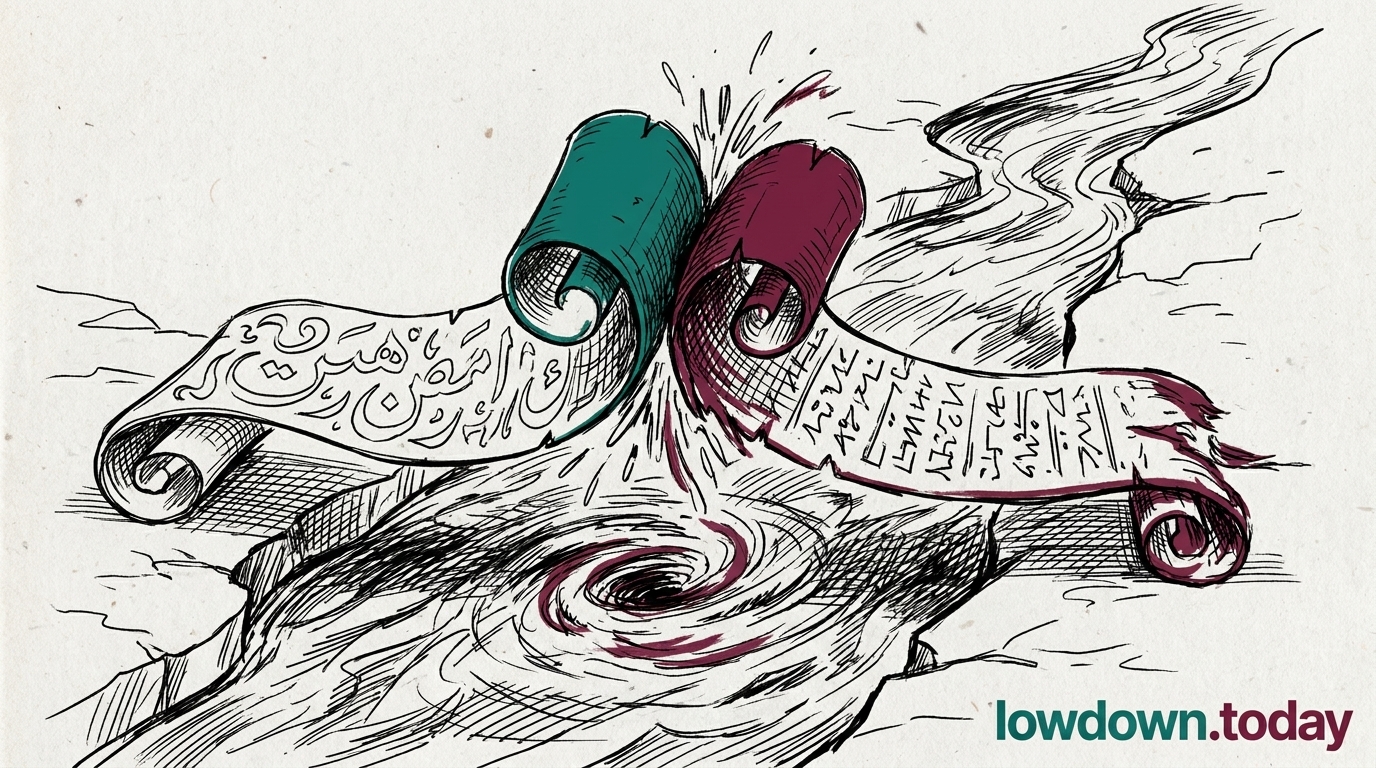
A 10-day Israel-Lebanon ceasefire took effect at 17:00 local on 17 April. An Israeli strike killed one civilian in Kounine within 24 hours.

ConflictDeveloping
Key takeaway

A truce announced on Truth Social is already producing casualties with Hezbollah outside the deal entirely.

A 10-day Israel-Lebanon ceasefire took effect at 17:00 local on Friday 17 April . Benjamin Netanyahu told his cabinet that Israel Defense Forces (IDF) troops would not withdraw from the 10-kilometre southern Lebanon "security zone" during the truce and that the ceasefire did not apply to Hezbollah operations 1. An Israeli strike killed one civilian in Kounine, a village in southern Lebanon, within the first 24 hours. The Lebanese Army reported multiple Israeli violations, including intermittent shelling in southern villages.

Trump posted on Truth Social that Israel was "PROHIBITED" from bombing Lebanon after Netanyahu's cabinet remark that the Lebanon fight was "not over" . The truce itself was announced through the same Truth Social channel, not through a published text with Lebanese counter-signatures. Hezbollah is explicitly outside the agreement, which leaves no armed Lebanese party bound to the ceasefire the Israeli prime minister has already partially disowned.

The Lebanon truce expires around 26-27 April, four days after the Iran ceasefire expires on 22 April. Two verbal truces are now stacked on top of each other, neither backed by a published bilateral text, both announced from a US president's social-media account rather than from a State Department readout. The Iran 22 April expiry and the Lebanon 26-27 April expiry land inside the four-deadline convergence window this briefing's WPR and GL-U sections set out.

Deep Analysis

In plain English

Israel and Lebanon agreed a 10-day ceasefire on 17 April. But Israel's Prime Minister said the truce did not cover Hezbollah (the militant group that has been firing rockets into northern Israel throughout the war). An Israeli strike killed a civilian in the village of Kounine in southern Lebanon within the first 24 hours. The ceasefire has no written agreement behind it and no outside body to check whether either side is keeping to it.

What could happen next?
  • Meaning

    Netanyahu's retention of the right to strike 'at any time' in self-defence means the Kounine strike is a precedent-setter for the truce's operational meaning: a ceasefire that allows unilateral strikes on the basis of self-defence is a tempo reduction, not a genuine halt.

    Short term · Assessed
  • Meaning

    The Lebanon truce expiry around 26-27 April sits four days after the Iran ceasefire expiry on 22 April; if both lapse without signed extensions, the war restarts on two fronts simultaneously within a five-day window.

    Short term · Assessed
  • Meaning

    Trump's 'PROHIBITED' post and Netanyahu's self-defence reservation cannot both be operative simultaneously; the first public strike after 26 April will reveal which claim holds practical authority.

    Short term · Assessed
First Reported In

Update #72 · Hormuz opens and closes in 24 hours

Euronews· 18 Apr 2026
Read original
Different Perspectives
Global South governments (Indonesia, Brazil, South Africa)
Neutrality was possible when the targets were military. 148 dead schoolgirls made it impossible — no government can explain that away to its own citizens.
Trump administration
Oscillating between claiming diplomatic progress and threatening escalation, while deploying additional ground forces to the Gulf.
Israeli security establishment
Fears a rapid, vague US-Iran agreement that freezes military operations before the IDF achieves what it considers full strategic objectives. A senior military official assessed the campaign is 'halfway there' and needs several more weeks.
Iraqi government
Iraqi government
Iraq's force majeure is the position of a non-belligerent whose entire petroleum economy has been paralysed by a war between others — storage full, exports blocked, production being cut with no timeline for resumption.
Russia — Ambassador Vassily Nebenzia
Moscow calibrated its position between Gulf states and Iran: abstaining on Resolution 2817 rather than vetoing it, signalling it would not block protection for Gulf states, while refusing to endorse a text that ignores the US-Israeli campaign it regards as the conflict's proximate cause. Russia proposed its own ceasefire text — which failed 4-2-9 — allowing Moscow to claim the peacemaker role while providing Iran with satellite targeting intelligence, a duality consistent with its approach in Syria.
France — President Macron
France absorbed its first combat death in a conflict it has publicly declined to join. The killing of Chief Warrant Officer Frion in Erbil forces Macron to choose between escalating involvement and accepting casualties from the margins.