Skip to content
Briefings are running a touch slower this week while we rebuild the foundations.See roadmap
Iran Conflict 2026
10APR

Murkowski misses her own AUMF deadline

3 min read
08:05UTC

Senator Lisa Murkowski's draft Iran AUMF, targeted by her own office for 28 April introduction, did not reach Congress.gov by close of business. Collins, Tillis and Curtis have publicly backed the concept; nobody has filed the bill.

ConflictDeveloping
Key takeaway

Murkowski's draft Iran AUMF missed her own filing target; the Senate now produces no instruments on the war.

Senator Lisa Murkowski of Alaska did not file her draft Iran Authorisation for Use of Military Force by close of business on Tuesday 28 April, the date her office had targeted last week for introduction . Congress.gov carried no Iran AUMF bill number under her name; the Quiver Quantitative Senate-filings tracker still listed S.4236, the American Seafood Competitiveness Act, as her most recent introduction 1. An AUMF is the congressional instrument under Article I that grants the President legal authority to wage a particular war; without one the War Powers Resolution of 1973 requires withdrawal sixty days from the start of hostilities.

Susan Collins of Maine and Thom Tillis of North Carolina endorsed Murkowski's draft on Saturday 25 April ; John Curtis of Utah added his name as the third Republican backer the same day . The Senate has just rejected the fifth attempt to invoke War Powers oversight on Iran by 51 to 46 on 22 April . The political conditions for filing existed; the bill text existed; the staff drafting was complete. The act of dropping the paper into the hopper did not happen.

A filed AUMF would force the first signed Iran instrument of the war under the most adversarial conditions available to the White House. Either the president signs the bill and accepts congressional terms on his Iran policy, or he vetoes it and triggers a veto-override fight, or he ignores it and provokes an Article I confrontation. None of those options is attractive on a war The Administration has chosen to manage without paper. By not filing, Murkowski has spared the White House the choice. The Friday legal expiry will pass the way the prior four floor votes passed: without a vote on authorisation, without paper, without consequence inside the Senate's own rules.

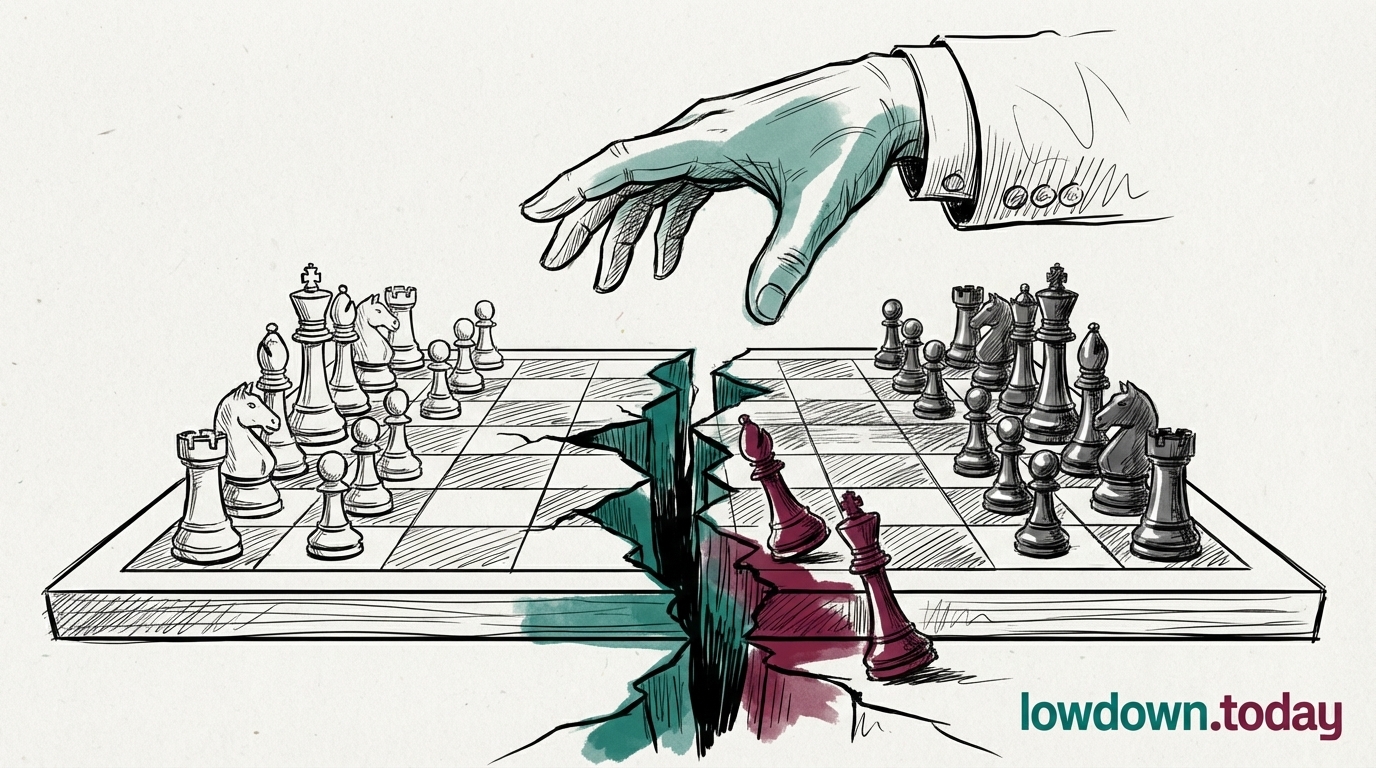
Four failed WPR motions read as active opposition to an authorising instrument. The new pattern reads as something different. Collins, Tillis and Curtis publicly support a bill nobody is willing to make them vote on. The legislative branch has stopped producing instruments of any kind on the Iran war.

Deep Analysis

In plain English

The US Congress has a law , the War Powers Resolution , that says the president needs congressional approval to keep fighting a war for more than 60 days. That deadline is this Friday. The senator working on a bill to give that approval missed her own deadline to file it. Four separate Senate votes have failed to stop or authorise the war. On Friday the legal clock runs out, with no bill filed on either side.

Deep Analysis
Root Causes

Murkowski's non-filing follows a documented pattern in the Senate's handling of this conflict: four floor votes that produced a public record without a legislative instrument.

An AUMF introduced by Murkowski would be referred to the Foreign Relations Committee, where Senator Jim Risch chairs; Risch has not backed the concept, so a filed bill would die in committee without a discharge petition, a tactic Murkowski has not signalled. That procedural wall makes the Collins-Tillis-Curtis backing irrelevant: co-sponsors cannot force a bill past a committee chair who has not moved it.

The Collins-Tillis-Curtis backing is real but insufficient: three senators co-sponsoring a bill that cannot clear committee serve the same function as the four prior WPR votes , a public record of opposition without a forcing instrument.

What could happen next?
  • Consequence

    Friday 1 May becomes the fifth consecutive legal deadline the executive and legislative branches pass without a signed Iran instrument, extending the precedent that the WPR clock has no enforcement mechanism in practice.

    Immediate · 0.88
  • Risk

    The May appropriations cycle offers the next structural lever: a continuing resolution or supplemental spending bill could attach an Iran-specific funding restriction, converting the political position into a financial constraint.

    Short term · 0.65
  • Precedent

    If the WPR clock expires without enforcement action for the sixth consecutive administration, the practical legal threshold for sustained presidential military action without AUMF shifts permanently upward.

    Long term · 0.75
First Reported In

Update #82 · Iran writes Phase 1; Washington still has no pen

White House· 28 Apr 2026
Read original
Causes and effects
This Event
Murkowski misses her own AUMF deadline
The Senate's most credible vehicle for asserting congressional war authority over Iran failed to reach a docket on its own target date. The legislative branch is now matching the executive branch's silent posture.
Different Perspectives
Lloyd's of London
Lloyd's of London
The Joint War Committee left Hormuz war-risk premiums at $10-14 million per voyage on 25 May, declining to move on Brent's 5% fall. The JWC's protocol requires a UN Security Council resolution or bilateral government certification letter before de-listing, and neither has arrived: a verbal understanding does not satisfy the formal condition the reinsurance market's treaty terms require.
Gulf Arab producers
Gulf Arab producers
Saudi Arabia and UAE depend on Hormuz for their own crude exports; Aramco CEO Nasser has warned no oil market recovery arrives until 2027 if the blockade continues past mid-June. Monday's $98.96 Brent settlement shortens nothing for Gulf producers without a signed instrument and a Pentagon mine-clearance timeline that runs up to six months post-ceasefire.
Qatar
Qatar
Qatar holds $12bn of frozen Iranian assets at the centre of the sequencing dispute but cannot release them without explicit US Treasury authorisation, given the original freeze was a US instrument. As the asset-holding state, Qatar's leverage is real but passive: it is the escrow holder, not the decision-maker, and any resolution requires US Treasury sign-off that Trump has withheld.
Pakistan
Pakistan
With both Prime Minister Sharif and army chief Munir simultaneously in Beijing on 25 May, Pakistan has for the first time consolidated its civilian and military mediation tracks under China's roof. Munir's direct Tehran-to-Beijing flight signals that the security and financial threads of the sequencing problem are now being worked in parallel rather than sequentially.
China
China
Beijing hosted Pakistan's principal mediators and Iran's China envoy Ghalibaf simultaneously on 25 May while its banking regulator capped new state-bank lending to five sanctioned refiners. China is simultaneously the most credible third-party underwriter of the $12bn sequencing and the state whose institutions face live OFAC secondary-sanctions exposure if the deadlock persists through GL V's expiry.
United States
United States
Trump posted on 24 May that the blockade holds until a deal is certified and signed, ruling out the informal MOU structure both sides had been building. The 'certified, and signed' condition is the first operational bar Trump has attached in 87 days, but it arrived without an executive instrument, maintaining the gap between posted ultimatum and signed US policy.