Skip to content
You can now search across every topic, entity and event.What's new
Iran Conflict 2026
6APR

Islamabad talks end without a statement

2 min read
09:43UTC

Four nations spent two days building a ceasefire framework. They produced the war's most substantial diplomatic initiative, and then concluded without committing a single word to paper.

ConflictAssessed
Key takeaway

The war's best diplomatic effort ended with no commitment.

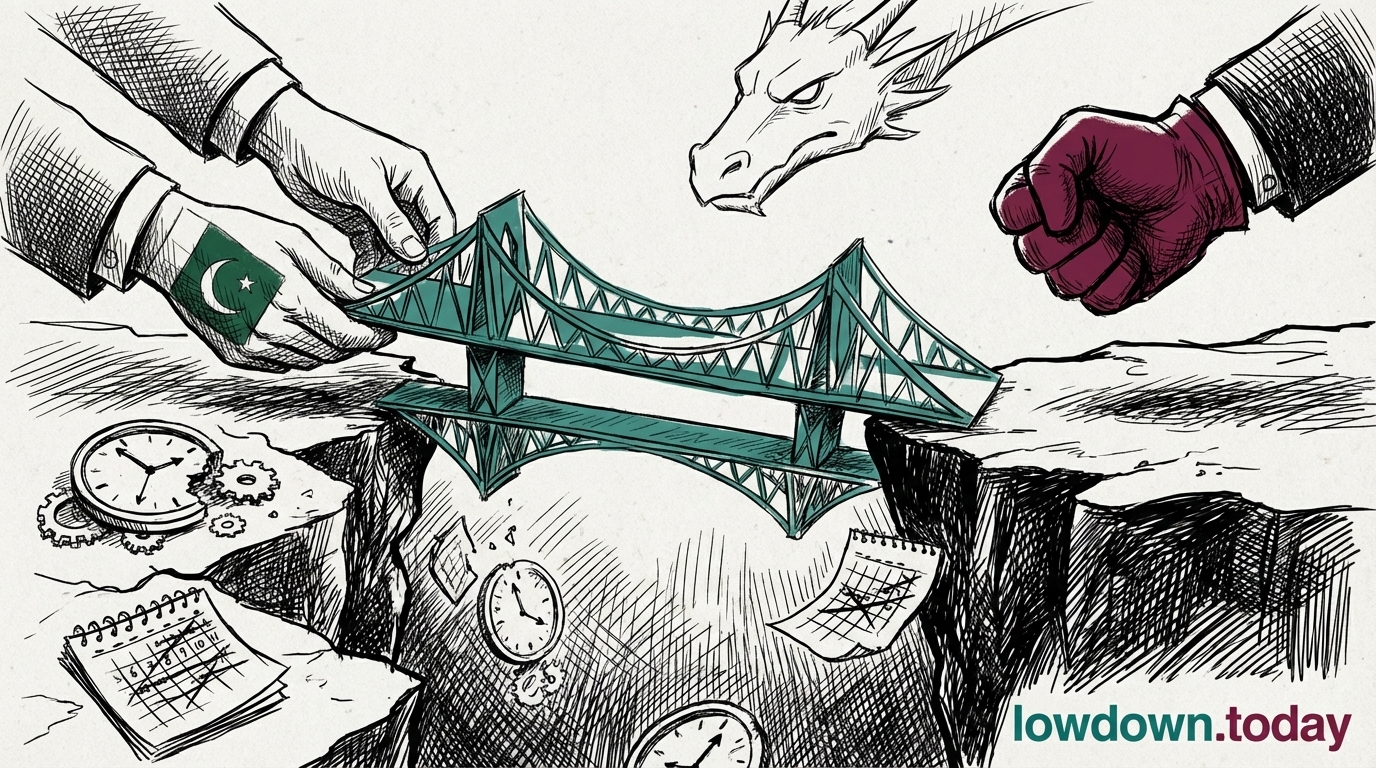
Foreign ministers from Pakistan, Turkey, Egypt, and Saudi Arabia concluded two days of talks in Islamabad on 30 March. 1 China declared 'full support.' Pakistan's Foreign Minister Ishaq Dar announced his country would host direct US-Iran talks 'in coming days.' No formal communique was published.

The absence of a statement may reflect disagreement on language. It may reflect a deliberate decision not to commit positions in writing while Trump's Financial Times interview circulated. Either way, the four nations that convened to build a ceasefire framework concluded without committing to one. The summit was the most substantial multilateral diplomatic initiative since the war began , and it ended with an offer and a silence.

The structural problem has not changed. Iran's five conditions for ending the war include permanent sovereignty over the strait of Hormuz. The US 15-point plan demands guaranteed transit passage. No mediator can bridge a gap where one side claims ownership and the other denies it. Iran's Foreign Minister Abbas Araghchi repeated the position: 'Intermediary messages are not direct negotiations.'

Turkey's participation through Foreign Minister Hakan Fidan is worth noting: a NATO member participating in a ceasefire initiative independently of Washington signals the depth of the transatlantic fracture. But good intentions do not overcome incompatible red lines. Until either Washington drops its Hormuz transit demand or Tehran abandons its sovereignty claim, any mediator is working a problem that has no mathematical solution.


Deep Analysis

In plain English

Four countries, Pakistan, Turkey, Egypt, and Saudi Arabia, sent their foreign ministers to the Pakistani capital Islamabad for two days of meetings designed to find a way to end the war. China also voiced its support. At the end of two days, they produced nothing in writing. In diplomacy, a statement or communique is how countries show they agreed on something. Without one, there is no shared position and no commitment. The core problem has not changed: Iran insists it owns the Strait of Hormuz, the world's most important oil shipping lane. The United States demands free passage through it as a condition for any deal. No mediator can close a gap where one side says 'we own it' and the other says 'no you don't'. Then Trump gave an interview saying he wants to seize Iran's oil, on the same day the summit concluded.

What could happen next?
  • Consequence

    Turkey's NATO membership makes its independent participation in a ceasefire initiative a public signal of transatlantic fracture, with real countries on the ground diverging from Washington's position.

  • Risk

    The strongest multilateral mediation effort of the conflict has produced no binding framework. Each failed initiative reduces the credibility of the next.

First Reported In

Update #52 · Trump wants Iran's oil; 3,500 Marines land

Bloomberg / Al Jazeera· 30 Mar 2026
Read original
Causes and effects
This Event
Islamabad talks end without a statement
The absent communique means the strongest multilateral mediation effort of the conflict produced no binding framework. Trump's oil seizure statement, arriving the same day, structurally undermined any mediation before it could begin.
Different Perspectives
Oil traders
Oil traders
Sent Brent down 2.29 per cent to $98.38 a barrel on reports that mediation was reviving, moving the price on CENTCOM's quiet night rather than on Trump's same-day promise of a bigger operation with no deadline attached.
Iran
Iran
An Iranian official called the same mediation account completely misleading, denying it received any US proposal via Baghdad on the same day Iraq denied delivering one, leaving neither denial able to settle what actually passed between the two capitals.
Iraq
Iraq
Called groundless the New York Times account that its prime minister carried a US ceasefire proposal to Tehran, a denial that also protects Baghdad's effort to avoid becoming a party to a war fought by aircraft it does not control.
OHCHR
OHCHR
Recorded 17 civilian seafarer deaths since the war began, a population neither the Pentagon nor Iran's Health Ministry counts in its own tally, and called for urgent action on 6,000 crew stranded across roughly 400 vessels in the Strait of Hormuz.
Houthis
Houthis
Enforced the blockade on Saudi-linked shipping it declared on 20 July by hitting the NCC Masa and then an Aramco facility at Jazan, moving from radio warnings to strikes on land after four days without a confirmed hit.
Saudi Arabia
Saudi Arabia
Struck Houthi military sites near Hodeidah the same day the NCC Masa was hit, while its coalition spokesman insisted Hodeidah, Ras Issa and Salif all remain open to navigation. The distinction protects the ports Yemen's population depends on for food and fuel even while punishing the group behind the tanker strike.



