Skip to content
Briefings are running a touch slower this week while we rebuild the foundations.See roadmap
Iran Conflict 2026
31MAR

Iran FM warns all Hormuz tankers

2 min read
08:23UTC

Iran's Foreign Ministry warned all tankers to be 'very careful' — the first time the strait threat has escalated from military operations to sovereign diplomatic messaging.

ConflictDeveloping

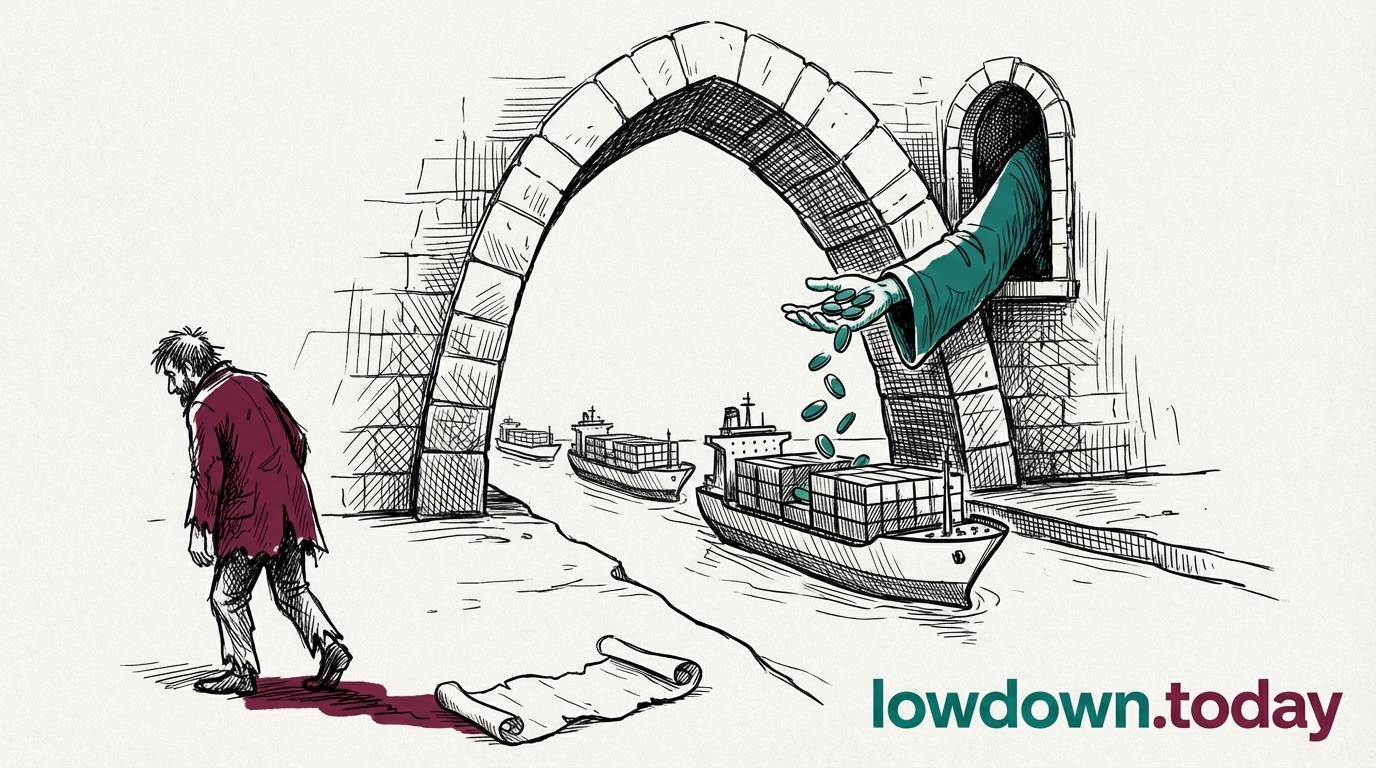
Iran's Foreign Ministry warned all tankers transiting the strait of Hormuz 'must be very careful' while the situation remains insecure — the first time the war's Hormuz threat has been elevated from IRGC operational messaging to formal diplomatic communication.

The distinction in register carries legal and commercial weight. The IRGC had already struck two named tankers — the Marshall Islands-flagged Louise P and the Prima — publicly claiming both attacks and naming each vessel. But IRGC statements bind a military organisation. A Foreign Ministry warning binds the state. It places every flag state on notice that Iran's sovereign authority, not merely its armed forces, considers the strait contested. Under the UN Convention on the Law of the Sea, Hormuz is an international strait through which all vessels hold the right of transit passage. Iran's warning stops short of claiming the right to block transit. The IRGC's drone strikes demonstrate that compliance with Iranian terms is the practical condition for safe passage — the legal form and the operational reality have diverged.

The warning lands on a strait already partitioned by negotiation. Reuters reported Beijing in direct talks with Tehran for guaranteed passage of Chinese-linked crude and Qatari LNG . Fortune reported Chinese-flagged and 'Muslim'-owned vessels receiving de facto IRGC protection from interdiction. China's 48th PLA Navy fleet deployed to The Gulf the same day. The FM statement codifies what was already operational: a two-tier waterway, open for approved commerce, hazardous for the rest. During the 1987–88 Tanker War, Iran and Iraq between them attacked 546 commercial vessels in The Gulf over eight years. The current conflict has produced a more discriminating system — not indiscriminate attacks on shipping, but selective enforcement that rewards alignment with Tehran and Beijing.

For the tanker and insurance markets, the FM escalation compounds an existing paralysis. Every major P&I club cancelled War risk coverage effective 5 March. Tanker traffic is down approximately 70%. Kuwait declared force majeure on all exports . VLCC freight rates hit an all-time high of $423,736 per day . A formal government warning adds a new dimension: flag states whose vessels are struck can now point to an explicit Iranian state-level caution as evidence of premeditated threat, strengthening both insurance claims and potential proceedings under international maritime law. The FM's choice of words — 'must be very careful' rather than 'will be stopped' — preserves deniability while achieving the same deterrent effect.

First Reported In

Update #31 · Iran moves to heavy warheads; China deploys

Fortune· 10 Mar 2026
Read original
Causes and effects
This Event
Iran FM warns all Hormuz tankers
Elevating Hormuz threats from IRGC operational warnings to Foreign Ministry communication implicates Iran's sovereign authority and transforms ad hoc interdiction into stated government policy, with consequences for international maritime law, insurance markets, and flag-state liability.
Different Perspectives
Markets
Markets
Brent crude rose 2.2 per cent to $96.34 on 10 June, reversing a 7 per cent weekly decline built on deal optimism, as the overnight exchange repriced the Strait of Hormuz risk premium in a single session. The move reflects transit-risk repricing rather than supply shock: Iran's exports had already collapsed to below 300,000 barrels per day.
Pakistan
Pakistan
Pakistan's Naqvi channel, the only mediation track carrying both civilian and military buy-in, was stress-tested by live ordnance within 48 hours of the 6-7 June Tehran visit. Whether Washington informed Islamabad of the imminent strike plan while Naqvi was in Tehran remains undisclosed, putting the channel's neutrality under scrutiny.
Kuwait
Kuwait
Kuwait hosted the third Iranian strike on its soil since the 3 June airport drone attack, with Ali Al Salem airbase targeted in the three-country salvo. Its recent $1.98 billion Anduril Anvil counter-drone purchase signals it is rearming rather than reconsidering its hosting posture.
Bahrain
Bahrain
Bahrain absorbed the IRGC barrage via PAC-3 intercepts with its magazine already at 87 per cent depletion and no resupply before 2027. Sounding air-raid sirens over Manama, it faced the intercept burden with the thinnest defensive stack in the Gulf coalition.
Jordan
Jordan
Jordan reported all five incoming missiles intercepted with no injuries and no damage, a clean defensive performance that strengthens Amman's case for staying in the Western coalition without escalating its own posture. It now sits on Iran's target list for the first time despite not being a party to the Abraham Accords confrontation.
Iran / IRGC
Iran / IRGC
Foreign Minister Araghchi posted on X that US forces should 'leave our region if you want to be safe' and framed the exchange as a US defeat, while the IRGC claimed 21 targets hit and an F-35 hangar destroyed. The claims serve a domestic and Arab-audience framing rather than a verified battle-damage assessment.