Skip to content
Briefings are running a touch slower this week while we rebuild the foundations.See roadmap
Iran Conflict 2026
26MAR

3,500 Marines and 82nd Airborne in Gulf

3 min read
09:36UTC

The USS Tripoli brought 3,500 Marines into theatre the same week the 82nd Airborne's Devil Brigade began moving to Kuwait. Three Pentagon sources confirmed planning for weeks of ground operations.

ConflictAssessed
Key takeaway

US ground forces now match the 2003 Iraq posture in scale.

The USS Tripoli arrived in the CENTCOM area of operations around 27 March carrying 3,500 Marines and sailors. 1 The 82nd Airborne Division's 1st Brigade Combat Team, the Devil Brigade, began deploying to Kuwait, joining forces already positioned at bases struck by Iranian missiles in recent days. The deployment follows the 82nd Airborne headquarters order issued on 24 March .

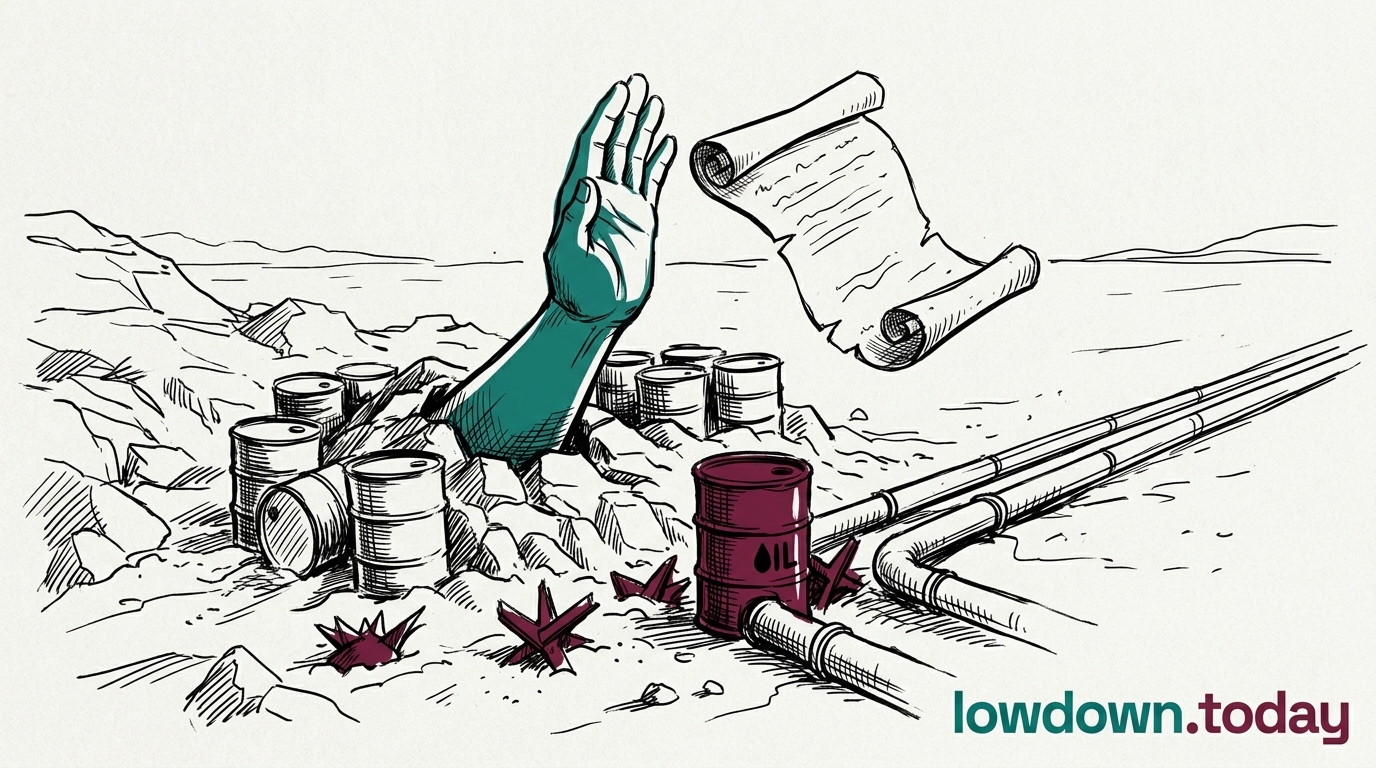
Three Pentagon sources confirmed to the Washington Post that planning for 'weeks of ground operations' is active. 2 Options include an amphibious seizure of Kharg Island and coastal raids near the strait of Hormuz to destroy weapons targeting commercial and military shipping. Decision authority rests with Trump personally. Byron Callan of Capital Alpha Partners assessed a 75% probability that US troops will set foot on Iranian soil; that estimate, made five days ago , now looks conservative.

Iran is not blind to this. Parliamentary Speaker Ghalibaf stated publicly: 'The enemy openly sends messages of negotiation but secretly is planning a ground attack.' Tehran fortified Kharg Island with mines and anti-aircraft missiles five days ago . The IRGC's warning about ground assault planning through CNN suggests Iranian intelligence has independent visibility into Pentagon deliberations.

The combination of two amphibious ready groups in theatre, a brigade combat team in Kuwait, Saudi basing access at King Fahd Air Base , and explicit ground planning has not been assembled in The Gulf since the 2003 Iraq invasion. Whether these forces stage forward toward Hormuz or remain in Kuwait determines whether 'weeks of ground operations' moves from planning to execution.

Deep Analysis

In plain English

A US navy ship called the USS Tripoli arrived in the Persian Gulf with 3,500 soldiers and sailors on board. At the same time, a second army unit, the 82nd Airborne Division's elite brigade, started moving to Kuwait. This is the biggest build-up of US ground forces in the Gulf since the 2003 Iraq war. Three anonymous Pentagon officials confirmed to journalists that there is active planning for weeks of ground operations inside Iran, including potentially landing troops on Kharg Island, where Iran exports most of its oil. Iran's parliament speaker said publicly that Iran knows the US is planning a ground attack.

Deep Analysis
Root Causes

The ground force posture reflects the logical consequence of an air campaign reaching its announced objectives. CENTCOM declared 10,000-plus targets struck and two-thirds of Iran's conventional military destroyed or damaged, leaving residual capabilities that only ground forces can address.

The Kharg Island planning specifically reflects the oil-seizure objective Trump articulated. An air campaign cannot seize and hold an oil terminal; that requires infantry, marine expeditionary forces, and sustained occupation capability.

What could happen next?
  • Risk

    The 2003 Iraq comparison suggests a force assembled at this scale and specificity typically precedes execution within weeks, not months.

    Short term · 0.75
  • Consequence

    Iran's public acknowledgement that it is 'waiting' for a ground assault, combined with Kharg Island fortification, means any amphibious operation will encounter prepared defences.

    Immediate · 0.9
  • Risk

    If the 82nd Airborne stages forward from Kuwait toward Hormuz, the conflict transitions from air campaign to land war with fundamentally different escalation dynamics.

    Short term · 0.8
First Reported In

Update #52 · Trump wants Iran's oil; 3,500 Marines land

Washington Post· 30 Mar 2026
Read original
Different Perspectives
Gulf shipping and insurance markets
With Hormuz and Bab el-Mandeb both hostile at once, war-risk underwriters face their first dual-chokepoint pricing problem; the rerouting hedge that absorbed one closure is gone for Israeli-linked hulls. Any deal that reopens Hormuz without a Houthi stand-down clause delivers only partial shipping relief.
Russia and China
Russia and China
Russia and China met IAEA chief Grossi jointly in Geneva on 5 June to coordinate an advance blocking position against Washington's censure resolution, the first documented instance of proactive pre-session obstruction rather than reactive post-vote dissent. Beijing's move came four days after OFAC designated Shanghai Qianye Energy under Iran energy sanctions.
Saudi Arabia
Saudi Arabia
Saudi Arabia was left out of the emergency $4.01 billion Patriot waiver Qatar received on 2 May as its own PAC-3 stocks ran near-empty from intercepting Iranian salvoes over Aramco facilities. Riyadh is on a standard 18-month FMS queue behind a production line booked through 2030, with no equivalent priority to Qatar's Al Udeid basing role.
Houthis (Ansar Allah)
The Houthis declared a complete ban on Israeli Red Sea navigation on 8 June and struck Jaffa, their first attack on Israeli territory since April, seven days after the Tasnim authorisation to activate other fronts including Bab el-Mandeb. The declaration put both chokepoints under hostile authority simultaneously.
Iran
Iran
Iran agreed the 9 June mutual halt after the Mahshahr exchange and coordinated with Russia and China to block Washington's IAEA censure resolution, using the Board as a second front while the bilateral pause held on the military one. Tehran's acceptance of the Lebanon carve-out contradicts the linkage position it stated on 1 June.
Benjamin Netanyahu and the IDF
Israel struck the Karun Petrochemical plant at Mahshahr on 8 June over Trump's explicit objection, then agreed a halt with Iran the following day scoped on Israeli terms with Lebanon carved out. Netanyahu's posture is that the IDF will not accept Iranian missile factories as off-limits regardless of US diplomatic timelines.